
Volkswagen Tiguan Turbo Boost Leak: Symptoms, Causes and Repair Costs in Canada

A Volkswagen Tiguan turbo boost leak can cause poor acceleration, increased fuel consumption, unusual engine noises and unexpected warning lights. In some cases, the vehicle may even enter limp mode, significantly reducing engine performance.
The Volkswagen Tiguan relies on its turbocharged engine to deliver a balance between performance and fuel efficiency. When pressurized air escapes from the turbocharging system, the engine may struggle to produce its expected power.
Fortunately, a boost leak does not necessarily mean that your turbocharger needs replacing. Something as simple as a damaged rubber hose, deteriorated seal or loose connection could be responsible.
In Canada, estimated Volkswagen Tiguan boost leak repair costs range from $100 to $700 CAD for relatively simple repairs, while a complete turbocharger replacement can cost between $2,200 and $4,500 CAD or more.
Let's explore the symptoms, causes, diagnostic procedures and repair options available to Canadian Tiguan owners.
- What Is a Volkswagen Tiguan Turbo Boost Leak?
- Volkswagen Tiguan Turbo Boost Leak Symptoms
- Common Causes of Volkswagen Tiguan Turbo Boost Leaks
- Volkswagen Tiguan P0299 Turbo Underboost Code
- Volkswagen Tiguan Turbocharger Fault Codes
- Volkswagen Tiguan Boost Leak Problems by Generation
- How to Diagnose a Volkswagen Tiguan Turbo Boost Leak
- Volkswagen Tiguan Turbo Boost Leak Repair Costs in Canada
- Can Canadian Winter Conditions Cause Turbo Boost Leaks?
- Can You Drive a Volkswagen Tiguan With a Boost Leak?
- Boost Leak vs Turbocharger Failure
- How Long Does It Take to Fix a Tiguan Boost Leak?
- Are Volkswagen Tiguan Turbo Problems Covered Under Warranty in Canada?
- How to Prevent Volkswagen Tiguan Turbo Boost Leaks
- Is It Worth Repairing a Volkswagen Tiguan Turbo Boost Leak?
- Frequently Asked Questions
- 1. How much does it cost to fix a Volkswagen Tiguan turbo boost leak in Canada?
- 2. What does the P0299 code mean on a Volkswagen Tiguan?
- 3. Can a boost leak damage a Volkswagen Tiguan turbocharger?
- 4. What does a Volkswagen Tiguan boost leak sound like?
- 5. Can a Volkswagen Tiguan boost leak be fixed without replacing the turbo?
- Conclusion
What Is a Volkswagen Tiguan Turbo Boost Leak?
A turbo boost leak occurs when compressed air escapes from the pressurized intake system before reaching the engine.
The turbocharger compresses incoming air, allowing the engine to produce more power. This air travels through several components, including the intercooler, charge pipes, hoses and throttle body.
If any of these components develops a crack or loses its seal, the engine may receive less air than expected.
The engine control unit detects the difference between requested and actual boost pressure and may activate a warning light or reduce engine power.
The problem can affect different Tiguan generations equipped with the 2.0 TSI turbocharged gasoline engine.
Volkswagen Tiguan Turbo Boost Leak Symptoms
Several warning signs can indicate that your Tiguan is experiencing a boost pressure problem.
| Symptom | Possible cause |
|---|---|
| Loss of engine power | Escaping compressed air |
| Hissing sound | Damaged turbo hose or seal |
| Slow acceleration | Insufficient boost pressure |
| Check engine light | Boost pressure fault |
| EPC warning light | Engine management problem |
| Increased fuel consumption | Reduced engine efficiency |
| Limp mode | Significant boost deviation |
| Oily residue around hoses | Possible charge pipe leak |
| P0299 fault code | Turbocharger underboost |
| Unusual turbo noise | Air leak or turbocharger damage |
1. Loss of Engine Power
Reduced engine performance is one of the most noticeable symptoms of a Volkswagen Tiguan boost leak.
You may find that the SUV struggles when accelerating onto a highway, climbing steep hills or overtaking another vehicle.
The engine may operate relatively normally at low speeds but fail to deliver its usual performance when the turbocharger is required to generate additional pressure.
2. Hissing or Whistling Noise
A damaged turbo hose can produce a noticeable hissing or rushing air sound during acceleration.
Unlike normal turbocharger operation, a boost leak may create a louder noise that increases as engine load rises.
A pronounced siren-like or grinding noise, however, could indicate internal turbocharger damage rather than a simple air leak.
3. Slow Acceleration
If your Tiguan feels unusually sluggish, insufficient boost pressure could be responsible.
Drivers may notice a delay between pressing the accelerator and receiving the expected power.
This can become particularly noticeable when carrying passengers, travelling through mountainous areas or merging onto Canadian highways.
4. Check Engine Light
A significant boost pressure leak can trigger the check engine light.
The engine control module continuously monitors several operating parameters, including intake pressure.
When actual boost pressure remains below the expected level under certain operating conditions, the system may store a diagnostic trouble code.
5. EPC Warning Light
The Electronic Power Control (EPC) warning light can appear when the Volkswagen Tiguan experiences certain engine management problems.
Turbocharger control faults, wastegate problems and incorrect boost pressure can all contribute to this warning.
You might be interested in this content. Why Is My Car Shaking While Driving?
An illuminated EPC light does not automatically confirm a boost leak, so proper diagnosis is essential.
6. Increased Fuel Consumption
A malfunctioning turbocharging system may reduce overall driving efficiency.
Drivers may compensate for poor acceleration by pressing the accelerator more aggressively, increasing gasoline consumption.
If your Tiguan suddenly requires more litres per 100 kilometres under similar driving conditions, a boost pressure problem is worth investigating.
7. Volkswagen Tiguan Entering Limp Mode
Limp mode is a protective operating strategy that limits engine performance when a significant fault is detected.
When this happens, your Tiguan may have restricted acceleration and reduced turbocharger output.
Restarting the vehicle may temporarily restore normal performance, but it will not repair the underlying problem.
Common Causes of Volkswagen Tiguan Turbo Boost Leaks
Damaged Turbocharger Hoses
Rubber hoses connecting the turbocharger, intercooler and intake system are exposed to heat, pressure and engine vibrations.
Over time, these hoses can deteriorate and develop small cracks.
Potential problems include:
- Split rubber hoses.
- Deteriorated connections.
- Loose retaining clips.
- Damaged seals.
- Cracked hose fittings.
- Hoses that become disconnected.
Some cracks only open when the system is pressurized, making them difficult to identify when the engine is switched off.
Loose Turbo Hose Clamps
A loose clamp or improperly secured retaining clip can allow compressed air to escape from a hose connection.
This is generally one of the less expensive boost leak problems to repair.
Loose connections may also appear following previous engine repairs or intercooler replacement.
Cracked Charge Pipes
The Volkswagen Tiguan uses charge pipes to transport compressed air through the intake system.
Plastic pipes can deteriorate after years of exposure to high temperatures and repeated pressure changes.
A small crack may cause intermittent performance problems, while a larger opening can result in significant power loss.
Damaged Intercooler
The intercooler reduces the temperature of compressed air before it enters the engine.
Because it is positioned near the front of the vehicle, it can be exposed to road debris, moisture and winter driving conditions.
Common intercooler problems include:
- Cracked end tanks.
- Damaged connections.
- Impact damage from road debris.
- Corrosion.
- Leaking seals.
A damaged intercooler may require complete replacement.
Worn Turbocharger Diverter Valve
The diverter valve manages excess compressed air when the driver releases the accelerator.
If the valve fails to seal correctly, boost pressure may escape internally through the recirculation system.
Possible symptoms include inconsistent acceleration, reduced boost pressure and a P0299 fault code.
Depending on the engine version, replacing the diverter valve can be considerably cheaper than replacing the entire turbocharger.
You might be interested in this content.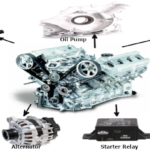 Common Engine Problems and Their Causes
Faulty Turbocharger Wastegate
The wastegate regulates exhaust gas flow through the turbocharger, helping control boost pressure.
A worn, loose or seized wastegate can prevent the turbocharger from producing sufficient pressure.
Although this is not technically an external boost leak, it can produce very similar symptoms.
Wastegate problems deserve particular attention on older Volkswagen Tiguan 2.0 TSI models.
Damaged O-Rings and Seals
The charge air system contains several seals designed to prevent pressurized air from escaping.
These seals can become brittle or compressed as the vehicle ages.
A relatively inexpensive replacement seal may restore normal boost pressure without requiring major mechanical work.
Faulty Boost Pressure Sensor
A malfunctioning boost pressure sensor can provide incorrect information to the engine control module.
This may cause the vehicle to report an underboost condition even when no significant air leak exists.
Before replacing expensive mechanical components, the sensor and its electrical connections should be tested.
Volkswagen Tiguan P0299 Turbo Underboost Code
The P0299 fault code is commonly associated with insufficient turbocharger boost pressure.
It indicates that the engine management system has detected lower-than-expected boost pressure under specified operating conditions.
Possible causes include:
- Damaged turbocharger hoses.
- Leaking intercooler.
- Faulty diverter valve.
- Worn wastegate mechanism.
- Defective boost pressure sensor.
- Turbocharger actuator problems.
- Internal turbocharger failure.
The P0299 code alone does not confirm that the turbocharger needs replacing.
Replacing the turbo without checking the charge air system could result in a substantial and unnecessary repair bill.
Volkswagen Tiguan Turbocharger Fault Codes
| Fault code | Meaning |
|---|---|
| P0299 | Turbocharger underboost condition |
| P0234 | Turbocharger overboost condition |
| P0236 | Boost pressure sensor range or performance fault |
| P0237 | Boost pressure sensor circuit low |
| P0238 | Boost pressure sensor circuit high |
| P2263 | Turbocharger system performance fault |
| P2563 | Turbocharger boost control position sensor performance |
| P00AF | Turbocharger boost control module performance |
| P2279 | Intake air system leak |
The exact codes and diagnostic procedures may vary depending on the Tiguan's model year, engine configuration and engine management software.
Volkswagen Tiguan Boost Leak Problems by Generation
2009–2017 Volkswagen Tiguan
First-generation Tiguan models are now old enough that age-related deterioration of turbo hoses, seals and other components can become increasingly relevant.
Areas worth inspecting include:
- Turbocharger wastegate.
- Diverter valve.
- Rubber charge hoses.
- Intercooler connections.
- Boost pressure sensors.
- PCV system.
Wastegate wear and seizure are particularly important diagnostic considerations on certain older 2.0 TSI engines.
2018–2024 Volkswagen Tiguan
Second-generation Canadian Tiguan models use a revised version of the 2.0 TSI engine.
Potential boost pressure problems include leaking charge pipes, damaged intercooler connections, electronic actuator faults and sensor-related issues.
A Volkswagen-compatible diagnostic scanner can be particularly useful when investigating these vehicles.
2025–2026 Volkswagen Tiguan
The newer Tiguan generation continues to use turbocharged 2.0-litre engines in Canada.
While boost leaks remain mechanically possible, these vehicles are too new to establish definitive long-term failure patterns.
Owners experiencing reduced power or turbocharger warning codes should check their warranty coverage before paying for repairs.
You might be interested in this content. Why Does My Check Engine Light Come On?
How to Diagnose a Volkswagen Tiguan Turbo Boost Leak
Step 1: Scan the Vehicle for Fault Codes
Start by connecting a compatible OBD-II diagnostic scanner.
Record all stored and pending fault codes before clearing anything.
A Volkswagen-specific diagnostic system may provide additional information about requested boost pressure, actual boost pressure and wastegate actuator operation.
Step 2: Inspect the Turbocharger Hoses
With the engine switched off and cooled down, visually inspect accessible hoses and connections between the turbocharger, intercooler and intake manifold.
Look for:
- Visible cracks.
- Loose connections.
- Damaged retaining clips.
- Disconnected hoses.
- Excessive oily deposits.
- Damaged plastic fittings.
A light oil film inside turbocharger intake plumbing can be normal. However, concentrated oily residue around a connection may help identify a possible leak.
Step 3: Perform a Smoke Test
A smoke test is one of the most effective ways to locate air leaks.
A professional technician introduces diagnostic smoke into the appropriate section of the intake system and checks where it escapes.
This procedure can reveal small cracks and damaged seals that are difficult to identify visually.
Step 4: Perform a Boost Leak Pressure Test
A controlled pressure test can help identify leaks that only become noticeable when the charge air system is pressurized.
The test should follow the correct pressure limits and procedures for the specific Volkswagen engine.
Using excessive pressure can damage intake system components.
Step 5: Check Requested and Actual Boost Pressure
A technician can compare the boost pressure requested by the engine control unit with the actual pressure produced by the turbocharger.
A significant difference may indicate an air leak, wastegate problem, intake restriction or another turbocharger control fault.
Step 6: Inspect the Wastegate and Actuator
If the charge air system passes its leak tests, the wastegate mechanism and actuator should be examined.
A seized wastegate or faulty electronic actuator can prevent the turbocharger from producing the correct pressure.
Step 7: Test the Turbocharger
Complete turbocharger replacement should generally be considered only after other potential causes have been ruled out.
The technician should evaluate the turbocharger's mechanical condition, oil supply, control system and any abnormal noises.
Volkswagen Tiguan Turbo Boost Leak Repair Costs in Canada
Repair costs depend on the location of the leak, model year, labour rates and replacement parts required.
The following figures are approximate Canadian budgeting estimates, not fixed dealership quotations.
| Repair or service | Estimated cost (CAD) |
|---|---|
| Diagnostic scan | $100–$200 |
| Smoke or pressure test | $120–$250 |
| Hose clamp or retaining clip replacement | $80–$180 |
| Turbo hose seal replacement | $100–$250 |
| Turbo boost hose replacement | $200–$550 |
| Charge pipe replacement | $300–$700 |
| Diverter valve replacement | $200–$500 |
| Boost pressure sensor replacement | $150–$400 |
| Intercooler replacement | $600–$1,300 |
| Wastegate actuator repair or replacement | $500–$1,500 |
| Specialized wastegate repair | $1,000–$1,800 |
| Turbocharger replacement | $2,200–$4,500+ |
Prices generally exclude applicable sales taxes. Additional diagnostic work, related components and dealership labour may increase the final cost.
VW Tiguan turbo repair cost comparison
Illustrative midpoint estimates in Canadian dollars
Hose seal
$175
Boost hose
You might be interested in this content. Volkswagen Tiguan Turbo Issues: Symptoms, Causes, and Repair Guide
$375
Charge pipe
$500
Intercooler
$950
Wastegate repair
$1,400
Turbocharger
$3,350
Volkswagen Dealership vs Independent Mechanic
An authorized Volkswagen dealership may charge more than an independent European vehicle specialist.
However, dealerships can provide manufacturer-specific diagnostic procedures, genuine replacement parts and access to warranty information.
An experienced independent Volkswagen specialist may offer more economical repair options, especially when the problem involves a wastegate mechanism rather than internal turbocharger failure.
For expensive repairs, we recommend obtaining a second opinion before approving a complete turbocharger replacement.
Can Canadian Winter Conditions Cause Turbo Boost Leaks?
Canada's demanding winter climate can contribute to deterioration of certain turbocharging system components.
Repeated temperature changes can affect rubber hoses, plastic pipes and seals.
Winter-related factors include:
- Extreme cold temperatures.
- Repeated heating and cooling cycles.
- Road salt exposure.
- Moisture accumulation.
- Corrosion of exposed mechanical components.
- Road debris damaging the intercooler.
Cold temperatures may also make older rubber seals less flexible, potentially making an existing leak more noticeable.
However, winter weather alone does not confirm the cause of a turbocharger fault.
Can You Drive a Volkswagen Tiguan With a Boost Leak?
A Tiguan with a minor boost leak may remain operational, but continuing to drive without addressing the problem is not advisable.
A boost leak can compromise acceleration, making highway merging and overtaking more difficult.
Depending on the fault, continued operation could also place additional stress on the turbocharging system.
If the vehicle remains stable and has no severe warning signs, a short, gentle journey to a repair facility may be possible.
Stop driving and arrange professional assistance if you experience:
- Severe loss of engine power.
- A flashing check engine light.
- Heavy exhaust smoke.
- Grinding or loud siren-like turbocharger noises.
- A red oil pressure warning light.
- Engine overheating.
Avoid hard acceleration, towing and demanding highway driving until the problem has been diagnosed.
Boost Leak vs Turbocharger Failure
A boost leak and a failing turbocharger can produce similar symptoms, but their repair costs are considerably different.
You might be interested in this content. Nissan Rogue Transmission Problems: Common Issues, Symptoms, Repair Costs and Years to Avoid
| Characteristic | Boost leak | Turbocharger failure |
|---|---|---|
| Reduced engine power | Common | Common |
| Hissing noise | More typical | Possible |
| Grinding noise | Unusual | Possible |
| Blue exhaust smoke | Unusual | Possible |
| Excessive oil consumption | Unusual | Possible |
| P0299 fault code | Possible | Possible |
| Repair complexity | Low to moderate | High |
| Estimated repair cost | $100–$1,300 | $2,200–$4,500+ |
A thorough diagnosis is the best way to distinguish between these problems.
How Long Does It Take to Fix a Tiguan Boost Leak?
Repair times vary depending on accessibility and the component requiring replacement.
| Repair | Approximate time |
|---|---|
| Diagnostic inspection | 30–90 minutes |
| Hose clamp replacement | 15–45 minutes |
| Turbo hose replacement | 30–90 minutes |
| Charge pipe replacement | 1–2 hours |
| Diverter valve replacement | 1–2 hours |
| Intercooler replacement | 2–5 hours |
| Wastegate repair | 2–6 hours or more |
| Turbocharger replacement | 4–8 hours or more |
These estimates exclude additional troubleshooting, parts delivery and unexpected complications.
Are Volkswagen Tiguan Turbo Problems Covered Under Warranty in Canada?
Volkswagen Canada generally provides the following standard new vehicle warranty coverage:
- New vehicle limited warranty: 4 years or 80,000 kilometres.
- Powertrain limited warranty: 5 years or 100,000 kilometres.
Both are subject to applicable terms and exclusions.
Certain turbocharger defects may qualify for warranty coverage, depending on the failed component and the vehicle's age, mileage and maintenance history.
Canadian owners outside the original warranty period may also wish to request goodwill assistance from Volkswagen.
Check whether any applicable service campaigns, extended coverage or manufacturer repair programs exist for your specific vehicle identification number.
How to Prevent Volkswagen Tiguan Turbo Boost Leaks
Although not every turbocharger problem can be prevented, proper maintenance can help reduce the likelihood of premature component deterioration.
We recommend following these practices:
- Follow the manufacturer's maintenance schedule.
- Use engine oil that meets the required Volkswagen specification.
- Replace the engine air filter when necessary.
- Inspect turbocharger hoses during routine servicing.
- Address warning lights promptly.
- Avoid aggressive acceleration immediately after a cold start.
- Allow the engine to return to normal operating conditions after demanding driving.
- Investigate unusual turbocharger noises.
- Keep the intercooler area free from excessive debris.
- Use quality replacement components.
Regular inspections are particularly valuable on higher-mileage Tiguan models.
Is It Worth Repairing a Volkswagen Tiguan Turbo Boost Leak?
In most cases, repairing a boost leak is worthwhile.
A damaged hose, worn seal or loose connection can often be repaired for a few hundred Canadian dollars, restoring normal engine performance without major mechanical work.
If the vehicle requires a complete turbocharger replacement, consider its overall condition, mileage, maintenance history and market value.
A Tiguan with a well-maintained engine and transmission may still justify a substantial turbocharger repair.
However, an older vehicle with multiple expensive mechanical problems requires a more careful financial assessment.
Frequently Asked Questions
1. How much does it cost to fix a Volkswagen Tiguan turbo boost leak in Canada?
Most straightforward boost leak repairs cost approximately $100 to $700 CAD. Intercooler replacement can cost between $600 and $1,300, while complete turbocharger replacement may exceed $4,500 CAD.
2. What does the P0299 code mean on a Volkswagen Tiguan?
The P0299 code indicates that the turbocharger system is not producing the expected boost pressure. Common causes include air leaks, wastegate problems, faulty diverter valves and turbocharger control issues.
3. Can a boost leak damage a Volkswagen Tiguan turbocharger?
Depending on the severity and nature of the fault, a boost leak can increase stress on the turbocharger as the system attempts to achieve the requested pressure. Prompt diagnosis can help prevent additional problems.
4. What does a Volkswagen Tiguan boost leak sound like?
A boost leak often produces a hissing, whistling or rushing air sound during acceleration. The noise may become louder as engine load and turbocharger pressure increase.
5. Can a Volkswagen Tiguan boost leak be fixed without replacing the turbo?
Yes. Many boost pressure problems are caused by damaged hoses, seals, intercoolers, diverter valves or loose connections. These components can often be repaired or replaced without installing a new turbocharger.
Conclusion
A Volkswagen Tiguan turbo boost leak can significantly affect engine performance, fuel consumption and overall driving comfort. Common symptoms include sluggish acceleration, hissing noises, EPC warnings, limp mode and the P0299 underboost fault code.
Fortunately, not every turbocharger-related warning requires an expensive turbo replacement. Damaged hoses, leaking seals, faulty diverter valves and wastegate problems can produce similar symptoms.
For Canadian owners, most minor boost leak repairs cost between $100 and $700 CAD, while more complex turbocharging system repairs can cost several thousand dollars.
We recommend starting with a complete diagnostic scan, visual inspection and professional smoke or pressure test before replacing expensive components.
You might be interested in this content.Volkswagen Tiguan EPC Light: Causes, Fixes, and Safety AdviceIdentifying the actual cause early can restore your Volkswagen Tiguan's performance, prevent unnecessary repairs and potentially save thousands of dollars.
Leave a Reply