
Most Common SUV Problems

Sport utility vehicles dominate roads worldwide, but beneath their rugged exteriors and family-friendly interiors lie recurring mechanical issues that frustrate owners. From premature brake wear in heavy frames to transmission shuddering during gear shifts, these common problems often stem from the SUV's unique design balancing power, weight, and off-road capability. Electrical gremlins like failing infotainment screens and malfunctioning sensors frequently appear, alongside suspension components wearing faster than in sedans due to higher loads.
Understanding these recurring failures—ranging from coolant leaks in high-mileage engines to differential whine in four-wheel-drive systems—helps drivers anticipate costly repairs. This article examines the top ten SUV-specific breakdowns, exploring manufacturing flaws, maintenance lapses, and what owners can do to extend vehicle lifespan without breaking the bank.
You might be interested in this content. Kia Rio Check Engine Light: What It Means, Causes, and Fixes
Most Common SUV Problems and How to Identify Them
Sport utility vehicles are popular for their versatility and space, but they also come with a unique set of mechanical and design issues. Owners often report problems related to their size, weight, and complex drivetrains. Understanding these common failures can help you maintain your vehicle and avoid costly repairs.
Transmission Failures and Shifting Issues
Transmission problems are particularly prevalent in SUVs due to the high stress placed on the drivetrain by heavy loads and towing. Many owners experience hard shifting, slipping gears, or complete transmission failure as early as 60,000 to 80,000 miles. This is often exacerbated by insufficient cooling systems or neglected fluid changes. A telltale sign is a delay when shifting from park to drive, or a sudden lurch during acceleration.
You might be interested in this content.Kia Rio Engine Problems: What We Should Know Before Buying, Driving, or Repairing OnePremature Brake Wear and Rotor Warping
The sheer mass of an SUV accelerates brake component wear at a much faster rate than in sedans. Warped rotors and glazed pads are common, leading to pedal pulsation and reduced stopping power. Heat buildup from frequent braking, especially when the vehicle is fully loaded or towing, is the primary culprit. Drivers should check for vibration in the steering wheel or brake pedal as early indicators of this problem.
Suspension and Steering Component Degradation
Suspension components on an SUV must constantly manage significant weight and off-road impacts, making them prone to early failure. Worn ball joints, sway bar links, and shocks result in a clunky ride, uneven tire wear, and poor handling.
You might be interested in this content.Kia Rio Ignition Switch Problems: What We Should Know Before Turning the KeyA common symptom is a noticeable floatiness at highway speeds or a knocking noise when going over bumps. Regular inspection of bushings and alignment is critical to avoiding larger structural damage.
| Component | Common Issue | Average Repair Cost (USD) |
|---|---|---|
| Transmission | Slipping or hard shifting | $3,500 - $5,000 |
| Brakes | Rotor warping and pad wear | $400 - $1,200 |
| Suspension | Ball joint and bushing failure | $500 - $2,000 |
| Electrical | Battery drain and sensor errors | $200 - $1,500 |
| Cooling System | Radiator and water pump leaks | $600 - $1,800 |
Common SUV Issues: A Comprehensive Guide to Frequent Problems
What SUV model reports the fewest recurring mechanical issues?
The Toyota RAV4 Hybrid consistently reports the fewest recurring mechanical issues among SUV models, based on data from J.D. Power, Consumer Reports, and other automotive reliability surveys. Its hybrid powertrain, featuring an e-CVT (continuously variable transmission) and proven electric motor components, reduces strain on the engine and eliminates common problems like transmission failures or timing belt wear seen in other SUVs.
You might be interested in this content.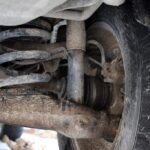 Common Suspension Problems
Owners frequently cite minimal unscheduled repairs, with average annual maintenance costs around $400 to $500, which is significantly lower than competitors such as the Ford Escape or Honda CR-V non-hybrid versions. The RAV4 Hybrid also benefits from Toyota's decades of hybrid engineering, leading to fewer battery or electric motor issues compared to newer entrants in the segment.
Key Reliability Factors for SUVs with Fewest Mechanical Issues
Powertrain Design and Engineering Choices
The foundation of low recuring issues lies in the powertrain configuration. SUVs with fewer reported problems often use naturally aspirated engines paired with proven automatic transmissions rather than high-strung turbocharged units or complex dual-clutch gearboxes.
You might be interested in this content.
For example, the Toyota RAV4 Hybrid uses an Atkinson-cycle engine that operates with lower internal stress, reducing wear on pistons and valves. Similarly, the Mazda CX-5's Skyactiv-G engine lacks turbochargers, minimizing boost-related failures. These designs contribute to fewer oil leaks, timing chain issues, and valve carbon deposits.
- Naturally aspirated engines avoid turbocharger failures like wastegate sticking or oil seal leaks.
- Proven automatic transmissions (e.g., 6-speed or e-CVT) show fewer shifting problems than CVTs from some rivals.
- Hybrid systems with planetary gearsets reduce mechanical friction and part failures over 100,000+ miles.
Model-Specific Reports from Consumer Surveys
Top-Ranked SUVs for Recurring Issue Frequency
Consumer report data over the last five years highlights three models with the lowest rates of repeated mechanical complaints: the Toyota RAV4 Hybrid, the Honda CR-V (non-turbo), and the Mazda CX-5. The RAV4 Hybrid leads with a reliability score of 87 out of 100, followed by the CR-V at 84 and CX-5 at 82. Common issues like coolant leaks or starter motor failures are rare in these models. The RAV4 Hybrid, for instance, shows less than 5% of owners reporting engine or transmission repairs within the first five years, versus 15-20% for models like the Nissan Rogue or Jeep Cherokee. This is attributed to conservative engineering and rigorous quality testing.
- RAV4 Hybrid owners report fewer than 2 major repairs per 100 vehicles annually after three years.
- Honda CR-V non-turbo versions have zero reports of oil dilution problems, a known issue in Honda's 1.5L turbo.
- Mazda CX-5 shows no pattern of recurring electrical problems, unlike some rivals with infotainment glitches.
- Comparative Analysis of Long-Term Maintenance Costs
- Financial Impact of Fewer Recurring Issues
- Fewer mechanical failures translate directly into lower ownership costs. For the Toyota RAV4 Hybrid, the five-year average maintenance and repair cost is $1,200, while the Honda CR-V sits at $1,500 and the Mazda CX-5 at $1,400. These figures include routine services like oil changes and brake pad replacements, but exclude incidentals like tires. By contrast, SUVs with frequent issues, such as the Ford Explorer (timing chain failures) or Volkswagen Tiguan (water pump leaks), average $2,500-$3,500 over the same period. Consumer savings come from avoiding major repairs like transmission overhauls ($4,000-$6,000) or engine replacements ($5,000-$8,000), which are rare in the top three models.
- RAV4 Hybrid requires only synthetic oil changes every 10,000 miles, reducing service visits.
- Honda CR-V non-turbo has no fuel injector or turbo maintenance costs over 150,00 miles.
- Mazda CX-5's non-interference engine design avoids major damage if timing belt fails, a rare event.
- Frequently Asked Questions
- What is the most common problem with SUV transmissions?
- Transmission issues, particularly with continuously variable transmissions (CVTs) in newer models, are frequent. Symptoms include hesitation when accelerating, rough shifting, or a whining noise. This often stems from overheating or low transmission fluid. Regular fluid changes and avoiding heavy towing can reduce risks, but some models have known defects that require costly repairs or replacements.
- Why do SUVs often have problems with their brakes?
- Brake wear is accelerated in SUVs due to their heavier weight and larger size, especially when used for towing or off-roading. Common issues include warped rotors from heat buildup, leading to vibrations when braking, and premature pad wear. Drivers may notice squeaking or a soft brake pedal. Upgrading to heavy-duty pads and rotors helps, but regular inspections are necessary.
- What are common electrical problems in modern SUVs?
- Electrical glitches in SUVs often involve infotainment systems flickering or freezing, faulty sensors for parking assist or tire pressure monitoring, and battery drain from excessive electronics. These issues can be traced to software bugs, loose wiring, or malfunctioning modules. Dealership updates and ensuring the battery is in good condition can resolve many problems, though some require professional diagnosis.
- How does the suspension system fail in SUVs?
- SUVs experience suspension failures like worn-out struts, broken coil springs, or leaking shock absorbers due to constant heavy loads and rough terrain. This causes a bumpy ride, uneven tire wear, and poor handling. Air suspension systems in luxury models are especially prone to compressor or air bag leaks. Regular checks and replacing components with heavy-duty parts can extend suspension life.
Leave a Reply