
Nissan Rogue Won’t Start but Battery Is Good: 11 Common Causes and How to Fix Them

Your Nissan Rogue won't start, but the battery seems perfectly fine. The dashboard lights illuminate, the radio works, and perhaps the headlights are bright. Yet, when you press the start button or turn the ignition key, the engine refuses to start.
This can be frustrating, especially when you need your vehicle for work, errands, or a long journey.
Fortunately, a Nissan Rogue that won't start despite having a good battery doesn't necessarily have a serious engine problem. In many cases, the issue involves a faulty starter motor, weak key fob battery, brake pedal switch, loose electrical connection, or malfunctioning sensor.
However, identifying the actual cause is important before replacing expensive components.
In this guide, we'll explain why your Nissan Rogue won't start even when the battery is good, how to recognize different starting problems, which components to check first, and what you can do to get your SUV running again.
- Why Won't My Nissan Rogue Start if the Battery Is Good?
- Nissan Rogue Won't Start: Identify the Symptoms First
- 1. Faulty Starter Motor
- 2. Nissan Rogue Key Fob Battery Is Dead
- 3. Faulty Brake Pedal Switch
- 4. Nissan Rogue Not Recognizing Park or Neutral
- 5. Loose or Corroded Battery Connections
- 6. Blown Fuse or Faulty Starter Relay
- 7. Push-Button Ignition System Problems
- 8. Nissan Rogue Immobilizer System Malfunction
- 9. Faulty Fuel Pump or Fuel Delivery Problem
- 10. Bad Crankshaft or Camshaft Position Sensor
- 11. Ignition System or Engine Management Problems
- Nissan Rogue Won't Start but Lights Come On
- Nissan Rogue Won't Start and Makes a Clicking Noise
- Nissan Rogue Cranks but Won't Start
- Nissan Rogue Push Button Start Not Working
- How to Fix a Nissan Rogue That Won't Start: Step-by-Step Troubleshooting
- Step 1: Confirm Battery Condition
- Step 2: Identify Whether the Engine Cranks
- Step 3: Check the Intelligent Key
- Step 4: Check the Brake Pedal Signal
- Step 5: Verify the Transmission Position
- Step 6: Inspect Fuses and Electrical Connections
- Step 7: Scan for Diagnostic Trouble Codes
- Step 8: Test the Starter or Engine Systems
- Nissan Rogue Starting Problems by Model Year
- Can a Nissan Rogue Have a Good Battery and Still Need a Jump Start?
- When Should You Call a Mechanic?
- How to Prevent Nissan Rogue Starting Problems
- Frequently Asked Questions
- 1. Why Won't My Nissan Rogue Start Even Though the Battery Is Fully Charged?
- 2. Why Does My Nissan Rogue Click but Not Start?
- 3. Can a Bad Brake Switch Stop a Nissan Rogue From Starting?
- 4. Why Does My Nissan Rogue Crank but Not Start?
- 5. How Do I Start My Nissan Rogue if the Key Fob Battery Is Dead?
- Conclusion: What to Do When Your Nissan Rogue Won't Start but the Battery Is Good
Why Won't My Nissan Rogue Start if the Battery Is Good?
If your Nissan Rogue battery has been tested and confirmed to be in good condition, several other components could prevent the engine from starting.
The most common causes include:
- Faulty starter motor or starter solenoid.
- Dead or weak Intelligent Key battery.
- Malfunctioning brake pedal switch.
- Transmission not recognizing Park or Neutral.
- Loose or corroded battery terminals.
- Blown starter fuse or faulty relay.
- Push-button ignition or electronic control problems.
- Nissan immobilizer system malfunction.
- Faulty fuel pump or fuel delivery problems.
- Bad crankshaft or camshaft position sensor.
- Ignition system or engine management faults.
Not every problem produces the same symptoms.
For example, a defective starter motor may prevent the engine from turning over entirely, while a failing fuel pump can allow the engine to crank normally without actually starting.
The first step is determining whether your Nissan Rogue is not cranking or is cranking but failing to start.
Nissan Rogue Won't Start: Identify the Symptoms First
Before attempting repairs, pay attention to what happens when you try to start your vehicle.
Different sounds and dashboard messages can help narrow down the problem.
| Symptom | Possible Causes |
|---|---|
| Dashboard lights work, but engine won't crank | Starter motor, brake switch, ignition control |
| Single clicking sound | Starter solenoid, cables, battery under load |
| Rapid clicking sound | Weak battery under load, poor connections |
| Engine cranks but won't start | Fuel pump, ignition system, engine sensors |
| Key not detected warning | Key fob battery, Intelligent Key system |
| Vehicle starts intermittently | Starter, relay, electrical connection |
| Engine starts and immediately stalls | Fuel delivery, sensors, engine management |
| No dashboard lights or electrical response | Main power supply, battery cables, fuses |
This distinction matters because replacing the starter won't solve a fuel delivery problem, and replacing a fuel pump won't fix a defective brake switch.
Let's examine each possible cause.
1. Faulty Starter Motor
A bad starter motor is one of the first components worth checking when your Nissan Rogue won't start but the battery is good.
The starter motor turns the engine during the starting process. When it fails, the battery may still power the headlights, dashboard, radio, and other electrical systems.
However, the engine won't crank.
Symptoms of a Bad Nissan Rogue Starter
Common warning signs include:
- A single clicking sound when attempting to start.
- Dashboard lights illuminate normally.
- The engine doesn't turn over.
- Starting becomes increasingly intermittent.
- The vehicle starts after several attempts.
- The starter occasionally operates slowly or makes unusual noises.
A starter can fail because of worn internal contacts, a defective solenoid, damaged electrical connections, or mechanical wear.
How to Fix It
Start by confirming that the battery and its electrical connections are functioning correctly.
If those components pass testing, a technician can check whether the starter receives the proper electrical supply and activation signal.
If the starter receives the correct voltage but doesn't operate, replacement may be necessary.
However, don't replace the starter solely because you hear a clicking sound. A weak battery under load or excessive resistance in a cable can produce similar symptoms.
2. Nissan Rogue Key Fob Battery Is Dead
Many Nissan Rogue models use Nissan's Intelligent Key system and push-button ignition.
This system must recognize an authorized key before allowing the engine to start.
If the key fob battery becomes weak or completely discharged, the vehicle may not recognize the key normally.
You might see messages such as:
- No Key Detected.
- Key Battery Low.
- Key System Error.
The exact wording varies by model year.
Fortunately, a dead key fob battery doesn't always mean you're stranded.
How to Start a Nissan Rogue With a Dead Key Fob Battery
On many push-button Nissan Rogue models, you can use an emergency starting procedure.
You might be interested in this content. Why Is My Car Shaking While Driving?
- Sit in the driver's seat with the Intelligent Key.
- Make sure the vehicle is in Park.
- Press and hold the brake pedal.
- Touch the Intelligent Key directly against the engine START/STOP button.
- Follow the vehicle's prompt or chime and press the ignition button as directed in the owner's manual.
The exact sequence can vary by model year.
If the engine starts using this procedure, the key fob battery may need replacement.
Also, try your spare key if one is available.
What if the Emergency Procedure Doesn't Work?
If the Rogue still won't start, possible explanations include a defective key fob, an Intelligent Key receiver problem, interference, or an issue with the vehicle's security system.
A diagnostic scan may be necessary to distinguish between these possibilities.
3. Faulty Brake Pedal Switch
A defective brake pedal switch is another possible reason your Nissan Rogue push-button start isn't working.
On vehicles equipped with push-button ignition, the electronic starting system must recognize that you're pressing the brake pedal.
If the brake switch doesn't send the correct signal, the vehicle may refuse to crank even though the battery is fully charged.
Signs of a Bad Brake Switch
You may notice:
- The dashboard turns on, but the engine won't start.
- Pressing the START button activates accessory mode.
- The vehicle repeatedly asks you to press the brake pedal.
- The brake lights don't illuminate.
- The vehicle has intermittent starting problems.
Keep in mind that some brake switches contain separate electrical circuits. Working brake lights don't necessarily prove that every brake switch signal is functioning correctly.
How to Check the Brake Switch
Ask someone to stand safely behind the vehicle while you press the brake pedal with the ignition in the appropriate position.
Check whether the brake lights illuminate.
If they don't, inspect the brake light circuit and have the brake switch tested.
A technician can also examine live brake pedal data using compatible diagnostic equipment.
If the switch is defective, replacing it may restore normal starting operation.
4. Nissan Rogue Not Recognizing Park or Neutral
Your Nissan Rogue uses transmission-related safety controls to prevent the engine from starting when the transmission is in an inappropriate gear.
If the vehicle doesn't correctly recognize Park or Neutral, the starting system may not allow the starter to operate.
This can happen because of a faulty transmission range sensor, shift position input, wiring issue, or electronic shifter malfunction.
Common Symptoms
- The vehicle won't start in Park.
- The displayed gear position doesn't match the selected position.
- A transmission or shift system warning appears.
- Starting works intermittently.
- The vehicle may start in Neutral but not Park.
What You Can Try
With the vehicle stationary on level ground:
- Apply the parking brake.
- Keep your foot firmly on the brake pedal.
- Confirm the transmission is in Park.
- Try starting the engine.
- If your specific model permits starting in Neutral, select Neutral according to the owner's manual and try again.
If the vehicle starts in Neutral but not Park, this may indicate a gear position recognition problem.
However, it doesn't automatically prove that the transmission range sensor needs replacement.
A professional diagnosis should confirm the actual fault.
5. Loose or Corroded Battery Connections
Even when the battery itself is good, the engine may not start if electricity cannot flow properly through the battery cables.
This is particularly important because a multimeter can display normal battery voltage while a poor connection prevents sufficient current from reaching the starter.
What Causes the Problem?
Possible causes include:
- Loose positive battery terminal.
- Corroded negative battery connection.
- Damaged battery cable.
- Poor engine ground connection.
- Corrosion hidden inside a cable.
- Loose electrical connection at the starter.
These problems can create high electrical resistance.
As a result, small electrical accessories may work normally while the starter doesn't receive enough current.
How to Check Battery Connections
Turn the vehicle off and visually inspect both battery terminals.
Look for white, green, or blue corrosion, damaged insulation, loose clamps, or obvious cable deterioration.
If a connection requires cleaning or tightening, follow the correct battery disconnection procedure for your model.
You might be interested in this content.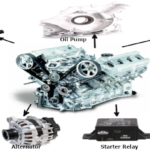 Common Engine Problems and Their Causes
Avoid allowing metal tools to bridge the positive terminal and grounded vehicle components.
A professional voltage-drop test during a starting attempt can identify excessive resistance that a visual inspection might miss.
6. Blown Fuse or Faulty Starter Relay
The Nissan Rogue starting system depends on several electrical circuits.
A damaged fuse, defective relay, or electrical power distribution problem can interrupt the starting sequence.
Depending on the model year, certain starting-related functions may be controlled through integrated electrical modules rather than a simple standalone relay.
Symptoms of an Electrical Starting Problem
You might notice:
- No cranking when pressing START.
- Dashboard lights remain on.
- Starting works intermittently.
- No obvious starter engagement sound.
- Other electrical functions occasionally malfunction.
How to Diagnose It
Check the fuse information for your specific Nissan Rogue model year.
Inspect relevant starting, ignition, and engine control circuits.
Replace a blown fuse only with one of the same specified rating.
If a replacement fuse blows again, stop replacing it repeatedly. An underlying electrical problem may require diagnosis.
For relay or module-related faults, technicians can test power, ground, and control signals before replacing components.
Some Nissan Rogue starting problems originate in the electronic ignition system.
Unlike vehicles that rely exclusively on a traditional mechanical ignition switch, modern push-button models communicate with several electronic control modules before authorizing the engine to start.
The system may need to verify:
- A recognized Intelligent Key.
- Correct brake pedal input.
- An acceptable transmission position.
- Proper communication between control modules.
- Availability of electrical power.
A malfunction in one of these areas can prevent starting.
Warning Signs
Potential symptoms include the ignition switching between OFF, ACC, and ON without cranking, unusual dashboard messages, or intermittent button response.
However, the push button itself isn't necessarily defective.
The underlying problem could involve wiring, a control module, the Intelligent Key system, or another required input.
Recommended Fix
Have the vehicle scanned with diagnostic equipment capable of communicating with Nissan body and security systems.
A basic engine-code reader may not identify these faults.
8. Nissan Rogue Immobilizer System Malfunction
The Nissan Vehicle Immobilizer System is designed to prevent unauthorized engine operation.
If it cannot recognize the appropriate key or authorize starting, the engine may not start even when the battery is healthy.
Signs of an Immobilizer Problem
Possible indicators include:
- Security-related dashboard warnings.
- Key recognition errors.
- Starting failure with one particular key.
- The engine cranking without starting on some systems.
- The starting system refusing to operate.
The exact behavior depends on the vehicle's generation and security configuration.
How to Fix an Immobilizer Problem
First, try the spare key.
If the spare key works normally, the original key may be defective or require attention.
If neither key works, a technician can inspect the security system, key recognition status, and stored diagnostic trouble codes.
Avoid attempting to bypass the immobilizer, since doing so can introduce additional security and electrical problems.
9. Faulty Fuel Pump or Fuel Delivery Problem
What if your Nissan Rogue engine cranks normally but won't actually start?
In that situation, the starter motor is doing its job, making a fuel delivery issue one possibility.
You might be interested in this content. Why Does My Check Engine Light Come On?
The fuel system must supply the correct amount of fuel at the pressure required by the engine.
If it cannot, the engine may rotate normally without starting.
Symptoms of Fuel System Problems
Common signs include:
- Engine cranks normally but doesn't start.
- Extended cranking before the engine starts.
- Engine stalls unexpectedly.
- Rough operation or loss of power before the failure.
- Starting problems that become more frequent.
Possible causes include a failing fuel pump, fuel pressure control issue, electrical supply problem, or malfunctioning fuel system component.
How to Diagnose It
Start by verifying the fuel level rather than relying entirely on the dashboard gauge.
A technician can then examine fuel pressure, fuel pump operation, and relevant diagnostic data.
Don't assume the fuel pump has failed simply because you cannot hear it running.
Fuel pump operating strategies vary, and the absence of an audible priming sound doesn't confirm a defective pump.
Because modern Rogue engines use pressurized fuel systems, pressure testing and component replacement should follow the appropriate service procedures.
10. Bad Crankshaft or Camshaft Position Sensor
Crankshaft and camshaft position sensors help the engine control module determine engine speed and position.
The engine management system uses this information to coordinate ignition and fuel injection.
If a critical position signal is missing or incorrect, the engine may crank without starting.
Symptoms of a Faulty Engine Position Sensor
Possible symptoms include:
- Engine cranks but refuses to start.
- Engine stalls while driving.
- Intermittent starting difficulty.
- Check Engine light.
- Rough running before the no-start condition.
Depending on the fault, the engine control module may store diagnostic codes related to crankshaft or camshaft position signals.
Examples can include P0335 or P0340, although these codes aren't exclusive to Nissan Rogue vehicles and don't automatically prove that a sensor is defective.
How to Fix It
A mechanic can evaluate engine speed data while cranking and inspect the appropriate sensor circuits.
Wiring damage, connector problems, and mechanical timing issues can sometimes produce symptoms similar to a failed sensor.
Replacement should follow confirmed diagnosis rather than guesswork.
11. Ignition System or Engine Management Problems
If your Nissan Rogue cranks but won't start and the fuel system appears to function correctly, ignition or engine control problems may be responsible.
Gasoline engines require properly timed ignition, suitable fuel delivery, sufficient compression, and correct engine control information to run.
Potential causes include:
- Ignition coil malfunction.
- Damaged wiring or connectors.
- Engine control module power supply problems.
- Incorrect sensor signals.
- Engine timing or compression problems.
An individual failed ignition coil often causes misfires rather than a complete no-start condition. A total no-start generally requires a fault affecting enough of the ignition or engine management system to prevent combustion.
What Should You Do?
Use an appropriate diagnostic scanner to check for stored and pending trouble codes.
If there are no useful codes, additional tests may be necessary.
These can include checking ignition operation, fuel delivery, sensor data, and mechanical engine condition.
Nissan Rogue Won't Start but Lights Come On
One particularly confusing situation occurs when every dashboard light illuminates normally, but the engine doesn't start.
Many drivers assume this means the battery must be good.
Unfortunately, that isn't always true.
The lights and infotainment system require considerably less electrical current than the starter motor.
A battery can still power small accessories while failing to deliver sufficient current for starting.
You might be interested in this content. Nissan Rogue Locked with Key Inside: How to Unlock Your SUV Safely
How to Confirm the Battery Is Actually Good
A battery voltage test is a useful starting point.
Typical approximate readings for a rested 12-volt lead-acid battery include:
| Battery Voltage | General Interpretation |
|---|---|
| 12.6–12.8 V | Typically fully charged |
| Around 12.4 V | Partially discharged |
| Around 12.2 V | Significantly discharged |
| Below 12.0 V | Low state of charge |
| Around 9.6 V during cranking | Common reference threshold in standardized load testing |
These values are general guidelines, not a complete battery diagnosis. Temperature, battery design, test conditions, and charging history affect the readings.
A proper battery load or conductance test provides more useful information than resting voltage alone.
If the battery passes, investigate its cables, starter circuit, and starting authorization inputs.
Nissan Rogue Won't Start and Makes a Clicking Noise
Clicking noises are among the most helpful symptoms when diagnosing a starting problem.
However, the type of clicking matters.
Single Click but No Start
A single click may indicate that the starter solenoid is attempting to engage.
Potential causes include:
- Defective starter motor.
- Faulty starter solenoid.
- Insufficient current reaching the starter.
- High resistance in battery cables.
- Mechanical resistance preventing engine rotation.
A technician can check the starter's voltage supply and control circuit before deciding whether the starter requires replacement.
Rapid Clicking but No Start
Rapid clicking commonly occurs when voltage falls too low to keep the starter solenoid engaged.
Possible causes include a discharged battery, internal battery failure, or poor electrical connections.
Even if the headlights are bright, the battery should still be tested under load.
Nissan Rogue Cranks but Won't Start
A Nissan Rogue that cranks normally but refuses to fire requires a different approach from a vehicle that doesn't crank at all.
If you hear the engine turning over at its usual speed, the starter is at least functioning well enough to rotate the engine.
In this situation, focus on:
- Fuel delivery and fuel pressure.
- Engine position sensor signals.
- Ignition system operation.
- Immobilizer authorization, where applicable.
- Engine control module power and communication.
- Mechanical engine condition.
A check engine light or stored diagnostic trouble code can provide valuable clues.
However, some no-start conditions won't immediately generate a specific code.
Professional testing may be necessary to distinguish between missing fuel, missing ignition, and other engine faults.
If pressing the START/STOP button doesn't crank the engine, it's worth performing several basic checks before arranging expensive repairs.
First, confirm the transmission is in Park.
Next, press the brake pedal firmly and watch for any dashboard instructions.
Try the emergency Intelligent Key starting procedure described in your owner's manual.
If available, test the spare key.
Also, look for warnings involving the key, brake system, transmission position, or ignition.
If the button changes the vehicle into accessory mode but the engine doesn't crank, a missing brake pedal input or another starting authorization problem may be involved.
For newer Nissan Rogue models, a scan of the body control and Intelligent Key systems may provide more information than a basic engine diagnostic scan.
How to Fix a Nissan Rogue That Won't Start: Step-by-Step Troubleshooting
If your Nissan Rogue won't start but the battery is good, we recommend following a logical troubleshooting sequence.
This reduces unnecessary parts replacement and helps identify simple problems first.
Step 1: Confirm Battery Condition
Even if the battery is relatively new, have it tested under load.
You might be interested in this content.Nissan Rogue Not Starting? Common Causes, Troubleshooting, and Easy FixesCheck the terminals and inspect visible cables for damage.
A new battery can still be discharged, defective, or poorly connected.
Step 2: Identify Whether the Engine Cranks
Attempt to start the vehicle normally.
Listen carefully.
Does the starter engage? Is there a single click, repeated clicking, normal cranking, or complete silence?
This observation determines which system to investigate next.
Step 3: Check the Intelligent Key
If your Rogue has push-button ignition, try the emergency start procedure.
Test the spare key if available.
If the engine starts using one key but not the other, focus on the key-related problem before investigating major engine components.
Step 4: Check the Brake Pedal Signal
Confirm that the brake pedal is firmly depressed.
Look for the vehicle's start-related dashboard prompts.
Check the brake lights, while remembering that functioning lights don't eliminate every possible brake switch fault.
Step 5: Verify the Transmission Position
Make sure the vehicle recognizes Park correctly.
If your owner's manual allows starting in Neutral, this can help identify an intermittent Park recognition problem.
Never attempt these checks with the vehicle able to roll.
Step 6: Inspect Fuses and Electrical Connections
Check the applicable fuse information for your model year.
Inspect accessible electrical connections for looseness, corrosion, or damage.
Don't bypass safety interlocks or install oversized fuses.
Step 7: Scan for Diagnostic Trouble Codes
Use a diagnostic scanner capable of reading the systems relevant to the symptoms.
An engine-only scanner may be insufficient when the problem involves the key, brake switch, transmission position, or body control module.
Step 8: Test the Starter or Engine Systems
If the engine doesn't crank, a technician should examine the starter supply, ground circuit, and activation command.
If the engine cranks normally, further diagnosis should focus on fuel delivery, ignition, sensor signals, and engine condition.
This approach is more reliable than replacing components based on a single symptom.
Nissan Rogue Starting Problems by Model Year
Although many Nissan Rogue generations share similar starting-system principles, their mechanical and electronic designs differ.
| Nissan Rogue Model Years | Areas Worth Checking |
|---|---|
| 2014–2020 | Battery cables, starter, Intelligent Key, ignition controls, transmission range input |
| 2021–2023 | Intelligent Key recognition, brake switch, electronic controls, starter circuit |
| 2024–2026 | Push-button start authorization, electronic shift position, key system, electrical modules |
These are diagnostic areas rather than confirmed defects affecting every model year.
There is no single starting problem that automatically explains every Nissan Rogue no-start condition.
The vehicle's engine configuration, equipment, model year, and exact symptoms should guide the diagnosis.
For example, an older Rogue equipped with a 2.5-liter engine may require different engine sensor testing procedures than a newer Rogue with a turbocharged engine.
Consult the correct service information for your particular vehicle.
Can a Nissan Rogue Have a Good Battery and Still Need a Jump Start?
Yes.
You might be interested in this content. Mazda 3 Not Starting? Common Causes, Symptoms, and How to Fix It
A battery might show a normal resting voltage but fail to deliver sufficient current under the heavy load required for starting.
In other situations, a poor connection or battery cable problem can create voltage loss.
If the vehicle starts with an external jump source, that suggests an electrical supply problem may be present, but it doesn't conclusively establish that the battery itself is defective.
A jump start also won't normally solve problems such as a failed fuel pump, missing engine sensor signals, or a malfunctioning immobilizer.
Always follow the jump-starting procedure specified for your Nissan Rogue.
If you're uncertain about the procedure or the battery appears damaged, seek professional assistance.
When Should You Call a Mechanic?
Some Nissan Rogue starting problems can be resolved with a key fob battery replacement or a simple electrical connection repair.
Others require specialized diagnostic equipment.
Professional assistance is recommended when:
- The starter doesn't operate despite verified battery power.
- The engine cranks but repeatedly fails to start.
- Security or key system warnings persist.
- Electrical fuses repeatedly blow.
- The vehicle stalls unexpectedly while driving.
- You notice burning smells, smoke, or overheating.
- Starting problems return after temporary fixes.
If your Rogue stalls in traffic or shows symptoms suggesting a serious electrical or engine problem, avoid driving it until the cause is identified.
A tow to a qualified repair facility may be safer than repeated starting attempts.
How to Prevent Nissan Rogue Starting Problems
Not every starting failure can be prevented, but regular maintenance helps reduce the risk of unexpected breakdowns.
Keep the Battery and Terminals in Good Condition
Inspect the battery periodically and check for loose or corroded connections.
Battery performance can deteriorate with age, temperature extremes, and repeated short journeys.
Replace Weak Key Fob Batteries
If your Nissan Rogue displays a key battery warning, replace the fob battery before it becomes completely discharged.
Keeping a functioning spare key is also useful.
Pay Attention to Intermittent Starting Problems
If your Rogue occasionally requires multiple attempts to start, don't ignore it.
Intermittent problems can develop into complete failures.
Early testing may reveal a faulty starter connection, switch, or electronic component.
Maintain the Vehicle According to Schedule
Follow Nissan's recommended maintenance procedures for your specific model.
Routine inspections can identify electrical and engine-related problems before they become more serious.
Address Dashboard Warning Messages
Key system, engine malfunction, transmission, and other warning messages may provide important diagnostic information.
Record the exact message and the conditions under which it appears.
This information can help a mechanic identify the problem more quickly.
Frequently Asked Questions
1. Why Won't My Nissan Rogue Start Even Though the Battery Is Fully Charged?
A fully charged battery doesn't guarantee that the engine will start. Possible causes include a faulty starter motor, defective brake pedal switch, key recognition problem, transmission range sensor issue, or damaged electrical connection. If the engine cranks normally, fuel delivery or engine management problems become more likely.
2. Why Does My Nissan Rogue Click but Not Start?
A clicking sound can indicate a starter problem, insufficient electrical current, or excessive resistance in the battery cables. Rapid clicking often points toward low voltage under load, while a single click may involve the starter solenoid or motor. Proper testing is required to identify the cause.
3. Can a Bad Brake Switch Stop a Nissan Rogue From Starting?
Yes. On push-button Nissan Rogue models, the starting system normally requires confirmation that the brake pedal is depressed. If the brake switch doesn't provide the correct signal, the vehicle may refuse to crank despite having a healthy battery.
4. Why Does My Nissan Rogue Crank but Not Start?
If the engine turns over normally but doesn't start, possible causes include inadequate fuel delivery, faulty engine position sensors, ignition system problems, immobilizer faults, or other engine management issues. A diagnostic scan and appropriate mechanical testing can help determine the cause.
5. How Do I Start My Nissan Rogue if the Key Fob Battery Is Dead?
Many Nissan Rogue models with push-button ignition allow emergency starting by holding the Intelligent Key against the START/STOP button while following the vehicle's specified brake pedal and ignition procedure. The exact steps vary by model year, so consult the owner's manual. If this works, replace the key fob battery.
Conclusion: What to Do When Your Nissan Rogue Won't Start but the Battery Is Good
If your Nissan Rogue won't start but the battery is good, don't immediately assume the engine or starter needs replacement.
You might be interested in this content.Nissan Rogue Key Fob Not Working? Causes, Troubleshooting, and Easy FixesSeveral components can prevent the vehicle from starting, including the Intelligent Key system, brake pedal switch, transmission position sensor, battery cables, starter motor, and engine management system.
The most useful first step is determining whether the engine fails to crank or cranks normally without starting.
If the engine doesn't crank, investigate the battery under load, electrical connections, starting authorization, and starter circuit.
If the engine cranks but doesn't fire, focus on fuel delivery, ignition, sensors, and other engine-related problems.
In many cases, a systematic diagnosis can identify the actual fault without unnecessary repairs.
By checking the simplest possibilities first and using professional diagnostic testing when necessary, you can get your Nissan Rogue back on the road while avoiding the expense of replacing parts that aren't defective.
Leave a Reply