
Can Nissan Rogue Drive in Snow? AWD Performance, Snow Mode, and Winter Driving Guide

Yes, the Nissan Rogue can drive in snow, and it can be a capable SUV for winter conditions, particularly when equipped with Intelligent All-Wheel Drive (AWD) and suitable winter tires. Its relatively generous ground clearance, traction control systems, and available Snow Mode make it a practical choice for drivers who regularly encounter snowy roads.
However, not every Nissan Rogue performs equally in winter. Front-wheel-drive (FWD) models can handle light to moderate snowfall with the right tires, while AWD versions generally provide better traction when accelerating, climbing slippery hills, and navigating snow-covered roads.
If we're considering a Nissan Rogue for winter driving, we need to understand how its drivetrain works, which features help in slippery conditions, and where its capabilities end.
In this guide, we'll explore everything about driving a Nissan Rogue in snow, including AWD versus FWD performance, Snow Mode, ground clearance, winter tires, and practical driving tips.
- Is the Nissan Rogue Good in Snow?
- Nissan Rogue AWD vs FWD in Snow
- Does the Nissan Rogue Have Snow Mode?
- How Much Snow Can a Nissan Rogue Drive Through?
- Nissan Rogue Ground Clearance for Snow
- Does the Nissan Rogue Need Snow Tires?
- Is the Nissan Rogue Safe to Drive on Ice?
- How to Drive a Nissan Rogue in Snow
- Can a Nissan Rogue Drive Uphill in Snow?
- Can a Nissan Rogue Drive Downhill in Snow?
- Can a Nissan Rogue Get Stuck in Snow?
- Nissan Rogue Snow Performance by Model Year
- Is the Nissan Rogue Rock Creek Better in Snow?
- Nissan Rogue vs Other SUVs in Snow
- Advantages and Disadvantages of the Nissan Rogue in Snow
- Is the Nissan Rogue a Good SUV for Canadian Winters?
- Is the Nissan Rogue Worth Buying for Snowy Areas?
- Frequently Asked Questions
- Conclusion: Can Nissan Rogue Drive in Snow?
Is the Nissan Rogue Good in Snow?
The Nissan Rogue is generally a good SUV for driving in snow, especially for everyday winter commuting. It's designed as a compact crossover rather than a dedicated off-road vehicle, but it includes several features that can improve traction and control during cold weather.
The Rogue's winter performance depends primarily on four factors:
- Drivetrain: AWD models can distribute engine power between the front and rear wheels to improve traction.
- Tires: Winter tires provide significantly better grip on snow and ice than ordinary all-season tires.
- Ground clearance: The Rogue has enough clearance for many typical snowy roads, although deep snow remains a limitation.
- Driving conditions: Packed snow, fresh powder, slush, and ice create very different challenges.
For drivers living in places where roads are regularly cleared and salted, a Nissan Rogue can be a sensible winter vehicle.
Its AWD system can be particularly useful when pulling away from an intersection, driving up a snowy driveway, or accelerating on a slippery road.
Nevertheless, AWD does not eliminate the possibility of skidding. The vehicle still depends on tire grip for braking and turning.
How Does the Nissan Rogue Handle Snow-Covered Roads?
The Rogue generally feels most capable on plowed roads with light snow, packed snow, or slush.
With appropriate tires, it can manage common winter situations such as residential streets, snowy parking lots, and moderately slippery highways.
On AWD models, the intelligent drivetrain responds to changing traction conditions by adjusting how power is distributed.
This helps reduce wheelspin when the front tires begin to lose grip.
However, drivers should not confuse improved acceleration traction with unlimited winter capability. On icy roads, stopping distances can increase dramatically, regardless of whether the vehicle has AWD.
Nissan Rogue AWD vs FWD in Snow
One of the most important decisions when choosing a Nissan Rogue for winter use is whether to buy a front-wheel-drive or all-wheel-drive version.
Both versions can operate in snowy conditions, but their capabilities differ.
| Winter Driving Feature | Nissan Rogue FWD | Nissan Rogue AWD |
|---|---|---|
| Light snow | Good with suitable tires | Very good with suitable tires |
| Moderate snow | Capable with limitations | Better acceleration traction |
| Deep snow | Limited | More capable, but still limited |
| Snow-covered hills | More prone to wheelspin | Generally better |
| Icy roads | Tire-dependent | Tire-dependent |
| Dedicated Snow Mode | Not available on recent FWD models | Available on recent AWD models |
| Purchase cost | Usually lower | Usually higher |
| Fuel economy | Generally better | Slightly lower |
| Best application | Occasional winter driving | Frequent snowy conditions |
Can a Nissan Rogue FWD Drive in Snow?
Yes, a front-wheel-drive Nissan Rogue can drive in snow.
Because its engine and transmission place much of the vehicle's weight over the front wheels, an FWD Rogue can maintain reasonable traction in light winter conditions.
With high-quality winter tires, it may perform better on slippery roads than an AWD Rogue equipped with unsuitable or badly worn tires.
However, FWD models have disadvantages when snow becomes deeper or road conditions become more challenging.
For example, climbing a steep snow-covered hill can be difficult when the front tires struggle to maintain traction.
FWD models may also have trouble pulling away from deep snow in parking spaces or driveways.
For drivers who only encounter occasional snowfall, an FWD Rogue with proper tires may be sufficient.
Is the Nissan Rogue AWD Better in Snow?
Yes, the Nissan Rogue AWD generally provides better traction than the FWD model when accelerating on snow-covered surfaces.
The available Intelligent All-Wheel Drive system automatically distributes power between the front and rear wheels when necessary.
When traction is limited, sending power to the rear wheels can help the vehicle move forward without relying exclusively on the front tires.
This becomes especially useful when:
- Starting from a stop on packed snow.
- Accelerating uphill.
- Driving through a snowy intersection.
- Leaving a slippery parking space.
- Traveling on roads with inconsistent traction.
However, AWD does not automatically provide better braking performance. Winter tires remain essential for maintaining control.
Does the Nissan Rogue Have Snow Mode?
Yes, recent Nissan Rogue models equipped with Intelligent AWD include a dedicated Snow Mode.
For example, the 2025 and 2026 conventional gasoline Rogue AWD models offer five driving modes:
- Auto
- Eco
- Sport
- Snow
- Off-Road
Snow Mode is intended to help improve traction when starting or driving on snowy and icy surfaces.
Front-wheel-drive versions do not have this same five-mode AWD system.
Older Nissan Rogue generations may have different driving modes and AWD controls, so we recommend checking the owner's manual for the specific model year.
What Does Snow Mode Do in a Nissan Rogue?
Snow Mode adjusts the vehicle's driving characteristics to better suit slippery winter surfaces.
Its purpose is to help the driver maintain traction when accelerating and traveling over snow or ice.
Depending on the model and operating conditions, these adjustments can involve how the AWD system responds and how power is managed.
Snow Mode is particularly helpful when traction changes rapidly, such as when moving between cleared pavement and snow-covered sections.
However, Snow Mode cannot create grip where the tires have almost none.
On extremely icy roads, even a vehicle using Snow Mode may slide if the driver accelerates, brakes, or turns too aggressively.
How to Turn On Snow Mode in a Nissan Rogue
For recent AWD-equipped Nissan Rogue models, activating Snow Mode is straightforward.
- Start the vehicle.
- Locate the Drive Mode Selector on the center console.
- Turn the selector toward the Snow Mode setting.
- Confirm that Snow Mode appears on the vehicle information display.
- Accelerate gently and maintain an appropriate speed for the road conditions.
The Rogue generally returns to its default Auto driving mode when the vehicle is restarted.
Snow Mode should be used for appropriate slippery conditions rather than regular dry pavement. Nissan cautions against using it on dry, hard road surfaces.
Should You Always Use Snow Mode in Winter?
No. Snow Mode is intended for snowy and icy road surfaces, not simply cold temperatures.
If the pavement is clear and dry, Auto Mode is normally the appropriate choice.
When the road becomes covered with snow or ice, selecting Snow Mode may help improve traction.
Always follow the recommendations in the owner's manual for your particular model year.
How Much Snow Can a Nissan Rogue Drive Through?
The Nissan Rogue can handle some accumulated snow, but there is no universal safe snow depth.
The amount it can manage depends on the snow's density, the condition of the road, tire selection, drivetrain, and available ground clearance.
For reference, the 2026 conventional Nissan Rogue has approximately 8.2 inches of ground clearance.
That measurement represents the distance between the ground and the vehicle's lowest specified point under the manufacturer's measurement conditions.
It does not mean the Rogue can safely drive through 8.2 inches of snow.
Wet, heavy snow can create significantly more resistance than light, powdery snow.
Additionally, snow can accumulate underneath the vehicle, reducing traction and potentially leaving it stranded.
Can a Nissan Rogue Drive Through 4 Inches of Snow?
A Nissan Rogue with suitable tires can generally manage approximately four inches of fresh snow under favorable conditions, especially with AWD.
However, this is not a guaranteed operating limit.
You might be interested in this content. Driving Safely in Canadian Winters
A relatively shallow layer of heavy snow or snow hiding ice can be more difficult than a deeper layer of dry powder.
We should also consider whether the road is level, whether the vehicle is climbing a hill, and whether there are deeper drifts.
Can a Nissan Rogue Drive Through 6 Inches of Snow?
Six inches of snow can be manageable in some situations, but the risk of becoming stuck increases.
An AWD Rogue with winter tires has an advantage over an FWD version, particularly when starting from a stop.
Nevertheless, snow depth alone does not determine whether driving is safe.
If the snow is wet, compacted, or deeper in certain sections, the Rogue may struggle to maintain momentum.
Unplowed roads should be approached cautiously, and drivers should avoid entering deep snow without knowing the road conditions underneath.
Can a Nissan Rogue Drive Through 12 Inches of Snow?
We would not recommend attempting to drive a standard Nissan Rogue through 12 inches of unplowed snow.
This exceeds the ground clearance of most conventional Rogue configurations and creates a substantial risk of getting stuck.
Deep snow can also hide road obstacles, drainage ditches, or uneven terrain.
Even with AWD, the Rogue is not designed to replace a dedicated off-road vehicle with greater ground clearance and specialized equipment.
Nissan Rogue Ground Clearance for Snow
Ground clearance plays an important role in winter driving because it determines how much space exists between the road and the underside of the vehicle.
The Nissan Rogue offers more clearance than many traditional sedans, making it useful when traveling over snow-covered roads.
For the 2026 conventional gasoline Rogue, Nissan specifies approximately 8.2 inches of ground clearance.
This can be helpful when driving over:
- Light snow accumulation.
- Small snow ridges.
- Uneven residential streets.
- Snow-covered driveways.
- Moderately rutted winter roads.
However, clearance alone does not determine snow performance.
A vehicle with greater ground clearance can still become stuck if its tires lack traction.
Similarly, AWD does not prevent the vehicle's underside from contacting deep, compacted snow.
Does the Nissan Rogue Need Snow Tires?
Winter tires are one of the most effective improvements we can make to a Nissan Rogue used in snowy conditions.
Even though AWD improves traction when accelerating, winter tires help with acceleration, braking, and cornering.
This is important because stopping and steering are often the biggest challenges in winter driving.
All-Season Tires vs Winter Tires
Many Nissan Rogue models come equipped with all-season tires.
These tires are designed to work across a broad range of road conditions, including dry pavement, rain, and some light snow.
However, they are not necessarily optimized for freezing temperatures, packed snow, or ice.
Dedicated winter tires use rubber compounds designed to remain more flexible in cold weather.
They also feature tread patterns engineered to provide better grip on winter surfaces.
| Tire Type | Light Snow | Heavy Snow | Ice | Cold-Weather Performance |
|---|---|---|---|---|
| Summer tires | Poor | Poor | Poor | Poor |
| Conventional all-season tires | Fair | Limited | Limited | Moderate |
| Three-peak-rated all-weather tires | Good | Good | Variable | Good |
| Dedicated winter tires | Excellent | Very good | Usually best among these options | Excellent |
Actual performance varies significantly between tire models, temperatures, and road conditions.
For regions with frequent snowfall and freezing temperatures, dedicated winter tires are generally the best option.
Are All-Weather Tires Good for a Nissan Rogue?
All-weather tires can be an attractive alternative for drivers who experience winter conditions but prefer not to change tires every season.
We recommend looking for tires carrying the Three-Peak Mountain Snowflake symbol, which indicates that the tire meets a defined severe-snow traction performance standard.
They can provide a useful compromise between year-round convenience and winter traction.
However, dedicated winter tires remain preferable for consistently icy roads and severe winter weather.
Should You Install Winter Tires on All Four Wheels?
Yes. Winter tires should be fitted to all four wheels.
Mixing winter tires with regular all-season tires can create unpredictable handling because the front and rear axles may have different levels of grip.
For AWD Nissan Rogue models, it is particularly important that tires meet the manufacturer's requirements for matching size, construction, and other characteristics.
Incorrect tire combinations can interfere with AWD operation and potentially cause drivetrain problems.
Is the Nissan Rogue Safe to Drive on Ice?
The Nissan Rogue includes several systems that can help drivers maintain control in slippery conditions.
Depending on the model year and configuration, these include:
- Anti-lock Braking System (ABS).
- Electronic Brake-force Distribution.
- Traction Control System.
- Vehicle Dynamic Control.
- Hill Start Assist.
- Intelligent All-Wheel Drive on equipped versions.
These technologies can help manage traction and stability, but they cannot overcome the physical limitations of tire grip.
For example, ABS helps prevent wheel lockup during braking, allowing the driver to retain some steering control.
However, it does not guarantee short stopping distances on ice.
Similarly, traction control can reduce excessive wheelspin, but it cannot prevent every slide.
Can AWD Prevent Sliding on Ice?
No. AWD primarily improves the vehicle's ability to accelerate when traction is limited.
It does not make the Rogue immune to sliding during braking or cornering.
Every wheel depends on friction between the tire and the road surface.
When that friction becomes extremely limited, the vehicle can lose control regardless of how many wheels receive engine power.
The most effective precautions include reducing speed, increasing following distance, and using tires suited to icy conditions.
How to Drive a Nissan Rogue in Snow
Driving safely in snow requires more than selecting the correct driving mode.
We recommend adjusting driving habits whenever road conditions become slippery.
1. Accelerate Slowly
Sudden acceleration can cause wheelspin, even in AWD vehicles.
Apply the accelerator gently and allow the Rogue to build speed progressively.
If traction control activates frequently, reduce throttle input.
2. Increase Your Following Distance
Snow and ice can dramatically increase braking distances.
Leave substantially more space between your Rogue and the vehicle ahead than you would on dry pavement.
The exact distance should depend on road conditions, visibility, vehicle speed, and available traction.
You might be interested in this content.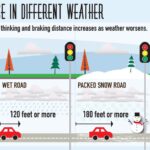 How to Drive on Snow and Ice
3. Brake Earlier and More Gently
Begin slowing down well before intersections, curves, and traffic lights.
Avoid sudden braking whenever possible.
If ABS activates during emergency braking, maintain firm pressure on the brake pedal and steer appropriately rather than pumping the brakes.
4. Avoid Abrupt Steering Movements
Sharp steering inputs can overwhelm the available tire grip and cause the vehicle to slide.
Make smooth steering adjustments and reduce speed before entering corners.
5. Use Snow Mode When Appropriate
If your Rogue has AWD and a dedicated Snow Mode, select it for snowy or icy surfaces according to the owner's manual.
Remember that Snow Mode assists traction but does not replace careful driving.
6. Avoid Cruise Control on Slippery Roads
Cruise control is generally unsuitable for snowy or icy roads.
The system may attempt to maintain speed when traction conditions are changing.
Maintain direct control over acceleration and speed instead.
7. Keep the Vehicle Properly Maintained
Before winter arrives, check:
- Tire tread depth and condition.
- Tire pressure.
- Battery health.
- Windshield washer fluid.
- Wiper blades.
- Coolant protection.
- Exterior lights.
- Brake condition.
These precautions can reduce the likelihood of unexpected problems during cold weather.
Can a Nissan Rogue Drive Uphill in Snow?
Yes, but hill climbing is one of the situations where AWD offers a particularly useful advantage.
When a front-wheel-drive vehicle climbs a hill, weight transfers toward the rear axle, potentially reducing traction at the front wheels.
This can make an FWD Rogue more likely to spin its tires on a slippery incline.
An AWD Rogue can send power to the rear wheels when needed, improving its ability to maintain forward movement.
Still, even AWD models may struggle on steep icy roads.
Tips for Driving Uphill in Snow
Maintain a gentle, steady throttle and avoid sudden acceleration.
Approach the hill at a safe speed that provides adequate momentum without compromising control.
Do not stop unnecessarily on a slippery incline.
If the tires begin spinning, avoid repeatedly pressing harder on the accelerator, as this can make the situation worse.
If the hill is too slippery to climb safely, find an alternative route rather than forcing the vehicle forward.
Can a Nissan Rogue Drive Downhill in Snow?
Yes, but descending a slippery hill requires particular care.
Unlike climbing, where AWD can improve acceleration traction, descending depends heavily on tire grip and controlled braking.
Reduce speed before reaching the downhill section.
Avoid abrupt braking or steering movements.
If the vehicle begins to slide, focus on maintaining control and steering toward a safe path.
Some Rogue variants have Hill Descent Control, but this feature is not available on every trim or model year.
Even when equipped, it should not be treated as a substitute for appropriate speed and suitable tires.
Can a Nissan Rogue Get Stuck in Snow?
Yes. A Nissan Rogue can become stuck in snow regardless of whether it has AWD.
Common situations include:
- Parking in deep, unplowed snow.
- Driving into snowbanks.
- Attempting steep, slippery hills.
- Traveling through heavy snowdrifts.
- Driving over deep compacted snow.
- Using tires with insufficient winter traction.
When the vehicle becomes stuck, excessive wheelspin may make the situation worse by digging the tires deeper into the snow.
What to Do If Your Nissan Rogue Gets Stuck in Snow
First, stop accelerating aggressively.
Check whether snow has accumulated around the tires or beneath the vehicle.
If conditions are safe, remove snow around the drive wheels using a small shovel.
You can also place suitable traction material near the tires if needed.
Use gentle accelerator inputs and follow the manufacturer's guidance for recovering a stuck vehicle.
Avoid rapidly shifting between Drive and Reverse or repeatedly spinning the wheels, as this can damage drivetrain components.
If the vehicle remains stuck, professional assistance may be the safest option.
Never operate the engine for extended periods when snow could block the exhaust pipe, because exhaust gases may accumulate and create a serious carbon monoxide hazard.
Nissan Rogue Snow Performance by Model Year
Not every Nissan Rogue generation has the same winter-driving features.
Although many versions have been available with AWD, the technology and available drive modes have changed over time.
| Model Years | Winter Driving Characteristics |
|---|---|
| 2008–2013 | Available AWD; suitable for moderate winter use with appropriate tires |
| 2014–2020 | Available intelligent AWD and electronic traction systems |
| 2021–2023 | Updated platform, available intelligent AWD, and dedicated Snow Mode on equipped models |
| 2024–2026 | Available AWD, modern electronic stability systems, and Snow Mode on AWD gasoline versions |
Equipment can vary by model year, trim, market, and powertrain.
Is a 2017 Nissan Rogue Good in Snow?
A 2017 Nissan Rogue can be a reasonable winter vehicle when properly maintained and equipped with suitable tires.
Its available AWD system can improve traction when accelerating on slippery roads.
However, it does not provide the same drive-mode selection as newer generations.
Condition is especially important when evaluating a used Rogue.
Worn tires, neglected maintenance, and drivetrain problems can significantly reduce winter reliability.
Is a 2020 Nissan Rogue Good in Snow?
The 2020 Nissan Rogue remains capable of ordinary winter driving, especially in AWD configuration.
Its traction and stability systems can help manage slippery conditions.
However, as with other model years, tire quality and road conditions are more important than simply having AWD.
Is a 2023 Nissan Rogue Good in Snow?
The 2023 Nissan Rogue AWD can be a good choice for regular winter commuting.
Its modern intelligent AWD system and dedicated Snow Mode give drivers useful tools for managing snowy roads.
With dedicated winter tires, it is well suited to many typical winter driving situations.
Is the 2025 or 2026 Nissan Rogue Good in Snow?
The 2025 and 2026 conventional gasoline Rogue AWD models offer an attractive combination of winter-driving features.
You might be interested in this content.
Their available Intelligent AWD, dedicated Snow Mode, traction control, and approximately 8.2 inches of ground clearance on the 2026 model make them practical for snowy daily driving.
However, these features do not turn the Rogue into a specialized deep-snow or off-road vehicle.
Is the Nissan Rogue Rock Creek Better in Snow?
The Nissan Rogue Rock Creek is designed with a more adventure-oriented appearance and equipment package than standard models.
Recent versions include AWD and all-terrain-oriented features.
This can make the Rock Creek attractive to drivers who frequently encounter rough roads or unpaved surfaces.
However, all-terrain tires are not automatically superior to dedicated winter tires on snow and ice.
For example, winter tires specifically designed for freezing temperatures may provide better grip on icy pavement than more rugged-looking all-terrain tires.
The Rock Creek is therefore not automatically the best Rogue for every winter situation.
For drivers who spend most of their time on paved but snowy roads, a conventional Rogue AWD fitted with excellent winter tires may be the more practical solution.
Nissan Rogue vs Other SUVs in Snow
The Nissan Rogue competes with several popular compact SUVs that are frequently used in snowy climates.
Three common alternatives are the Toyota RAV4, Honda CR-V, and Subaru Forester.
| SUV | AWD Availability | Winter Driving Strength |
|---|---|---|
| Nissan Rogue | Available | Good traction and available Snow Mode |
| Toyota RAV4 | Available on applicable models | Capable AWD configurations |
| Honda CR-V | Available | Well-suited to everyday snowy roads |
| Subaru Forester | Standard on conventional U.S. models | Strong emphasis on AWD traction |
Nissan Rogue vs Toyota RAV4 in Snow
Both the Nissan Rogue and Toyota RAV4 can handle typical winter conditions when equipped with appropriate tires.
AWD versions offer better acceleration traction than their comparable FWD configurations.
Differences in tires, AWD calibration, ground clearance, and individual trim equipment can affect performance.
For most drivers, selecting the right tires and maintaining the vehicle properly will have a greater effect on winter safety than small differences between these SUVs.
Nissan Rogue vs Honda CR-V in Snow
The Nissan Rogue and Honda CR-V are similarly positioned compact crossovers.
Both offer AWD configurations designed to improve traction on slippery roads.
The Rogue's dedicated Snow Mode on recent AWD versions provides a useful additional driving setting.
However, the presence of Snow Mode alone does not prove that the Rogue performs better than the CR-V in every winter situation.
Nissan Rogue vs Subaru Forester in Snow
The Subaru Forester is particularly popular in snowy regions because of its standard AWD system on conventional U.S. models and its emphasis on all-weather capability.
The Rogue AWD is also a capable winter vehicle.
However, drivers who frequently encounter steep, unplowed roads may find the Forester worth considering alongside the Rogue.
We would compare both vehicles with equivalent winter tires before drawing conclusions about traction.
Advantages and Disadvantages of the Nissan Rogue in Snow
Advantages
Available Intelligent AWD: Helps distribute power to improve traction when accelerating.
Dedicated Snow Mode: Provides a driving setting designed for snowy and icy surfaces on recent AWD models.
Useful ground clearance: Helps the Rogue manage some snow accumulation and uneven winter roads.
Electronic stability systems: Traction control and Vehicle Dynamic Control can assist when grip is limited.
Comfortable daily driving: The Rogue provides the space, comfort, and practicality expected from a compact family SUV.
Disadvantages
Limited deep-snow capability: Ground clearance becomes a restriction in heavy snow.
FWD traction limitations: Front-wheel-drive versions may struggle more on slippery hills.
AWD does not improve every aspect of winter handling: Braking and cornering still depend heavily on the tires.
Not a dedicated off-road vehicle: It lacks some specialized equipment found on vehicles intended for severe off-road conditions.
Tire expenses: Drivers in harsh climates may need a dedicated set of winter tires.
Is the Nissan Rogue a Good SUV for Canadian Winters?
Yes, an AWD Nissan Rogue with proper winter tires can be a sensible choice for many Canadian drivers.
It can be suitable for commuting in cities such as Toronto, Ottawa, Montreal, and Calgary, where winter conditions may include snow, slush, and freezing temperatures.
However, conditions vary considerably between regions.
Urban drivers who mainly travel on regularly plowed roads may find the Rogue entirely adequate.
Drivers living in rural areas with steep roads, deep snowdrifts, and infrequent snow removal may require a vehicle with greater off-road capability.
Winter tires should be prioritized, and drivers should comply with any provincial tire requirements.
Is the Nissan Rogue Worth Buying for Snowy Areas?
For drivers who want a comfortable, practical compact SUV that can handle regular winter conditions, the Nissan Rogue AWD is worth considering.
It offers a useful balance of passenger space, everyday comfort, winter traction, and fuel economy.
The AWD system is particularly valuable for drivers who frequently encounter snowy intersections, slippery hills, or unplowed parking areas.
However, AWD should not be the only purchasing consideration.
We would also evaluate the vehicle's reliability, maintenance history, tires, available safety equipment, and suitability for the local climate.
For occasional winter driving, an FWD Rogue with high-quality winter tires may be sufficient.
For frequent snowfall, AWD is generally the more versatile choice.
Frequently Asked Questions
1. Can a Nissan Rogue Drive in Heavy Snow?
A Nissan Rogue AWD can handle some heavy snowfall, especially with suitable winter tires, but it is not designed for deep, unplowed snow. Its ground clearance and available traction ultimately limit how much snow it can safely manage. When snow accumulates near or above the vehicle's underbody clearance, the risk of getting stuck increases significantly.
2. Do You Need AWD to Drive a Nissan Rogue in Snow?
No. A front-wheel-drive Nissan Rogue can drive in light to moderate snow when equipped with appropriate tires. However, AWD generally provides better acceleration traction on slippery hills and snow-covered roads. Drivers who frequently experience significant snowfall may benefit from choosing an AWD model.
3. Is Nissan Rogue Snow Mode Better Than AWD Auto Mode?
Snow Mode is specifically intended for snowy and icy conditions, while Auto Mode is designed for general everyday driving. On recent Rogue AWD models, Snow Mode modifies the vehicle's operation to support traction on slippery surfaces. However, neither mode guarantees grip on ice, and the effectiveness of either setting depends heavily on tire condition and driving behavior.
4. Does the Nissan Rogue Need Winter Tires if It Has AWD?
Winter tires are strongly recommended for drivers who regularly encounter snow, ice, and freezing temperatures. AWD improves acceleration traction, but winter tires also help the vehicle brake and steer on slippery surfaces. Installing four matching winter tires is one of the most effective ways to improve a Rogue's overall winter performance.
5. Can a Nissan Rogue Drive on Icy Roads?
Yes, a Nissan Rogue can drive on icy roads when conditions allow, but extreme caution is necessary. Its ABS, traction control, and stability systems can provide assistance, but none can guarantee control on very slippery ice. Drivers should use appropriate tires, reduce speed considerably, increase following distances, and avoid unnecessary travel during hazardous freezing-rain conditions.
Conclusion: Can Nissan Rogue Drive in Snow?
Yes, the Nissan Rogue can drive in snow, and AWD versions are particularly well suited to ordinary winter driving.
The vehicle's available Intelligent All-Wheel Drive, Snow Mode, electronic traction systems, and useful ground clearance make it a capable crossover for snowy streets, slippery intersections, and typical winter commuting.
However, the Rogue has limitations. It is not intended for driving through deep, unplowed snow, and its AWD system does not eliminate the risks associated with icy roads.
For the best winter performance, we recommend choosing appropriate winter tires, keeping the vehicle properly maintained, and adapting driving habits to the conditions.
You might be interested in this content. Nissan Rogue Winter Tire Size: Complete Guide by Year and Trim
If we live in an area with occasional light snowfall, a front-wheel-drive Rogue may be adequate. But if we regularly deal with snowy hills, slippery roads, and challenging winter conditions, a Nissan Rogue AWD with four high-quality winter tires is generally the better choice.
Ultimately, the Nissan Rogue can be a dependable winter-driving companion when used within its capabilities and driven with the caution that snow and ice demand.
Leave a Reply