
Seasonal Vehicle Maintenance Guide
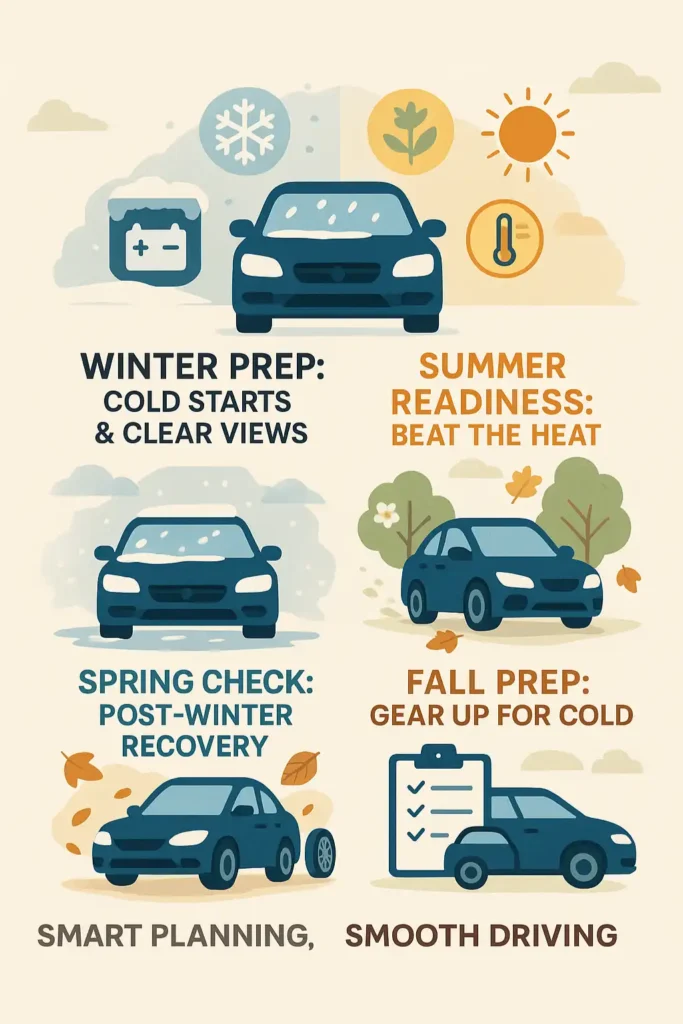
As the seasons change, so do the demands on your vehicle. From scorching summer heat to freezing winter temperatures, each season brings unique challenges that can impact performance, safety, and longevity. A proactive approach to seasonal vehicle maintenance not only prevents costly repairs but also ensures reliability on the road.
This guide covers essential checks and adjustments tailored to spring, summer, fall, and winter, including tire care, fluid levels, battery health, and wiper blades. By following these straightforward tips, drivers can navigate weather extremes with confidence, extend their car’s lifespan, and avoid unexpected breakdowns. Stay prepared year-round with this practical roadmap to seasonal upkeep.
Seasonal Vehicle Maintenance Guide
A seasonal vehicle maintenance guide is essential for ensuring your car operates efficiently and safely throughout the year. Each season brings unique challenges—from freezing temperatures and ice in winter to extreme heat in summer—that can impact your vehicle's tires, battery, and fluids.
You might be interested in this content. How Often Should You Replace Filters?
By adhering to a proactive schedule, drivers can prevent costly repairs, improve fuel economy, and enhance road safety. This guide focuses on the critical checks required as you transition between seasons, helping you maintain peak performance and reliability in any climate.
Winterizing Your Vehicle: Key Checks for Cold Weather
Preparing your vehicle for winter involves focusing on the battery, tire traction, and antifreeze levels. Cold temperatures can reduce battery capacity by up to 60%, so it’s crucial to test the battery’s charge and replace it if it is over three years old.
Install winter tires with adequate tread depth—at least 6/32 of an inch—to improve grip on snow and ice. Additionally, check the coolant mixture to ensure it offers protection down to at least -34°F, and inspect windshield washer fluid for a winter-grade formula that won’t freeze.
You might be interested in this content.
Spring and Summer Readiness: Heat and Humidity Management
As temperatures rise, your vehicle’s cooling system and air conditioning become top priorities. Begin by inspecting the radiator, hoses, and coolant level to prevent overheating, and flush the system if the fluid appears dirty or rusty.
Check the air conditioning system for proper operation and recharge refrigerant if necessary. Furthermore, tire pressure naturally increases in heat, so adjust it to the manufacturer’s recommended PSI to avoid blowouts, and examine the serpentine belt for cracks or wear that could fail under high engine load.
Year-Round Fluid and Filter Maintenance
Regular fluid and filter changes are the backbone of seasonal readiness, regardless of climate. Ensure engine oil is at the correct level and viscosity for the season—such as using 5W-30 in winter versus 10W-30 in summer for some vehicles.
You might be interested in this content. Common Maintenance Mistakes to Avoid
Replace the cabin air filter every 12,000 miles to maintain HVAC performance, and flush the brake fluid every two years to prevent moisture absorption and corrosion. Additionally, monitor the transmission fluid and power steering fluid for proper levels and color, as contaminated fluids can lead to system failures under seasonal stress.
| Season | Key Maintenance Focus | Recommended Action |
|---|---|---|
| Winter | Battery, Tires, Antifreeze | Test battery charge; install winter tires; check coolant to -34°F |
| Spring/Summer | Cooling System, A/C, Tire Pressure | Flush radiator; recharge A/C; adjust tire PSI |
| Year-Round | Fluids, Filters, Belts | Change oil per season; replace cabin filter every 12,000 miles |
Seasonal Vehicle Maintenance Guide: Tire Care and Fluid Checks
What key items should a seasonal vehicle maintenance checklist cover for optimal performance?
A seasonal vehicle maintenance checklist should include the following key items to ensure optimal performance: engine oil and filter change, tire inspection and pressure adjustment, battery test and terminal cleaning, brake system check, fluid level verification (coolant, transmission, brake, windshield washer), air filter replacement, belt and hose inspection, and air conditioning system test.
Seasonal Fluid System Checks
Engine coolant and antifreeze concentration
Antifreeze concentration is critical for preventing engine freezing in winter and overheating in summer. A 50/50 mix of antifreeze and water is standard, but a tester can confirm the correct ratio. Neglecting this can lead to coolant freezing, cracking the engine block, or corrosion from old, acidic coolant.
You might be interested in this content. Winter Vehicle Maintenance Checklist
- Check coolant level in the reservoir when the engine is cold.
- Use a hydrometer to measure antifreeze concentration and freeze point.
- Inspect hoses for cracks, bulges, or leaks near clamps.
Tire and Wheel Condition for Changing Seasons
Tread depth and pressure adjustment
Temperature fluctuations alter tire pressure by about 1 psi per 10 degrees Fahrenheit, making seasonal adjustment essential. Inadequate tread depth reduces traction on wet or snowy roads. Proper inflation extends tire life and improves fuel efficiency.
- Measure tread depth with a gauge; replace at 2/32 inch or less.
- Inflate tires to the manufacturer’s recommended psi listed in the door jamb.
- Rotate tires according to the schedule in the owner’s manual to ensure even wear.
Battery and Electrical System Preparation
Voltage test and terminal cleaning
Cold weather reduces battery capacity, while heat accelerates fluid evaporation and corrosion. A load test reveals if the battery holds charge under stress. Clean, tight terminals prevent voltage drops that cause starting problems, especially in winter.
- Use a multimeter to read battery voltage; a fully charged battery reads 12.6 volts or higher.
- Clean corrosion from terminals with a wire brush and baking soda solution.
- Tighten connections and check the alternator belt tension for proper charging output.
Frequently Asked Questions
Why is it important to check my tire pressure with seasonal temperature changes?
Tire pressure naturally fluctuates with temperature, dropping about 1-2 PSI for every 10°F decrease. Underinflated tires reduce fuel efficiency, cause uneven wear, and compromise handling, especially on wet or icy roads. Check your tires monthly and adjust pressure to the manufacturer's recommendation listed on your door jamb sticker, not the sidewall maximum. This simple step ensures optimal traction, braking performance, and tire longevity throughout the season.
You might be interested in this content. How to Drive in Extreme Cold Weather
What should I inspect in my vehicle’s cooling system before summer?
Before summer heat arrives, check your coolant level and mixture ratio (typically 50/50 antifreeze and water). Inspect radiator hoses for cracks, bulges, or soft spots that could burst under pressure. Ensure the radiator cap seals properly to maintain system pressure. A clogged or dirty radiator reduces cooling efficiency, leading to potential engine overheating during long drives or stop-and-go traffic in high temperatures.
How do I prepare my car’s battery for cold winter weather?
Cold temperatures reduce battery capacity by up to 60% and thicken engine oil, making starting harder. Have your battery load-tested at a service center to confirm it holds a charge above 12.4 volts. Clean any corrosion from terminals using a wire brush and baking soda solution. Ensure connections are tight. If your battery is over three years old, consider replacing it before winter to avoid unexpected failures.
What winter wiper and windshield fluid maintenance is essential?
Switch to winter-specific wiper blades with rubber covers to prevent ice buildup. Replace blades if they streak or chatter. Use windshield fluid rated to -20°F or lower to avoid freezing in your reservoir or on the glass.
You might be interested in this content. Common Winter Vehicle Problems
Fill up early, as freezing fluid can crack the reservoir. Clean your windshield interior weekly to prevent frost haze. This ensures clear visibility during snow, sleet, and salt spray conditions.
Leave a Reply