
Nissan Kicks Good on Gas Canada: Is It Really Fuel-Efficient?

If we are shopping for a small SUV in Canada, fuel economy can quickly become one of the biggest deciding factors. Gas prices have a habit of moving in the wrong direction at exactly the wrong time, and nobody enjoys watching the fuel pump climb like a taxi meter. That naturally brings us to a common question: is the Nissan Kicks good on gas in Canada?
The short answer is yes. The Nissan Kicks is one of the more fuel-efficient gasoline-powered subcompact SUVs available to Canadian drivers. For the 2026 Nissan Kicks, Nissan Canada lists fuel consumption of approximately 8.1 L/100 km in the city, 6.6 L/100 km on the highway, and 7.4 L/100 km combined for front-wheel-drive configurations.
Natural Resources Canada's 2025 Fuel Consumption Guide reported the same 7.4 L/100 km combined rating for the front-wheel-drive Kicks, while AWD models were rated at approximately 7.7 L/100 km combined.
Those numbers make the Kicks a compelling option for commuters, urban drivers, students, small families, and anyone who wants SUV practicality without accepting SUV-sized fuel bills.
But laboratory ratings only tell part of the story. Canadian winters, highway speeds, AWD, traffic, tire pressure, driving style, and even short trips can change what we actually see at the pump.
So, let's dig deeper.
- Is the Nissan Kicks Good on Gas in Canada?
- Why Is the Nissan Kicks So Fuel-Efficient?
- Nissan Kicks City Fuel Economy
- Nissan Kicks Highway Fuel Economy
- Nissan Kicks FWD vs AWD Fuel Economy
- How Much Fuel Does a Nissan Kicks Use Per Year?
- Is the Nissan Kicks Economical for Commuting?
- How Canadian Winter Affects Nissan Kicks Fuel Economy
- How Much Worse Is Nissan Kicks Fuel Economy in Winter?
- Does AWD Make the Nissan Kicks Bad on Gas?
- How Does the Nissan Kicks Compare With Other Small SUVs on Gas?
- Is a Hybrid Better Than the Nissan Kicks for Fuel Economy?
- What Gas Does a Nissan Kicks Use in Canada?
- How Can We Get Better Gas Mileage From a Nissan Kicks?
- Can the Nissan Kicks Reach Better Than 7.4 L/100 km?
- Why Your Nissan Kicks May Be Using Too Much Gas
- Is the Nissan Kicks a Good Road-Trip Vehicle for Fuel Economy?
- Does the Nissan Kicks Save Enough Fuel to Matter?
- Who Should Buy a Nissan Kicks for Fuel Economy?
- Who Might Want Something More Fuel-Efficient?
- Nissan Kicks Fuel Economy vs SUV Practicality
- Is the Nissan Kicks Good on Gas for Canadian Families?
- What Is a Good Fuel-Economy Number in Canada?
- Does Fuel Economy Make the Nissan Kicks Worth Buying?
- Final Verdict: Is the Nissan Kicks Good on Gas in Canada?
- Frequently Asked Questions
Is the Nissan Kicks Good on Gas in Canada?
Yes, especially when we compare it with larger crossovers and traditional SUVs.
The Kicks sits in the subcompact crossover segment, which gives it an important advantage. It is relatively light, uses a four-cylinder engine, and relies on a continuously variable transmission designed partly around efficiency.
The current Canadian Kicks uses a 2.0-litre four-cylinder engine producing 141 horsepower and 140 lb-ft of torque, paired with Nissan's Xtronic CVT. Nissan also uses fuel-saving features such as idle stop/start, Eco mode, and active grille shutters.
The result is fuel consumption closer to that of many compact cars than traditional SUVs.
For someone driving 15,000 to 20,000 kilometres per year, that distinction can matter considerably.
Nissan Kicks Fuel Economy in Canada at a Glance
Official ratings provide a useful baseline:
- City: approximately 8.1 L/100 km
- Highway: approximately 6.6 L/100 km
- Combined: approximately 7.4 L/100 km for FWD
- Combined AWD: approximately 7.7 L/100 km in Natural Resources Canada's 2025 guide
Another way to think about 7.4 L/100 km is that the Kicks uses roughly 7.4 litres of fuel to travel 100 kilometres under the standardized combined test cycle.
For a gasoline crossover, that's respectable.
Why Is the Nissan Kicks So Fuel-Efficient?
Fuel economy does not come from one magical component. It is more like a relay race where several small advantages pass the baton.
The Kicks benefits from its modest size, aerodynamic design, CVT transmission, relatively small engine, and efficiency-focused engineering.
1. A Sensibly Sized Four-Cylinder Engine
The 2.0-litre four-cylinder engine avoids the appetite of larger turbocharged engines or V6 powertrains.
With 141 horsepower, the Kicks is not trying to impersonate a sports SUV. Instead, its engine is designed around daily usability.
That philosophy suits Canadian commuters perfectly. Most of us spend far more time travelling to work, picking up groceries, and navigating suburban streets than launching from traffic lights.
2. The Xtronic CVT Helps Keep Engine Speed Down
Traditional automatic transmissions move through individual gears. A continuously variable transmission can instead adjust through a broad range of ratios.
In theory, that allows the engine to spend more time operating near its efficient sweet spot.
Imagine cycling with a bicycle that could always choose exactly the right gear without having to jump from one sprocket to another. That is roughly what a CVT tries to accomplish.
The downside? During hard acceleration, some drivers find CVTs noisier or less natural than conventional automatics.
For fuel efficiency, however, the concept works well.
3. Eco Mode Encourages Efficient Driving
The Nissan Kicks offers an Eco driving mode designed to prioritize efficiency.
Eco mode typically softens accelerator response and encourages the powertrain to avoid unnecessarily aggressive behaviour.
Does it transform the Kicks into a hybrid?
Of course not.
But during urban commuting, small changes add up.
4. Idle Stop/Start Reduces Wasted Fuel
Sitting at a long traffic light while an engine burns fuel without moving the vehicle is inherently inefficient.
The current Kicks uses an idle stop/start system that can shut the engine down temporarily when appropriate, then restart it when we are ready to move.
Nissan specifically identifies idle stop/start among the features contributing to Kicks fuel efficiency.
That matters particularly in cities like Toronto, Vancouver, Montreal, Calgary, or Ottawa, where stop-and-go driving can become part of everyday life.
Nissan Kicks City Fuel Economy
The Canadian rating of approximately 8.1 L/100 km in city driving is arguably more relevant than the highway figure for many Kicks owners.
Why?
Because the Kicks is built for urban environments.
Its compact footprint makes parking easier, while its elevated seating position gives drivers the crossover experience without carrying the bulk of a larger SUV.
What Real-World City Driving Can Do to Fuel Consumption
Official fuel economy numbers are standardized estimates. Actual consumption changes considerably depending on conditions.
Repeated acceleration is one of the biggest enemies of economy.
Picture two drivers travelling the same 10-kilometre route.
One accelerates gently, anticipates red lights, and coasts toward traffic.
The other accelerates hard, brakes late, and repeats the process every few hundred metres.
Their vehicles may be identical, yet their fuel economy could look surprisingly different.
Short Trips Hurt Fuel Economy
A five-minute winter grocery run can consume disproportionately more fuel than a longer journey.
Engines generally operate less efficiently before reaching normal temperature. Cabin heating, window defrosting, heated seats, and other electrical loads can also contribute to higher energy demand.
Therefore, if your Kicks spends most of its life on short urban journeys, don't be surprised if your dashboard average sits above the official city rating.
You might be interested in this content. Driving Safely in Canadian Winters
Nissan Kicks Highway Fuel Economy
Highway driving is where the Kicks can stretch its legs efficiently.
The Canadian highway estimate is approximately 6.6 L/100 km for the FWD model.
At steady speeds with mild weather and limited cargo, a small crossover can operate very efficiently.
However, speed matters more than many drivers realize.
Why Driving Faster Uses More Fuel
Air resistance increases substantially as speed rises.
Driving at 120 or 125 km/h instead of 100 km/h may save some time, but the vehicle has to push much harder against the air.
It is like jogging into a stronger and stronger wind.
As highway speed increases, fuel consumption generally rises as well.
For road trips, a smooth pace can make the difference between impressive fuel economy and merely average results.
Nissan Kicks FWD vs AWD Fuel Economy
This is especially relevant in Canada because the latest Kicks offers available Intelligent All-Wheel Drive. Nissan describes the system as continuously monitoring road conditions and responding when additional traction is required.
AWD sounds attractive when winter enters the conversation, but we pay a small efficiency penalty for it.
Natural Resources Canada's 2025 guide rates:
FWD Kicks: 7.4 L/100 km combined.
Kicks AWD: 7.7 L/100 km combined.
The difference of roughly 0.3 L/100 km is not enormous.
Should Canadian Buyers Choose AWD?
That depends more on driving conditions than fuel economy alone.
If we live somewhere with frequent snow, icy hills, rural roads, or poorly cleared streets, AWD can provide useful additional traction.
If we mainly drive on plowed city roads and prioritize fuel economy, FWD remains appealing.
Remember, though: AWD is not a replacement for good winter tires.
A front-wheel-drive Kicks wearing excellent winter tires can often be a far more sensible winter machine than an AWD crossover on unsuitable rubber.
How Much Fuel Does a Nissan Kicks Use Per Year?
Let's put the consumption number into everyday terms.
At 7.4 L/100 km, driving 15,000 kilometres would require approximately:
15,000 ÷ 100 × 7.4 = 1,110 litres per year
At 20,000 kilometres:
20,000 ÷ 100 × 7.4 = 1,480 litres per year
Your actual annual cost depends on fuel prices.
If gasoline averaged $1.60 per litre, for example, those totals would represent approximately:
- 15,000 km: $1,776
- 20,000 km: $2,368
These are simple illustrations rather than guarantees because gas prices and real-world efficiency constantly change.
Still, they demonstrate why several tenths of a litre per 100 kilometres can matter over years of ownership.
Is the Nissan Kicks Economical for Commuting?
Very much so.
Daily commuting is arguably where the Kicks makes its strongest case.
Suppose we travel 40 kilometres every workday. Over roughly 250 commuting days, that's around 10,000 kilometres before adding weekend driving.
A fuel-efficient crossover saves fuel quietly in the background.
There is no dramatic moment. Instead, the savings arrive one tank at a time.
Urban Commuters Benefit the Most
The Kicks is especially attractive for drivers who want:
- SUV-style seating without large-SUV consumption
- easy parking
- reasonable highway efficiency
- available AWD
- affordable everyday fuel consumption
- enough cargo flexibility for normal family life
That combination is why the Kicks occupies an interesting middle ground between a hatchback and a traditional SUV.
How Canadian Winter Affects Nissan Kicks Fuel Economy
Now we come to the elephant wearing snow boots.
Winter.
A Kicks that delivers excellent mileage in September may suddenly look far thirstier in January.
That does not necessarily indicate a mechanical problem.
Cold Engines Use More Fuel
When temperatures drop, the engine takes longer to reach efficient operating temperature.
Short journeys become particularly punishing.
If we repeatedly drive three kilometres, shut the vehicle off, and later repeat the journey, the engine may spend much of its operating life warming up.
Winter Gasoline Can Change Efficiency
Fuel formulations vary seasonally.
Winter gasoline is designed partly to improve cold-weather performance, but energy content and environmental conditions can contribute to reduced mileage compared with warmer months.
Snow Creates More Rolling Resistance
Fresh snow, slush, and wet winter roads create additional resistance.
You might be interested in this content.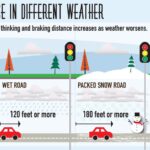 How to Drive on Snow and Ice
The engine must produce more energy simply to move the vehicle through messy conditions.
Add winter tires, roof-mounted equipment, and heavy heating use, and fuel consumption can climb further.
Remote Starting Can Lower Your Average
Remote start is wonderful when it is -20°C outside.
Nobody wants to scrape an iceberg from the windshield while sitting inside a freezing cabin.
But long idling periods consume fuel while adding zero kilometres to the odometer.
From the fuel computer's perspective, that is disastrous efficiency.
We don't need to abandon remote start entirely. Just avoid letting the vehicle idle for excessive periods when unnecessary.
How Much Worse Is Nissan Kicks Fuel Economy in Winter?
There is no universal percentage.
Conditions across Canada vary too dramatically.
A mild Vancouver winter is very different from deep winter in Winnipeg, Edmonton, Saskatoon, or northern Ontario.
Factors include:
- outside temperature
- trip length
- snowfall
- tire type
- idling
- traffic
- AWD use
- road conditions
- heater and defroster use
Therefore, a noticeable seasonal increase should not immediately trigger concern.
What matters more is whether consumption returns toward normal as weather improves.
Does AWD Make the Nissan Kicks Bad on Gas?
No.
The AWD Kicks remains reasonably efficient.
At roughly 7.7 L/100 km combined in Canada's 2025 guide, its additional consumption compared with the FWD version is relatively modest.
That represents a roughly 4% increase relative to 7.4 L/100 km.
For some Canadian drivers, that trade-off is easily worthwhile.
For others, it is unnecessary.
Who Should Consider FWD?
FWD makes sense if:
- maximizing economy is a priority
- most driving happens on paved urban roads
- winters are comparatively mild
- you use high-quality winter tires
- you do not regularly tackle steep snowy roads
Who Should Consider AWD?
AWD deserves consideration if:
- you regularly drive through heavy snow
- your neighbourhood has steep hills
- you travel rural roads
- winter traction matters more than the small fuel penalty
There is no universally correct choice.
How Does the Nissan Kicks Compare With Other Small SUVs on Gas?
The Kicks sits in a competitive segment.
According to Natural Resources Canada's 2025 guide, the FWD Kicks was rated at 7.4 L/100 km combined. For context, that was identical to the listed combined rating of the FWD Toyota Corolla Cross, while the Nissan Rogue was listed at 7.2 L/100 km in FWD form. Hybrid crossovers, unsurprisingly, can do considerably better; the Corolla Cross Hybrid AWD was listed at 5.6 L/100 km combined.
That tells us something important.
The Kicks is economical, but it is not a hybrid.
If maximum fuel efficiency is your only priority, electrified alternatives may outperform it.
If you want a conventional gasoline crossover with relatively low fuel consumption and without hybrid-system complexity or pricing considerations, the Kicks remains attractive.
Is a Hybrid Better Than the Nissan Kicks for Fuel Economy?
Purely on fuel consumption, many hybrids win.
There is no reason to dance around that reality.
Hybrid systems recover energy during braking and can rely on electric assistance when gasoline engines are least efficient.
In heavy city traffic, that can create substantial savings.
But purchase decisions involve more than L/100 km.
We also need to consider:
- purchase price
- financing rates
- insurance
- maintenance
- expected mileage
- resale value
- availability
- how long we intend to keep the vehicle
Saving $300 per year on gas means little if the alternative costs thousands more and we only own it for three years.
Fuel economy belongs in the equation, not above every other number.
What Gas Does a Nissan Kicks Use in Canada?
For everyday ownership, one of the Kicks' appealing characteristics is that it belongs to the mainstream gasoline crossover category rather than requiring a performance-oriented fuel strategy.
Always follow the octane requirement listed in the owner's manual and fuel-door label for your specific year and configuration.
That point matters because using more expensive gasoline than required generally does not magically reduce fuel consumption enough to justify the added price.
Premium fuel is not a vitamin supplement.
If the engine is designed for regular gasoline, buying premium purely because it sounds better usually provides little financial benefit.
How Can We Get Better Gas Mileage From a Nissan Kicks?
The easiest efficiency improvements usually cost nothing.
Consistency matters more than gimmicks.
Accelerate Smoothly
Treat the accelerator like a dimmer switch rather than an on/off button.
Hard acceleration requires more fuel.
A smooth departure usually saves fuel and makes the ride more comfortable.
You might be interested in this content.
Look Far Ahead
Anticipating traffic reduces unnecessary braking.
If a traffic light 300 metres ahead turns red, there is little reason to keep accelerating toward it.
Coasting naturally burns less fuel than accelerating and then converting that energy into brake heat.
Keep Tires Properly Inflated
Underinflated tires create additional rolling resistance.
They can also affect tire wear and handling.
Check tire pressures when the tires are cold and follow the specification listed on the vehicle placard rather than simply using the maximum pressure printed on the tire sidewall.
Remove Unnecessary Weight
One forgotten backpack won't matter.
A cargo area carrying heavy tools, sports equipment, boxes, and other items for months can.
More weight requires more energy to move.
Remove Roof Accessories When Not Needed
Roof racks and cargo boxes can increase aerodynamic drag.
At highway speed, that matters.
Removing unused accessories can improve efficiency while also reducing wind noise.
Avoid Excessive Idling
Idling produces exactly zero kilometres per litre.
Cold-weather warm-up may sometimes be useful for comfort and visibility, but there is little efficiency benefit in leaving the engine running unnecessarily for long periods.
Use Eco Mode Strategically
Eco mode can help promote smoother responses and more relaxed driving.
It is particularly useful during routine commuting.
However, we should never sacrifice safety merely to chase a lower dashboard number.
Can the Nissan Kicks Reach Better Than 7.4 L/100 km?
Absolutely.
The official combined rating is not a ceiling.
A long, flat highway journey in mild weather with moderate speeds could produce a lower figure.
Similarly, someone driving almost entirely in traffic during a Canadian winter could see significantly higher consumption.
Fuel economy is dynamic.
Think of 7.4 L/100 km as a benchmark rather than a promise.
Why Your Nissan Kicks May Be Using Too Much Gas
If consumption suddenly gets worse and weather or driving habits do not explain it, it may be worth investigating.
Possible causes include:
- low tire pressure
- aggressive driving
- heavy idling
- unusually short journeys
- roof racks or cargo boxes
- worn or incorrect tires
- poor wheel alignment
- neglected maintenance
- dragging brakes
- engine-management issues
- sensors operating incorrectly
A dashboard reading alone does not diagnose anything.
Track consumption over several tanks instead.
Calculate Fuel Economy Manually
Dashboard computers are convenient, but we can verify them ourselves.
When filling up:
- Fill the tank.
- Reset the trip odometer.
- Drive normally.
- Fill the tank again.
- Record litres added.
- Divide litres by kilometres travelled.
- Multiply by 100.
For example:
42 litres ÷ 600 km × 100 = 7.0 L/100 km
Repeating this across several tanks gives us a much more useful picture than judging one short trip.
Is the Nissan Kicks a Good Road-Trip Vehicle for Fuel Economy?
From a fuel perspective, yes.
The Kicks' approximately 6.6 L/100 km highway rating makes it appealing for long-distance travel.
Road trips also favour steady-state driving, which typically allows gasoline vehicles to operate efficiently.
The limitation is not fuel economy but expectations.
A subcompact SUV has less power and interior space than larger crossovers. Fully loading the vehicle with passengers, luggage, and rooftop cargo can affect both comfort and consumption.
If two adults are heading from Toronto to Montreal or Vancouver to Kelowna, the Kicks can make plenty of sense.
Five people plus a mountain of luggage? We may value additional space more than another fraction of a litre saved.
Does the Nissan Kicks Save Enough Fuel to Matter?
Over one week, the difference between 7.4 and 9.0 L/100 km may feel trivial.
Over 100,000 kilometres, it is not.
At 7.4 L/100 km:
100,000 km requires approximately 7,400 litres.
At 9.0 L/100 km:
100,000 km requires approximately 9,000 litres.
That's a difference of 1,600 litres.
You might be interested in this content. Nissan Kicks Fuel Economy L/100km: What Drivers Can Really Expect
At $1.60 per litre, we are talking about $2,560 over that distance.
Fuel efficiency is like a tiny leak in reverse. Each individual drop seems insignificant, but years of ownership can turn those drops into real money.
Who Should Buy a Nissan Kicks for Fuel Economy?
The Kicks makes the strongest case for drivers who want a traditional gasoline vehicle but dislike traditional SUV fuel consumption.
It is especially well suited to:
- commuters
- singles and couples
- small families
- urban Canadians
- drivers downsizing from larger SUVs
- first-time crossover buyers
- owners covering significant annual mileage
Drivers who spend most of their time in town should find its size convenient, while highway commuters can benefit from the relatively low 6.6 L/100 km highway rating.
Who Might Want Something More Fuel-Efficient?
The Kicks is economical, but there are situations where another powertrain makes more sense.
High-mileage urban drivers might benefit greatly from a hybrid.
Drivers with reliable home charging might find an EV dramatically cheaper to fuel.
And someone who drives fewer than 5,000 kilometres annually might discover that fuel economy hardly matters compared with purchase price, depreciation, and insurance.
This is why we should never shop by a single specification.
Nissan Kicks Fuel Economy vs SUV Practicality
Perhaps the strongest part of the Kicks formula is balance.
We get the elevated seating position and hatchback-style cargo versatility that attract buyers to SUVs, but without dragging around a huge engine and several tonnes of metal.
Nissan says the 2026 Kicks can offer up to 1,699 litres of cargo capacity with the rear seats folded, depending on configuration.
So the Kicks does not achieve fuel economy simply by becoming microscopic.
It remains a genuinely practical small crossover.
Is the Nissan Kicks Good on Gas for Canadian Families?
For smaller households, certainly.
Fuel economy becomes particularly valuable for families because the car often becomes a mobile command centre.
School.
Work.
Groceries.
Sports.
Appointments.
Weekend visits.
Those kilometres pile up quietly.
A vehicle consuming 7-something litres per 100 kilometres instead of 10 or 11 can produce meaningful long-term savings.
That said, families should test cargo and rear-seat space before buying.
A vehicle can be brilliantly efficient and still be wrong for your lifestyle if a stroller swallows the entire cargo area.
What Is a Good Fuel-Economy Number in Canada?
Context matters.
For a non-hybrid gasoline crossover, anything around the mid-7 L/100 km range combined is generally strong.
Large SUVs often consume considerably more.
Hybrids can operate in the 5-to-6 L/100 km territory.
Electric vehicles remove litres per 100 kilometres from the equation entirely and instead measure energy consumption in kWh/100 km.
So a 7.4 L/100 km Kicks is not the ultimate fuel-economy champion across every vehicle type.
But within the world of conventional gasoline crossovers, it performs well.
Does Fuel Economy Make the Nissan Kicks Worth Buying?
Fuel economy strengthens the Kicks' case, but it should not single-handedly make the decision.
We should also test:
- ride comfort
- acceleration
- cabin noise
- seat comfort
- rear-seat room
- cargo capacity
- winter traction
- infotainment usability
- insurance rates
- dealer support
A fuel-efficient vehicle we dislike driving every day is not a bargain.
On the other hand, if we already like the Kicks' size and personality, its relatively low fuel consumption becomes an excellent bonus.
Final Verdict: Is the Nissan Kicks Good on Gas in Canada?
Yes. The Nissan Kicks is good on gas by gasoline subcompact SUV standards in Canada.
The current front-wheel-drive Kicks is rated at approximately 8.1 L/100 km city, 6.6 L/100 km highway, and 7.4 L/100 km combined, while Natural Resources Canada's 2025 data places the AWD model at roughly 7.7 L/100 km combined.
Those numbers are especially attractive for drivers who want crossover practicality without stepping into a hybrid or EV.
Canadian winters will push consumption higher. AWD adds a small penalty. Aggressive driving can erase much of the advantage.
But underneath those variables, the Kicks remains an economical little crossover.
It doesn't sip fuel quite like the best hybrids, but it hardly drinks like a traditional SUV either.
For many Canadian commuters, that middle ground may be exactly right.
Frequently Asked Questions
1. How fuel-efficient is the Nissan Kicks in Canada?
The 2026 front-wheel-drive Nissan Kicks is rated at approximately 8.1 L/100 km city, 6.6 L/100 km highway, and 7.4 L/100 km combined in Canada. Actual consumption will vary depending on temperature, traffic, driving habits, tires, cargo, and other conditions.
You might be interested in this content.Nissan Kicks Good Car Canada: Is It Really Worth Buying?2. Is Nissan Kicks AWD good on gas?
Yes. Natural Resources Canada's 2025 Fuel Consumption Guide rated the Kicks AWD at approximately 7.7 L/100 km combined, versus 7.4 L/100 km for the FWD model. That is a relatively small penalty for adding all-wheel-drive capability.
3. Why does my Nissan Kicks use more gas in winter?
Cold starts, longer warm-up periods, winter gasoline, snow, slush, winter tires, cabin heating, defrosting, and remote-start idling can all increase fuel consumption. Short trips during very cold weather tend to produce particularly high readings.
4. Can a Nissan Kicks get under 7 L/100 km?
It can under favourable conditions. Because the official highway rating is approximately 6.6 L/100 km, steady highway driving at moderate speeds may produce averages below 7 L/100 km. Real-world results are never guaranteed, however.
5. Is the Nissan Kicks cheaper on gas than a larger SUV?
Generally, yes. Its small four-cylinder engine, low combined fuel-consumption figure, lighter construction, CVT, and efficiency features give it a substantial advantage over many larger gasoline SUVs. The exact savings depend on the vehicles compared, annual mileage, and gasoline prices.
Leave a Reply