
Mazda 3 Year Models in Canada: Complete Guide to Every Generation (2004–2027)

The Mazda 3 has been one of Canada's most recognizable compact cars for more than two decades. Since its introduction for the 2004 model year, it has evolved from an affordable, sporty alternative to traditional compact sedans into a refined vehicle offering premium features, advanced safety technology, and available all-wheel drive.
If you're researching Mazda 3 year models in Canada, understanding the differences between generations can make a major difference when purchasing a used or new vehicle.
Not every Mazda 3 is the same. Some model years introduced major mechanical improvements, while others brought updated styling, better fuel economy, additional technology, or new engine options.
In this guide, we'll explore every Mazda 3 generation sold in Canada, explain the most important changes throughout its history, compare available engines and trim levels, and help you identify which model years may offer the best value.
- Mazda 3 Generations in Canada: Quick Overview
- First Generation Mazda 3 (2004–2009)
- Second Generation Mazda 3 (2010–2013)
- Third Generation Mazda 3 (2014–2018)
- Fourth Generation Mazda 3 (2019–2027)
- 2019 Mazda 3: A Completely New Vehicle
- 2020 Mazda 3: Continued Refinement
- 2021 Mazda 3: The Turbo Era Begins
- 2022–2023 Mazda 3: Modern Features and Established Design
- 2024 Mazda 3: Larger Standard Engine
- 2025 Mazda 3: Additional Technology
- 2026 Mazda 3: GX, GS, GT and GT Turbo
- 2027 Mazda 3: The Latest Announced Canadian Model
- Mazda 3 Year-by-Year Changes in Canada
- Mazda 3 Trim Levels in Canada: GX vs GS vs GT
- Mazda 3 Sedan vs Mazda 3 Sport Hatchback
- Which Mazda 3 Year Models Are Best in Canada?
- Mazda 3 Model Years to Inspect More Carefully
- Mazda 3 Engine Options by Generation
- Is the Mazda 3 Reliable in Canada?
- Is AWD Worth It on a Mazda 3 in Canada?
- What to Check Before Buying a Used Mazda 3 in Canada
- Frequently Asked Questions About Mazda 3 Year Models in Canada
- Conclusion: Which Mazda 3 Year Model Should You Choose in Canada?
Mazda 3 Generations in Canada: Quick Overview
The Mazda 3 has gone through four generations in the Canadian market, beginning with the 2004 model year.
Each generation brought improvements in design, performance, comfort, and technology.
| Generation | Model Years | Main Characteristics |
|---|---|---|
| First Generation (BK) | 2004–2009 | Sporty design, simple technology, 2.0L and 2.3L engines |
| Second Generation (BL) | 2010–2013 | Updated styling, improved comfort, introduction of Skyactiv technology |
| Third Generation (BM/BN) | 2014–2018 | Kodo design, improved efficiency, more advanced safety features |
| Fourth Generation (BP) | 2019–2027 | Premium interior, available AWD, modern technology, turbo engine option |
The fourth generation remains the current design family for the announced 2027 model year.
Although the Mazda 3 has maintained its reputation for engaging handling throughout its history, the driving experience and available equipment vary significantly between older and newer models.
First Generation Mazda 3 (2004–2009)
The first-generation Mazda 3 arrived in Canada for the 2004 model year, replacing the Mazda Protegé.
It quickly gained popularity because of its attractive styling, responsive steering, and relatively affordable ownership costs.
Compared with many compact cars of the same period, the original Mazda 3 offered a more entertaining driving experience without sacrificing everyday practicality.
2004–2006 Mazda 3: The Early Models
The earliest Mazda 3 models featured a relatively straightforward mechanical design.
Canadian buyers could choose between sedan and hatchback configurations, depending on the available trim and equipment.
Common engine options included:
- 2.0-litre four-cylinder engine.
- 2.3-litre four-cylinder engine.
- Manual or automatic transmission, depending on configuration.
- Front-wheel drive.
These models remain appealing to buyers looking for inexpensive transportation.
However, their age means that maintenance history and structural condition are now much more important than their original specifications.
In particular, Canadian buyers should pay close attention to corrosion.
Road salt, winter moisture, and repeated freeze-thaw cycles can accelerate rust on older vehicles.
2007–2009 Mazda 3: Improved Equipment and Performance
The later first-generation models received styling and equipment updates.
One of the most interesting developments was the arrival of the Mazdaspeed3 for the 2007 model year.
This performance-oriented hatchback featured a turbocharged 2.3-litre engine and significantly more power than the regular Mazda 3.
The Mazdaspeed3 appealed to enthusiasts who wanted the practicality of a compact hatchback combined with strong acceleration.
For Canadian buyers considering a 2007–2009 Mazda 3 today, the most important inspection points include:
- Rust around wheel arches, rocker panels, and underneath the vehicle.
- Suspension wear and unusual noises.
- Cooling system condition.
- Transmission and clutch operation.
- Engine oil leaks.
- Evidence of regular maintenance.
A well-preserved first-generation Mazda 3 can still provide dependable transportation, but these vehicles require careful inspection before purchase.
Second Generation Mazda 3 (2010–2013)
The second-generation Mazda 3 was introduced for the 2010 model year.
Mazda maintained the car's sporty character while improving interior quality, comfort, and overall refinement.
The exterior design became more expressive, particularly around the front grille and headlights.
Inside, the dashboard featured a more modern layout with improved instrumentation and available convenience features.
2010–2011 Mazda 3: A New Design
The 2010 redesign brought several important changes.
Depending on the version, Canadian buyers could find 2.0-litre and 2.5-litre four-cylinder engines.
The larger engine provided stronger acceleration, making it attractive for drivers who frequently travelled on highways.
The second-generation Mazdaspeed3 also offered a turbocharged performance alternative.
These early second-generation models generally provide a good combination of driving enjoyment and affordability.
However, buyers should investigate previous maintenance, suspension condition, and potential corrosion.
2012–2013 Mazda 3: Introduction of Skyactiv Technology
The 2012 model year represented an important turning point.
Mazda introduced Skyactiv technology to selected Canadian Mazda 3 models, including a more efficient 2.0-litre engine and updated transmission technology.
This helped improve fuel economy without compromising the car's responsive character.
When comparing a 2011 Mazda 3 with a 2012 or 2013 version, we would pay particular attention to whether the newer car has the Skyactiv powertrain.
Not every second-generation Mazda 3 has the same engine.
For buyers prioritizing fuel efficiency, a properly maintained 2012 or 2013 Skyactiv-equipped example can be more attractive than an earlier version.
Third Generation Mazda 3 (2014–2018)
The third generation arrived for the 2014 model year and represented one of the biggest transformations in Mazda 3 history.
Mazda introduced a completely redesigned exterior using its Kodo design philosophy.
The interior also became more sophisticated, with improved materials and a cleaner dashboard layout.
This generation established the Mazda 3 as a compact car that could compete on more than just price.
2014 Mazda 3: A Major Redesign
The 2014 Mazda 3 introduced a new platform and more comprehensive Skyactiv technology.
Canadian models offered different configurations of naturally aspirated four-cylinder engines, including 2.0-litre and 2.5-litre options.
Important improvements included:
- More modern exterior styling.
- Improved fuel economy.
- Better interior ergonomics.
- Available advanced driver-assistance features.
- Updated automatic and manual transmissions.
- Increased emphasis on driving comfort.
The 2014 model year was a significant improvement over the previous generation in several areas.
However, when purchasing an early third-generation vehicle, we recommend testing the infotainment system and checking for completed recalls or service campaigns.
2015–2016 Mazda 3: Refining the Formula
The 2015 and 2016 models continued with the third-generation design.
Mazda focused primarily on equipment adjustments and refinement rather than introducing a completely new vehicle.
These model years remain interesting choices in Canada's used-car market because they combine modern styling with relatively straightforward naturally aspirated engines.
Available features vary by trim, but buyers may find heated seats, upgraded infotainment equipment, and additional safety technology.
2017–2018 Mazda 3: Updated Styling and Handling
The 2017 Mazda 3 received a notable mid-generation update.
Mazda introduced G-Vectoring Control, a technology designed to improve steering response and vehicle stability during cornering.
The manufacturer also refined the exterior styling and improved selected interior features.
The 2018 model largely continued these improvements.
For buyers comparing third-generation Mazda 3 year models in Canada, the 2017 and 2018 versions are particularly worth considering.
They combine the established third-generation platform with later refinements, making them attractive options for drivers who want a modern compact car without paying fourth-generation prices.
Fourth Generation Mazda 3 (2019–2027)
The fourth-generation Mazda 3 debuted for the 2019 model year.
This redesign introduced a more premium design direction, with a minimalist interior, improved sound insulation, and a stronger focus on comfort.
One of the most important developments for Canadian drivers was the introduction of available all-wheel drive.
Previously, mainstream Mazda 3 models in Canada had been front-wheel-drive vehicles.
You might be interested in this content.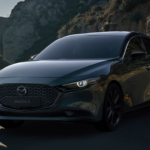 Mazda 3 Best and Worst Years in Canada: Which Models Should You Buy or Avoid?
The addition of i-Activ AWD made the fourth-generation Mazda 3 especially interesting for drivers dealing with snowy winters.
2019 Mazda 3: A Completely New Vehicle
The 2019 redesign introduced:
- A more upscale cabin.
- Improved ride refinement.
- Available i-Activ AWD.
- Updated driver-assistance technology.
- A redesigned infotainment interface.
- More sophisticated sedan and hatchback styling.
The Mazda 3 Sport hatchback adopted a distinctive rear design, while the sedan maintained a more traditional profile.
Although the redesign brought substantial improvements, the 2019 model was also the first year of a new generation.
When considering a used 2019 Mazda 3, checking its repair history, electronics, and outstanding recalls is particularly important.
2020 Mazda 3: Continued Refinement
The 2020 model continued the fourth-generation platform.
Its main appeal lies in combining the redesigned interior with familiar naturally aspirated engine options.
For Canadian buyers, the availability of AWD on selected models remained a major selling point.
A well-maintained 2020 Mazda 3 can offer modern styling and comfort at a lower used price than newer examples.
2021 Mazda 3: The Turbo Era Begins
The 2021 model year introduced one of the most exciting mechanical upgrades in Mazda 3 history.
Mazda added the available Skyactiv-G 2.5 Turbo engine to the Canadian lineup.
This engine could produce up to approximately 250 horsepower and 320 lb-ft of torque when using premium 93-octane fuel.
Turbocharged Mazda 3 models were paired with all-wheel drive, delivering strong acceleration while maintaining everyday practicality.
The 2021 Mazda 3 is particularly appealing to Canadian drivers looking for a compact car with more performance than a typical economy sedan.
2022–2023 Mazda 3: Modern Features and Established Design
The 2022 and 2023 model years continued the fourth-generation Mazda 3.
Buyers could find naturally aspirated engines, available AWD, and turbocharged configurations.
These model years are especially interesting in the used market because they combine a contemporary interior with several years of fourth-generation development.
For many buyers, a 2022 or 2023 Mazda 3 GS or GT offers an appealing balance of comfort, equipment, and purchase price.
However, it remains important to compare individual vehicles rather than assuming every car from these years has identical features.
2024 Mazda 3: Larger Standard Engine
The 2024 model year brought an important change to the Canadian lineup.
Mazda replaced the previously available base 2.0-litre engine with a 2.5-litre naturally aspirated engine.
The 2024 version was rated at 191 horsepower, giving entry-level models considerably more power than the previous 2.0-litre configuration.
Selected models also gained updated infotainment technology, including an available 10.25-inch centre display.
The 2024 Mazda 3 is worth considering for buyers who want stronger standard performance without necessarily choosing a turbocharged model.
2025 Mazda 3: Additional Technology
The 2025 Mazda 3 continued with the established fourth-generation design.
Updates focused on technology and equipment, including the introduction of available Alexa Built-in functionality and improvements to selected safety and connectivity features.
The 2025 model remains a strong option for drivers seeking a relatively recent Mazda 3 without necessarily buying a brand-new vehicle.
2026 Mazda 3: GX, GS, GT and GT Turbo
For 2026, Mazda Canada continued offering both the Mazda 3 sedan and Mazda 3 Sport hatchback.
The lineup included familiar GX, GS, GT, and GT Turbo configurations.
The naturally aspirated 2.5-litre engine produced 186 horsepower, while the turbocharged version offered up to 250 horsepower with premium gasoline.
Available features included AWD, upgraded infotainment systems, premium audio, and advanced driver-assistance equipment.
The 2026 Mazda 3 continued to emphasize a premium driving experience within the compact-car segment.
2027 Mazda 3: The Latest Announced Canadian Model
On November 3, 2026, Mazda Canada officially announced pricing and equipment for the 2027 Mazda 3 and Mazda 3 Sport.
The 2027 lineup continues the fourth-generation design, offering both sedan and hatchback body styles.
Its main new standard feature is Rear Seat Alert, added across the lineup.
Other highlights include the 186-horsepower naturally aspirated 2.5-litre engine, available i-Activ AWD, and GT Turbo variants producing up to 250 horsepower on premium fuel.
The announced starting Canadian MSRP is $25,750 for the sedan and $26,500 for the Sport hatchback, excluding freight, taxes, and additional fees.
The 2027 Mazda 3 therefore offers another year of incremental refinement rather than an entirely new generation. Mazda Canada News+2
Mazda 3 Year-by-Year Changes in Canada
The following table summarizes the major milestones in the Mazda 3's Canadian history.
| Model Year | Important Change |
|---|---|
| 2004 | Mazda 3 replaces the Protegé |
| 2005–2006 | First-generation lineup continues |
| 2007 | Updated first generation and Mazdaspeed3 introduction |
| 2008–2009 | Final first-generation model years |
| 2010 | Second-generation redesign |
| 2011 | Second-generation lineup continues |
| 2012 | Skyactiv technology introduced on selected models |
| 2013 | Final second-generation model year |
| 2014 | Third-generation redesign |
| 2015–2016 | Third-generation refinements |
| 2017 | Styling update and G-Vectoring Control |
| 2018 | Final third-generation model year |
| 2019 | Fourth generation and available AWD |
| 2020 | Fourth-generation lineup continues |
| 2021 | Available 2.5-litre turbo engine introduced |
| 2022–2023 | Technology and equipment updates |
| 2024 | Standard 2.5-litre naturally aspirated engine |
| 2025 | Additional connectivity technology |
| 2026 | Equipment and packaging updates |
| 2027 | Rear Seat Alert becomes standard |
This timeline makes it easier to understand which model years introduced significant changes and which primarily continued an existing design.
Mazda 3 Trim Levels in Canada: GX vs GS vs GT
Another important consideration when researching Mazda 3 year models is the trim level.
Mazda has used several trim names throughout its history, but GX, GS, and GT have been particularly common in the Canadian market.
Mazda 3 GX
The GX is generally the entry-level trim.
It focuses on practical transportation while maintaining the Mazda 3's responsive handling characteristics.
Depending on model year, GX equipment may include basic infotainment, heated seats, essential safety technology, and a naturally aspirated engine.
Recent GX models are considerably better equipped than many older examples.
Mazda 3 GS
The GS typically represents the middle of the lineup.
It often adds comfort and technology features that make everyday ownership more enjoyable.
Depending on the model year, available GS equipment may include a heated steering wheel, improved infotainment, upgraded upholstery, and additional convenience features.
For many Canadian buyers, the GS provides an attractive balance between price and equipment.
Mazda 3 GT
The GT generally offers more premium features.
Depending on the model year and configuration, GT models may include leather upholstery, upgraded audio, larger wheels, advanced driver-assistance systems, and more powerful engines.
The GT is a good choice for buyers who value comfort and technology.
Mazda 3 GT Turbo
The GT Turbo is the performance-focused option in the recent Canadian lineup.
It combines the turbocharged 2.5-litre engine with AWD and premium equipment.
Compared with naturally aspirated models, it offers considerably stronger acceleration.
However, buyers should also consider potentially higher fuel consumption, insurance costs, and maintenance expenses.
Mazda 3 Sedan vs Mazda 3 Sport Hatchback
Throughout much of its Canadian history, the Mazda 3 has been offered in both sedan and hatchback forms.
The hatchback is marketed as the Mazda 3 Sport.
While both body styles share much of their underlying engineering, their practicality and appearance differ.
| Feature | Mazda 3 Sedan | Mazda 3 Sport |
|---|---|---|
| Body style | Four-door sedan | Five-door hatchback |
| Cargo access | Traditional trunk | Rear liftgate |
| Styling | More traditional | Sportier appearance |
| Cargo flexibility | Good for regular luggage | More flexible for bulky items |
| Rear visibility | Varies by generation | Can be more restricted in recent models |
| Driving experience | Similar underlying platform | Similar underlying platform |
We would generally recommend the sedan for buyers who prefer a conventional compact-car design.
The Mazda 3 Sport may be more practical for carrying larger items, particularly when the rear seats are folded.
Neither body style is automatically more reliable than the other. Mechanical condition, equipment, and maintenance history matter more.
You might be interested in this content.Mazda 3 Insurance Cost in Canada: Complete 2026 GuideWhich Mazda 3 Year Models Are Best in Canada?
Choosing the best Mazda 3 model year depends on budget, desired features, and long-term ownership expectations.
Some model years stand out because they represent a mature version of their generation.
Best Affordable Used Mazda 3: 2017–2018
The 2017 and 2018 Mazda 3 models are worth considering for value-focused shoppers.
These years benefit from third-generation development and include several refinements introduced during the 2017 update.
They also retain relatively straightforward naturally aspirated engine options.
We would focus on examples with complete service records and minimal corrosion.
Best Modern Used Mazda 3: 2022–2024
The 2022–2024 models are attractive choices for buyers who want modern technology, improved comfort, and available AWD.
They offer the premium fourth-generation interior without necessarily requiring the cost of a brand-new model.
The 2024 model is especially interesting because of its more powerful standard 2.5-litre engine.
Best Mazda 3 for Performance: 2021 and Newer Turbo Models
Drivers looking for strong acceleration should consider a 2021 or newer Mazda 3 Turbo.
These models combine all-wheel drive with a powerful turbocharged engine.
They can be especially enjoyable on Canadian highways, although they are generally more expensive to purchase and operate.
Best Mazda 3 for the Latest Features: 2026–2027
Buyers who prioritize current equipment, factory warranty coverage, and recent safety technology may prefer the 2026 or 2027 Mazda 3.
The 2027 model adds standard Rear Seat Alert and maintains the familiar engine and drivetrain choices.
However, the latest model year is not necessarily the best financial choice for every buyer.
A lightly used Mazda 3 may provide better overall value depending on market prices.
Mazda 3 Model Years to Inspect More Carefully
No Mazda 3 model year should automatically be considered a bad purchase.
However, certain periods deserve additional attention.
2004–2009: Corrosion and Vehicle Age
The oldest Mazda 3 models can have substantial age-related deterioration.
In Canadian conditions, rust is one of the most important concerns.
Inspect the underside, structural components, brake lines, suspension mounting areas, and body panels.
Severe structural corrosion can make an otherwise inexpensive car uneconomical to repair.
2010–2013: Maintenance and Mechanical Wear
Second-generation vehicles are now old enough that maintenance history can vary significantly.
Inspect the suspension, transmission, engine cooling system, and underbody.
Also verify whether the car has the Skyactiv engine, since powertrain specifications differ between versions.
2014–2016: Electronics and General Condition
Early third-generation vehicles may deserve additional attention around infotainment operation and electronic equipment.
Check the display, controls, warning lights, and any available driver-assistance systems during the test drive.
2019: First Year of the Fourth Generation
Because the 2019 Mazda 3 introduced a major redesign, buyers should carefully check for recalls, software updates, and evidence of previous electrical or mechanical repairs.
This does not mean every 2019 Mazda 3 is unreliable.
It simply makes a detailed pre-purchase inspection particularly valuable.
Mazda 3 Engine Options by Generation
Engine availability has changed considerably over the years.
| Generation | Common Canadian Engine Options |
|---|---|
| 2004–2009 | 2.0L, 2.3L, turbocharged 2.3L Mazdaspeed |
| 2010–2013 | 2.0L, 2.5L, turbocharged 2.3L Mazdaspeed |
| 2014–2018 | Skyactiv-G 2.0L and 2.5L |
| 2019–2020 | Skyactiv-G 2.0L and 2.5L, depending on model |
| 2021–2023 | Skyactiv-G 2.0L, 2.5L, and 2.5L Turbo, depending on year |
| 2024–2027 | Skyactiv-G 2.5L and available 2.5L Turbo |
Exact engine availability depends on model year, trim, and body style.
For the latest models, the naturally aspirated 2.5-litre engine provides a useful combination of everyday performance and efficiency.
The turbocharged engine is more suitable for buyers who prioritize acceleration.
Is the Mazda 3 Reliable in Canada?
The Mazda 3 has generally established a positive reputation for durability, particularly among buyers looking for a compact car with conventional gasoline engines.
However, reliability is not determined by the model year alone.
A Mazda 3 with 180,000 kilometres and a complete maintenance history may be a better purchase than a lower-mileage example that has been neglected.
Important maintenance items include engine oil changes, brake servicing, coolant condition, transmission operation, tire replacement, and suspension inspections.
How Long Can a Mazda 3 Last?
A properly maintained Mazda 3 can potentially exceed 250,000 kilometres, and some examples reach 300,000 kilometres or more.
These figures are possibilities rather than guarantees.
Long-term durability depends on the engine, driving conditions, maintenance, and corrosion exposure.
In Canada, a car's structural condition can become just as important as its mechanical mileage.
Is AWD Worth It on a Mazda 3 in Canada?
All-wheel drive became available on the Mazda 3 with the 2019 redesign.
For drivers living in Ontario, Quebec, Alberta, or other regions with significant winter snowfall, AWD can provide additional traction during acceleration on slippery roads.
However, AWD does not replace proper winter tires.
Winter tires improve braking, steering, and overall traction in cold-weather conditions.
A front-wheel-drive Mazda 3 equipped with quality winter tires can still be an excellent Canadian daily driver.
We would choose AWD primarily for drivers who regularly encounter snow-covered roads, steep driveways, or challenging winter conditions.
Buyers should also consider the potential differences in fuel consumption and maintenance costs.
What to Check Before Buying a Used Mazda 3 in Canada
Regardless of the model year, a thorough inspection is essential.
We recommend checking the following areas before purchasing:
- Vehicle history: Review accident records, ownership history, and available maintenance documentation.
- Rust and corrosion: Inspect rocker panels, wheel arches, underbody components, and structural mounting points.
- Engine operation: Look for leaks, unusual noises, warning lights, or irregular idle.
- Transmission: Confirm smooth operation during acceleration, shifting, and deceleration.
- Suspension: Listen for clunks and inspect for worn components.
- Electronics: Test infotainment, climate controls, cameras, and safety systems.
- Recalls: Verify outstanding recall campaigns using the vehicle identification number.
- Tires and brakes: Check tread condition, brake wear, and winter tire availability.
For newer AWD and turbocharged models, maintenance records are particularly important.
A professional pre-purchase inspection is usually money well spent, especially when considering a vehicle that is no longer covered by its original warranty.
Frequently Asked Questions About Mazda 3 Year Models in Canada
1. What year did the Mazda 3 first come out in Canada?
The Mazda 3 was introduced in Canada for the 2004 model year, replacing the Mazda Protegé. The first generation was offered as a sedan and hatchback, establishing the Mazda 3's reputation for sporty handling and practical transportation.
2. What are the four generations of the Mazda 3?
The four Canadian Mazda 3 generations are 2004–2009, 2010–2013, 2014–2018, and 2019 onward. The announced 2027 model remains part of the fourth-generation family. Each generation introduced changes in exterior design, interior quality, technology, and available powertrains.
3. Which Mazda 3 model years are the most reliable?
There is no single model year that guarantees the best reliability. However, the 2017–2018 Mazda 3 models are appealing mature third-generation options, while the 2022–2024 models offer a more modern driving experience. Maintenance history, corrosion, mileage, and previous repairs should always influence the final decision.
4. Which Mazda 3 years have all-wheel drive in Canada?
All-wheel drive became available on the Canadian Mazda 3 for the 2019 model year. It continues to be available on selected fourth-generation trims, including the announced 2027 lineup. Not every Mazda 3 built since 2019 has AWD, so buyers should confirm the drivetrain of the individual vehicle.
5. What is the difference between the 2026 and 2027 Mazda 3 in Canada?
The 2027 Mazda 3 largely continues the 2026 model's fourth-generation design, engines, and trim structure. One of the principal announced updates is standard Rear Seat Alert across all 2027 Mazda 3 and Mazda 3 Sport models. Canadian starting MSRPs also increased by $500 compared with the initial 2026 pricing.
Conclusion: Which Mazda 3 Year Model Should You Choose in Canada?
The Mazda 3 has evolved considerably since its Canadian debut in 2004.
The earliest models remain interesting for budget-conscious buyers, although age and rust can be significant concerns. The second generation introduced important efficiency improvements, while the third generation brought a more modern design and improved driving refinement.
The fourth generation transformed the Mazda 3 into a more premium compact car, adding available AWD, enhanced technology, and turbocharged performance.
For Canadian buyers, our preferred choices depend on budget and priorities.
The 2017–2018 Mazda 3 offers an appealing combination of affordability and mature third-generation engineering. The 2022–2024 Mazda 3 is particularly attractive for drivers looking for modern comfort and available AWD. Meanwhile, the 2026–2027 models suit buyers who want newer equipment and current-generation features.
You might be interested in this content.Why Buy a Mazda 3 in Canada? 12 Reasons It's Worth ConsideringUltimately, the best Mazda 3 year model in Canada is not simply the newest or most powerful version. It is the vehicle that combines the right equipment, a reasonable purchase price, documented maintenance, and excellent mechanical and structural condition.
By understanding the differences between Mazda 3 generations and model years, we can make a more informed purchasing decision and choose a compact car that meets our needs for years to come.
Leave a Reply