
Hyundai Tucson Weight: How Much Does a Hyundai Tucson Weigh?

The Hyundai Tucson weighs between 1,555 and 1,935 kg (3,429 and 4,266 lbs) across the 2026 US model range, depending on the engine, drivetrain and trim level. Conventional gasoline models are generally the lightest, while plug-in hybrid versions are the heaviest due to their larger batteries and additional electrical components.
The Hyundai Tucson is a compact SUV designed to provide a balance between practicality, comfort, fuel efficiency and everyday performance. However, its weight can vary considerably depending on the configuration you choose.
Understanding the weight of a Hyundai Tucson is particularly important when evaluating fuel consumption, towing capacity, payload, acceleration and overall driving performance.
In this guide, we examine Hyundai Tucson curb weight in kilograms and pounds, compare different models and explain how vehicle weight affects everyday driving.
- How Much Does a Hyundai Tucson Weigh?
- Hyundai Tucson Weight in kg
- Hyundai Tucson Weight in lbs
- Hyundai Tucson Curb Weight by Trim Level
- Hyundai Tucson Hybrid Weight
- Hyundai Tucson Plug-in Hybrid Weight
- Hyundai Tucson Weight in Tonnes
- What Is Hyundai Tucson Curb Weight?
- Hyundai Tucson Gross Vehicle Weight
- Hyundai Tucson Curb Weight vs Gross Weight
- Hyundai Tucson Payload Capacity
- Why Is the Hyundai Tucson Hybrid Heavier?
- Does Hyundai Tucson Weight Affect Fuel Consumption?
- Does Hyundai Tucson Weight Affect Towing Capacity?
- Is the Hyundai Tucson a Heavy SUV?
- Hyundai Tucson FWD vs AWD Weight
- How to Find the Exact Weight of Your Hyundai Tucson
- Conclusion
- Frequently Asked Questions
How Much Does a Hyundai Tucson Weigh?
The following table shows the approximate curb weight of the 2026 Hyundai Tucson across its main powertrain configurations.
| Hyundai Tucson model | Weight in kg | Weight in lbs |
|---|---|---|
| 2.5L Gasoline FWD | 1,555–1,659 kg | 3,429–3,657 lbs |
| 2.5L Gasoline AWD | 1,620–1,724 kg | 3,572–3,800 lbs |
| Hybrid | 1,630–1,778 kg | 3,593–3,920 lbs |
| Plug-in Hybrid | 1,869–1,935 kg | 4,121–4,266 lbs |
The lightest configuration is the gasoline-powered Hyundai Tucson SE with front-wheel drive, while the Plug-in Hybrid Limited is the heaviest.
These figures are based on US-market specifications. Vehicle weight may differ in Canada, Australia, New Zealand, Europe and other markets.
Hyundai Tucson Weight in kg
The Hyundai Tucson has a curb weight of approximately 1,555 to 1,935 kilograms.
The vehicle's weight depends on several factors:
- Engine size and configuration.
- Front-wheel drive or all-wheel drive.
- Hybrid battery capacity.
- Trim level and optional equipment.
- Wheel and tire size.
- Model year.
- Regional specifications.
Most conventional gasoline-powered Tucson models weigh approximately 1,550 to 1,750 kg, placing them within the typical weight range of modern compact SUVs.
Hybrid and plug-in hybrid versions generally weigh more because they incorporate additional electrical systems.
Hyundai Tucson Weight in lbs
When measured in pounds, the 2026 Hyundai Tucson weighs between 3,429 and 4,266 lbs.
Most gasoline versions weigh less than 3,800 lbs, while plug-in hybrid configurations exceed 4,100 lbs.
The difference between the lightest and heaviest Tucson versions is approximately 837 lbs, or 380 kg.
This additional weight can influence acceleration, energy consumption, braking requirements and available payload.
Hyundai Tucson Curb Weight by Trim Level
The gasoline-powered Hyundai Tucson is available in several trim levels. Higher trims generally weigh more because they incorporate additional comfort, technology and convenience features.
You might be interested in this content.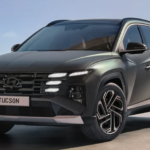 Hyundai Tucson Gas Tank Size: Fuel Capacity, Driving Range and Refuelling Costs
Hyundai Tucson FWD Weight
| Trim level | Weight in kg | Weight in lbs |
|---|---|---|
| SE | 1,555 kg | 3,429 lbs |
| SEL | 1,585 kg | 3,494 lbs |
| SEL Plus | 1,585 kg | 3,494 lbs |
| XRT | 1,599 kg | 3,526 lbs |
| SEL Premium | 1,603 kg | 3,533 lbs |
| Limited | 1,659 kg | 3,657 lbs |
Front-wheel-drive models are generally lighter because they do not require the additional mechanical components associated with all-wheel drive.
This configuration can be particularly suitable for urban driving, highway journeys and drivers who prioritize fuel efficiency.
Hyundai Tucson AWD Weight
| Trim level | Weight in kg | Weight in lbs |
|---|---|---|
| SE | 1,620 kg | 3,572 lbs |
| SEL | 1,650 kg | 3,638 lbs |
| SEL Plus | 1,650 kg | 3,638 lbs |
| XRT | 1,684 kg | 3,713 lbs |
| SEL Premium | 1,667 kg | 3,676 lbs |
| Limited | 1,724 kg | 3,800 lbs |
All-wheel-drive versions offer improved traction in certain driving conditions but carry additional weight.
Depending on the trim level, the AWD system adds approximately 65 to 85 kg compared with the equivalent FWD model.
Hyundai Tucson Hybrid Weight
The 2026 Hyundai Tucson Hybrid weighs approximately 1,630 to 1,778 kg (3,593 to 3,920 lbs) across its published configurations.
The hybrid system combines a turbocharged gasoline engine with an electric motor and a small high-voltage battery.
Although these components increase vehicle weight, the hybrid system can deliver better fuel economy, particularly in city traffic.
Additional weight comes from the electric motor, battery pack, power electronics, regenerative braking hardware and associated cooling systems.
For drivers who frequently travel in congested urban areas, the efficiency benefits of hybrid technology can outweigh the disadvantages associated with additional vehicle mass.
Hyundai Tucson Plug-in Hybrid Weight
The Hyundai Tucson Plug-in Hybrid is the heaviest version of the SUV.
| Plug-in Hybrid model | Weight in kg | Weight in lbs |
|---|---|---|
| SEL | 1,869 kg | 4,121 lbs |
| Limited | 1,935 kg | 4,266 lbs |
The primary reason for this additional weight is its larger high-voltage battery, which allows the vehicle to travel certain distances using electric power alone.
Unlike a conventional hybrid, the Tucson PHEV can be charged using an external electricity supply.
Although it weighs considerably more than the standard Tucson, it can reduce gasoline consumption when charged regularly and used for shorter journeys.
Hyundai Tucson Weight in Tonnes
The Hyundai Tucson weighs approximately 1.56 to 1.94 metric tonnes.
Gasoline models generally weigh between 1.56 and 1.72 tonnes, conventional hybrid versions weigh between 1.63 and 1.78 tonnes, and plug-in hybrid models weigh approximately 1.87 to 1.94 tonnes.
Most Hyundai Tucson configurations therefore weigh less than two metric tonnes before passengers and luggage are added.
You might be interested in this content.Hyundai Tucson Dashboard Symbols and MeaningsWhat Is Hyundai Tucson Curb Weight?
Curb weight refers to the weight of the vehicle in standard operating condition, without passengers or cargo.
It generally includes the vehicle's standard equipment, engine, transmission, fuel, coolant, engine oil and other operating fluids.
However, fuel-level assumptions and other measurement conventions can vary between manufacturers and countries.
Curb weight does not normally include passengers, luggage, additional cargo or the weight of a trailer.
This measurement is useful when comparing vehicles because it represents their approximate unloaded operating weight.
Hyundai Tucson Gross Vehicle Weight
Gross Vehicle Weight Rating, commonly abbreviated as GVWR, refers to the maximum permitted loaded weight of the vehicle.
Unlike curb weight, GVWR accounts for the maximum combined weight of the vehicle, occupants, luggage, accessories and other loads carried by the SUV.
The exact Hyundai Tucson GVWR varies according to the model year, engine, drivetrain and regional specifications.
Drivers should check the manufacturer's certification label, usually located inside the driver's door opening, to determine the maximum permitted weight of their particular vehicle.
Exceeding this limit can negatively affect braking, handling, suspension durability and tire performance.
Hyundai Tucson Curb Weight vs Gross Weight
Although these terms are frequently used interchangeably, they represent different measurements.
| Weight measurement | Meaning |
|---|---|
| Curb weight | Vehicle weight without passengers or cargo |
| Gross vehicle weight | Actual weight of the loaded vehicle |
| GVWR | Maximum permitted loaded vehicle weight |
| Payload capacity | Maximum allowable weight of occupants and additional loads |
| Towing capacity | Maximum permitted trailer weight under specified conditions |
Understanding these differences is especially important when towing a trailer, carrying heavy luggage or travelling with several passengers.
Hyundai Tucson Payload Capacity
Payload capacity refers to the additional weight a vehicle can safely carry within its specified limits.
We can estimate payload capacity using the following formula:
Payload capacity = GVWR − curb weight
For example, if a vehicle has a GVWR of 2,200 kg and a curb weight of 1,650 kg, its theoretical payload capacity would be 550 kg.
You might be interested in this content.Hyundai Tucson Engine Replacement Cost in Canada: Complete GuideThis is an illustrative calculation rather than a specification applicable to every Tucson.
Passengers, luggage, aftermarket accessories and trailer tongue weight can all reduce the remaining payload capacity.
For the exact permitted load, we recommend checking the vehicle's tire and loading information label.
Why Is the Hyundai Tucson Hybrid Heavier?
Hybrid SUVs require more components than conventional gasoline-powered vehicles.
The Hyundai Tucson Hybrid incorporates a high-voltage battery, electric motor, power control electronics, specialized transmission components and additional electrical equipment.
Plug-in hybrid versions require even larger batteries to support extended electric driving.
Despite their additional weight, hybrid models can achieve better fuel efficiency by recovering energy during deceleration, assisting the gasoline engine and operating on electric power under suitable conditions.
Does Hyundai Tucson Weight Affect Fuel Consumption?
Yes, vehicle weight can have a significant effect on fuel consumption.
Heavier vehicles generally require more energy to accelerate, climb hills and maintain speed under certain driving conditions.
Additional weight can contribute to:
- Increased fuel consumption.
- Greater energy requirements during acceleration.
- Increased tire wear.
- Additional braking demands.
- Reduced available payload.
- Higher energy consumption when climbing hills.
However, vehicle weight is not the only factor determining fuel economy.
Engine efficiency, aerodynamics, transmission design, tire pressure, driving habits and hybrid technology also play important roles.
This explains why a heavier Hyundai Tucson Hybrid can consume less gasoline than a lighter conventional Tucson.
Does Hyundai Tucson Weight Affect Towing Capacity?
Vehicle weight plays an important role in towing performance, but a heavier vehicle does not automatically have a higher towing capacity.
The maximum towing capacity depends on engine torque, transmission design, cooling systems, chassis strength, braking performance and manufacturer-approved limits.
Before towing a trailer or caravan, drivers should verify the towing capacity and gross combination weight limits applicable to their specific Hyundai Tucson.
You might be interested in this content. Chevrolet Trax Weight: Curb Weight, GVWR, and Complete Guide
It is also important to consider trailer tongue weight, as this contributes to the vehicle's total load.
Is the Hyundai Tucson a Heavy SUV?
The Hyundai Tucson is not exceptionally heavy for a modern compact SUV.
Its gasoline-powered configurations have a weight comparable to many other vehicles in the same segment, including the Toyota RAV4, Honda CR-V, Kia Sportage, Mazda CX-5 and Nissan Rogue.
However, the plug-in hybrid version approaches two metric tonnes, making it considerably heavier than many conventional compact SUVs.
The Tucson's weight reflects its combination of passenger space, safety equipment, structural components, technology and available electrified powertrains.
Hyundai Tucson FWD vs AWD Weight
Front-wheel-drive Hyundai Tucson models are generally lighter than their all-wheel-drive equivalents.
FWD configurations may offer lower fuel consumption and reduced mechanical complexity.
AWD configurations provide additional traction when accelerating on slippery surfaces and can be beneficial when driving in snow, rain or on loose surfaces.
For drivers who primarily use their Tucson in cities and on paved highways, FWD may be sufficient. Those who frequently encounter challenging weather or road conditions may benefit from AWD.
How to Find the Exact Weight of Your Hyundai Tucson
Because Hyundai Tucson weight varies between configurations, the most reliable ways to identify your vehicle's weight include:
- Checking the manufacturer's technical specifications.
- Reviewing the vehicle's owner's manual.
- Inspecting the manufacturer's certification label.
- Contacting a Hyundai dealership with the vehicle identification number.
- Using a certified vehicle weighbridge.
A weighbridge is particularly useful when determining the actual weight of a vehicle with passengers, luggage or aftermarket accessories installed.
Conclusion
The Hyundai Tucson weighs between 1,555 and 1,935 kg (3,429 and 4,266 lbs) across the 2026 US model range.
Gasoline-powered FWD versions are the lightest, while AWD configurations carry additional mechanical weight. Hybrid versions are generally heavier due to their electrical systems, and plug-in hybrid models have the highest curb weight because of their larger battery packs.
Despite these differences, the Hyundai Tucson remains within the expected weight range of modern compact SUVs.
We recommend checking the specifications of your exact model, particularly if vehicle weight is important for towing, payload capacity or fuel consumption.
Frequently Asked Questions
1. How much does a Hyundai Tucson weigh in kg?
The 2026 Hyundai Tucson weighs approximately 1,555 to 1,935 kg, depending on its engine, drivetrain and trim level.
You might be interested in this content. Mazda 3 Weight: Complete Guide by Year, Body Style and Engine
2. How much does a Hyundai Tucson weigh in pounds?
The Hyundai Tucson weighs between 3,429 and 4,266 lbs across its gasoline, hybrid and plug-in hybrid configurations.
3. How much does a Hyundai Tucson Hybrid weigh?
The 2026 Hyundai Tucson Hybrid weighs approximately 1,630 to 1,778 kg, depending on its configuration.
4. Is the Hyundai Tucson over two tonnes?
Most Hyundai Tucson models weigh less than two metric tonnes when unloaded. However, the total weight can exceed two tonnes when passengers and cargo are added.
5. Is the Hyundai Tucson AWD heavier than the FWD model?
Yes. The gasoline-powered Hyundai Tucson AWD weighs approximately 65 to 85 kg more than the equivalent FWD version, depending on the trim level.
Leave a Reply