
Best Driving Habits for Vehicle Longevity
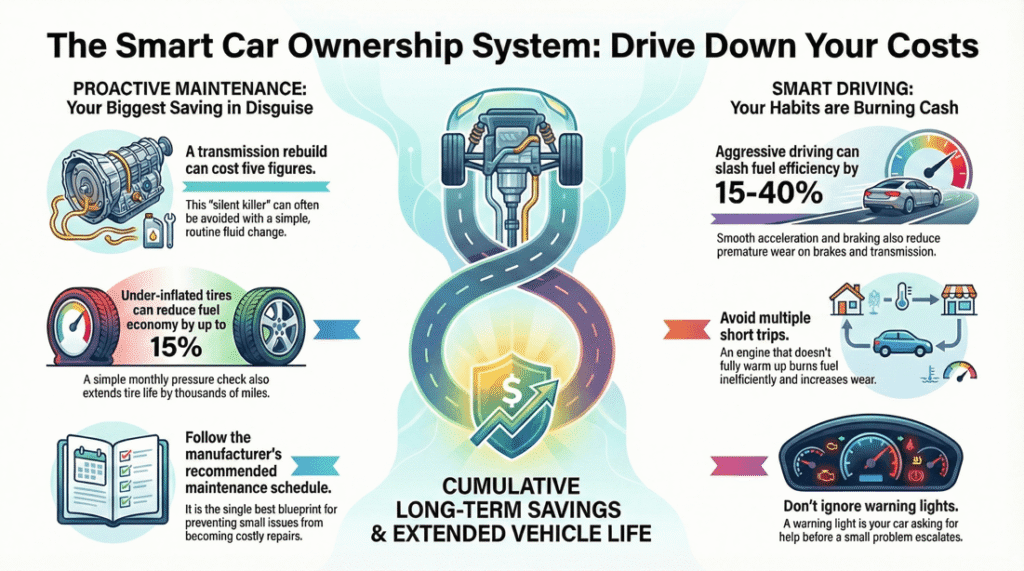
Driving habits have a profound impact on the lifespan and reliability of any vehicle, often more than regular maintenance alone. Gentle acceleration, smooth braking, and consistent speeds reduce strain on critical components like the engine, transmission, and brakes.
Avoiding short trips that prevent the engine from reaching optimal temperature minimizes wear, while allowing the vehicle to warm up briefly before driving protects internal parts. By adopting these mindful practices, drivers can significantly extend their car's life, enhance fuel efficiency, and reduce costly repairs, ensuring years of dependable performance and preservation of resale value.
Best Driving Habits for Vehicle Longevity
Adopting mindful driving techniques is the most effective way to extend your vehicle's lifespan and avoid costly repairs. Smooth, deliberate actions reduce stress on every component, from the engine and transmission to the brakes and tires. By focusing on how you accelerate, brake, and maintain consistent speeds, you can significantly reduce wear and tear, keeping your car running reliably for years beyond its expected service life.
You might be interested in this content. Night Driving Safety Tips
Smooth Acceleration and Deceleration
The single most impactful habit for preserving your vehicle is to practice smooth acceleration and deceleration. Instead of stomping on the gas pedal from a stop, gradually apply pressure to allow the engine and transmission to ease into higher speeds. This gentle approach reduces the sudden strain on the drivetrain, belts, and fuel system. Similarly, anticipate traffic flow and brake early and gently to avoid harsh stops.
Excessive hard braking wears down brake pads and rotors quickly, while also upsetting the vehicle's balance, which can stress suspension components. By driving with a light foot, you not only improve fuel efficiency but also dramatically decrease the internal friction that accelerates engine and transmission wear.
Maintain Consistent and Moderate Speeds
Constantly varying your speed, especially with heavy acceleration followed by hard braking, is detrimental to your car's health. Aim to maintain a steady and moderate pace, particularly on highways. Use cruise control when possible to keep the engine at a stable RPM, which minimizes thermal cycling—the repeated heating and cooling that can warp engine components and lead to gasket failure.
You might be interested in this content. Winter Road Trip Driving Guide
Driving at speeds significantly over 60 mph (96 km/h) forces the engine to work much harder, increasing fuel consumption and generating excessive heat that can degrade oil and cooling systems faster. Consistent speeds also reduce wear on the transmission, as it isn't constantly shifting gears to adjust to fluctuating throttle inputs.
Warm Up Your Engine Before High Loads
While modern engines don't require long idling sessions, they do benefit from a brief warm-up period, especially in cold weather. The best practice is to start the engine, allow it to run for about 30 to 60 seconds so oil can circulate fully, and then drive gently for the first few miles. Avoid revving the engine or engaging in hard acceleration until the coolant temperature gauge begins to rise.
This quick warm-up allows the engine oil to reach optimal viscosity, ensuring all moving parts—pistons, bearings, and valves—are properly lubricated before facing high loads. Driving aggressively on a cold engine causes rapid expansion of metal components before they have expanded uniformly, risking premature scoring of cylinder walls and excessive wear on the piston rings.
You might be interested in this content. How to Drive in Fog Safely
| Habit | Primary Benefit for Longevity | Component Saved |
|---|---|---|
| Smooth Starts & Stops | Reduces drivetrain shock and friction | Transmission, Brakes, Engine mounts |
| Consistent Speeds | Minimizes thermal cycling and RPM fluctuation | Engine gaskets, Alternator, Exhaust system |
| Short Warm-Up & Gentle Drive | Ensures proper lubrication before load | Piston rings, Cylinder walls, Bearings |
Gentle Acceleration and Deceleration Practices
Impact on Engine and Drivetrain Components
Aggressive driving, characterized by rapid acceleration and hard braking, places unnecessary stress on your vehicle's engine, transmission, and drivetrain. When you floor the accelerator, the engine demands a sudden surge of fuel and air, increasing internal pressure and temperature. This can lead to premature wear on piston rings, bearings, and valve trains.
Similarly, slamming on the brakes generates excessive heat in the brake system, warping rotors and wearing down brake pads faster. Smooth, gradual inputs allow mechanical components to operate within their designed tolerances, reducing friction and thermal shock.
- Apply throttle gently from a stop, aiming to reach cruising speed over several seconds rather than in a burst.
- Anticipate traffic flow and red lights to coast to a stop, using brakes lightly and progressively.
- Avoid jackrabbit starts from intersections or stop signs, especially in colder weather when oil is thicker.
Consistent Maintenance of Operating Temperature
Reducing Wear During Cold Starts and Hot Shutdowns
Short trips of less than five miles prevent your engine from reaching its optimal operating temperature, which is crucial for burning off moisture, condensation, and fuel contaminants. Incomplete combustion during warm-up leads to fuel dilution in the oil, which degrades lubrication and increases wear on cylinder walls and bearings. Conversely, shutting down a hot engine immediately after a high-load drive can cause oil to coke or carbonize on turbocharger bearings and hot surfaces. Driving habits that stabilize temperature help maintain oil viscosity and engine efficiency, extending the life of seals and gaskets.
You might be interested in this content. How to Drive More Efficiently
- Aim to combine short errands into a single longer trip to let the engine fully warm up.
- After highway driving or towing, allow the engine to idle for one to two minutes before shutting off to cool turbochargers.
- Park in a garage or use a block heater in cold climates to reduce the stress of cold starts.
Strategic Use of Cruise Control and Engine Braking
Minimizing Fuel System Deposits and Brake Wear
Maintaining a constant speed reduces the frequency of throttle adjustments, which helps fuel injectors operate cleanly and prevents carbon buildup on intake valves. Frequent speed changes cause the fuel mixture to fluctuate, leading to incomplete combustion and soot deposits.
Engine braking, done by downshifting or lifting off the accelerator on downhill grades, uses the drivetrain's resistance to slow the vehicle rather than relying solely on friction brakes. This technique reduces brake pad wear and prevents brake fluid from overheating, preserving the integrity of the braking system.
- Engage cruise control on flat highways to stabilize engine RPM and fuel delivery.
- Use a lower gear on steep descents to let engine compression control speed without riding the brakes.
- Anticipate stops by lifting off the accelerator early, letting the vehicle coast or engine-brake naturally.
Frequently Asked Questions
How does smooth acceleration and braking extend vehicle life?
Aggressive driving with rapid acceleration and hard braking strains the engine, transmission, and brakes. Smooth inputs reduce wear on these components, preserving fuel efficiency and preventing premature failure of brake pads and rotors. It also minimizes stress on the drivetrain and suspension, leading to fewer repairs and longer overall vehicle lifespan.
You might be interested in this content. How Long Does a Ford Fiesta Last in Canada?
Why is regular maintenance crucial for long-term vehicle health?
Scheduled oil changes, fluid checks, tire rotations, and filter replacements ensure all parts function optimally. Neglecting these leads to sludge buildup, overheating, or component failure. Following the manufacturer’s schedule prevents costly breakdowns and extends engine, transmission, and cooling system life, often doubling the vehicle's usable years.
What role does proper tire care play in longevity?
Maintaining correct tire pressure and regular alignment reduces uneven tread wear and improves fuel economy. Under-inflated tires cause extra rolling resistance, straining the drivetrain. Properly balanced and rotated tires enhance handling, reduce vibration damage to suspension parts, and prevent premature tire replacement, saving money and extending vehicle life.
How can avoiding short trips benefit your car's durability?
Frequent short trips prevent the engine from reaching optimal operating temperature, causing condensation to accumulate in oil and exhaust systems. This leads to sludge, corrosion, and increased wear. Combining errands into longer drives allows the engine to burn off moisture fully, reducing internal damage and prolonging engine, transmission, and battery life.
You might be interested in this content.
Leave a Reply