
Hyundai Tucson Pros and Cons in Canada: Is It Worth Buying?

The Hyundai Tucson is an appealing compact SUV for Canadian drivers looking for comfort, practicality, modern technology and everyday versatility. It competes directly with popular vehicles such as the Toyota RAV4, Honda CR-V, Mazda CX-5, Kia Sportage and Nissan Rogue.
With gasoline, hybrid and plug-in hybrid powertrain options, the Tucson appeals to several types of buyers. Its spacious interior, all-wheel-drive system and generous warranty coverage make it particularly attractive for Canadian families.
However, the Hyundai Tucson also has disadvantages. Some older models have experienced engine and transmission problems, the standard gasoline engine offers modest acceleration, and real-world fuel consumption can increase considerably during Canadian winters.
In this guide, we examine the main Hyundai Tucson pros and cons in Canada to help you determine whether this compact SUV is the right vehicle for your needs.
- Hyundai Tucson Pros and Cons at a Glance
- Hyundai Tucson Pros in Canada
- 1. Spacious and Comfortable Interior
- 2. Excellent All-Wheel-Drive System for Canadian Winters
- 3. Excellent Warranty Coverage
- 4. Multiple Powertrain Options
- 5. Good Hybrid Fuel Economy
- 6. Comfortable Ride Quality
- 7. Modern Interior Technology
- 8. Comprehensive Safety Features
- 9. Practical Cargo Space
- 10. Attractive Exterior Design
- Hyundai Tucson Cons in Canada
- 1. The Standard Gasoline Engine Is Not Particularly Powerful
- 2. Engine Problems in Certain Older Hyundai Tucson Models
- 3. Transmission Problems in Some Older Models
- 4. Higher Fuel Consumption During Canadian Winters
- 5. Hybrid Models Are More Expensive
- 6. Plug-In Hybrid Requires Regular Charging
- 7. Potentially Expensive Electronic Repairs
- 8. Resale Value Faces Strong Competition
- 9. Limited Hybrid Towing Capacity
- 10. No Third-Row Seating
- Hyundai Tucson Hybrid Pros and Cons
- Hyundai Tucson Gasoline vs Hybrid: Which Is Better in Canada?
- Is the Hyundai Tucson Good in Canadian Winters?
- Is the Hyundai Tucson Reliable in Canada?
- Hyundai Tucson Maintenance Costs in Canada
- Hyundai Tucson vs Its Competitors in Canada
- Who Should Buy a Hyundai Tucson in Canada?
- Frequently Asked Questions
- Conclusion: Is the Hyundai Tucson Worth Buying in Canada?
Hyundai Tucson Pros and Cons at a Glance
| Pros | Cons |
|---|---|
| Spacious and comfortable interior | Modest gasoline engine performance |
| Standard AWD on current Canadian models | Engine problems in certain older models |
| Excellent warranty coverage | Higher winter fuel consumption |
| Hybrid and plug-in hybrid options | Higher purchase price for electrified versions |
| Modern interior technology | Potentially expensive electronic repairs |
| Comprehensive safety features | Strong competition in resale value |
| Practical cargo space | Limited towing capacity on hybrid models |
| Comfortable everyday driving | No third-row seating |
| Attractive exterior design | Larger wheels can reduce ride comfort |
| Good family SUV practicality | Some distracting driver assistance alerts |
Specifications throughout this guide primarily refer to the 2026 Canadian Hyundai Tucson lineup, while reliability considerations also cover older generations.
Hyundai Tucson Pros in Canada
1. Spacious and Comfortable Interior
One of the biggest advantages of the Hyundai Tucson is its spacious passenger cabin.
Despite being classified as a compact SUV, the Tucson offers generous interior space for both front and rear passengers. Adults can generally sit comfortably in the second row, making it suitable for families and longer journeys.
The interior provides several advantages:
- Generous rear passenger legroom.
- Comfortable seating positions.
- Practical interior storage compartments.
- Good headroom.
- Available heated and ventilated front seats.
- Available heated rear seats.
For families travelling between Canadian cities or taking weekend road trips, the Tucson offers a practical balance between exterior dimensions and interior comfort.
2. Excellent All-Wheel-Drive System for Canadian Winters
The current Canadian Hyundai Tucson lineup includes HTRAC all-wheel drive as standard equipment. Hyundai Canada
This is an important advantage in a country where drivers regularly experience snow, freezing rain and slippery road conditions.
The AWD system can distribute power between the front and rear wheels to improve traction when necessary.
It is particularly useful when driving through snowy residential streets, climbing slippery hills or travelling on wet highways.
Combined with a quality set of winter tires, the Hyundai Tucson can be a capable winter vehicle.
However, AWD primarily improves traction during acceleration. It does not replace winter tires or eliminate the risks associated with driving on ice.
3. Excellent Warranty Coverage
Hyundai offers competitive new vehicle warranty coverage in Canada.
| Warranty | Coverage |
|---|---|
| Comprehensive limited warranty | 5 years or 100,000 km |
| Hybrid system warranty | 8 years or 160,000 km |
| Roadside assistance | 5 years |
Coverage is subject to Hyundai Canada's warranty conditions and exclusions. Hyundai Canada+1
The comprehensive warranty is particularly attractive compared with manufacturers that offer only three years of basic new vehicle coverage.
For buyers concerned about unexpected repair expenses, this provides additional peace of mind during the first several years of ownership.
4. Multiple Powertrain Options
Canadian Hyundai Tucson buyers can choose between three different powertrain configurations.
You might be interested in this content.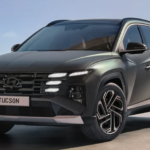 Which Hyundai Tucson to Buy in Canada? Complete Buying Guide
| Powertrain | Main advantage |
|---|---|
| 2.5L gasoline | Lower purchase price |
| 1.6L turbo hybrid | Better efficiency and acceleration |
| 1.6L plug-in hybrid | Electric driving capability |
The availability of multiple powertrains allows buyers to select a Tucson that matches their driving habits and budget.
The gasoline model is suitable for drivers seeking a conventional SUV, while the hybrid is particularly attractive for daily commuting.
The plug-in hybrid is worth considering for households with access to home charging.
5. Good Hybrid Fuel Economy
The Hyundai Tucson Hybrid offers significantly better official fuel economy than the conventional gasoline version.
Approximate combined fuel consumption ratings for recent Canadian models are:
| Hyundai Tucson version | Combined fuel consumption |
|---|---|
| 2.5L gasoline AWD | 8.8 L/100 km |
| 1.6L Hybrid AWD | 6.7 L/100 km |
| Plug-in Hybrid AWD | Depends on charging frequency |
The hybrid system is especially beneficial in urban environments, where regenerative braking and electric motor assistance can reduce gasoline consumption. autotrader.ca+1
Drivers commuting regularly in Toronto, Vancouver, Montreal or Ottawa may find the hybrid particularly appealing.
6. Comfortable Ride Quality
The Hyundai Tucson is primarily designed for comfortable everyday transportation rather than sporty driving.
Its suspension generally provides a comfortable ride over typical urban roads and highways, particularly when equipped with smaller wheels.
The elevated seating position also helps provide a commanding view of the road.
Although some versions with larger alloy wheels can feel firmer over potholes, the Tucson remains a comfortable SUV for most daily driving situations.
7. Modern Interior Technology
Recent Hyundai Tucson models feature an attractive interior with modern infotainment systems and digital displays.
Depending on the model year and trim level, available technology includes Apple CarPlay, Android Auto, wireless smartphone charging, digital instrumentation, navigation, digital key functionality and premium audio systems.
Higher trims also offer features that help the Tucson feel more sophisticated than a traditional entry-level compact SUV.
The updated interior introduced for the 2025 model year also offers more conventional physical controls for several frequently used functions.
8. Comprehensive Safety Features
Safety is another important Hyundai Tucson advantage.
Recent models offer Hyundai SmartSense driver assistance technologies, with equipment varying according to trim level and model year.
Available features include:
- Forward collision avoidance assistance.
- Lane keeping and lane following assistance.
- Blind-spot monitoring.
- Rear cross-traffic collision assistance.
- Adaptive cruise control.
- Driver attention warning.
- Surround-view monitoring.
These systems can be particularly useful during highway journeys and urban commuting.
Nevertheless, they are designed to assist the driver rather than replace attentive driving.
You might be interested in this content.Are Hyundai Tucson Easy to Steal? Everything You Need to Know9. Practical Cargo Space
The Hyundai Tucson offers a useful cargo area that makes it suitable for everyday family activities.
The wide rear opening and folding rear seats make it easier to transport groceries, luggage, sports equipment, camping supplies and other bulky items.
The Tucson is practical enough for most households without requiring the additional size and fuel consumption of a midsize SUV.
Cargo capacity varies between gasoline, hybrid and plug-in hybrid configurations.
10. Attractive Exterior Design
The Hyundai Tucson stands out from many conventional compact SUVs thanks to its distinctive exterior styling.
Its angular body panels, integrated lighting design and modern front grille give it a contemporary appearance.
Higher trims, including the N Line, provide additional sporty styling elements.
For buyers who prefer an SUV with more visual character than conservative competitors, the Tucson is an appealing option.
Hyundai Tucson Cons in Canada
1. The Standard Gasoline Engine Is Not Particularly Powerful
The conventional 2.5-litre four-cylinder gasoline engine prioritizes smooth everyday operation rather than strong performance.
While it is adequate for commuting, some drivers may find acceleration underwhelming when overtaking on highways, climbing steep hills or travelling with several passengers and heavy luggage.
The engine may also become noticeably louder during hard acceleration.
Buyers looking for stronger performance should consider the Hyundai Tucson Hybrid, which benefits from additional electric motor torque.
2. Engine Problems in Certain Older Hyundai Tucson Models
One of the most important disadvantages when buying a used Hyundai Tucson is the reliability history of certain older engines.
Some older Tucson vehicles have been associated with engine bearing problems, excessive oil consumption, engine knocking and premature engine failure.
Certain affected vehicles have been included in Canadian recalls and engine-related settlement programs. Eligibility depends on the engine, model year, vehicle identification number and applicable conditions. hyundaicanada-e2settlement.ca+1
These historical problems do not mean every Hyundai Tucson is unreliable.
Nevertheless, buyers should carefully investigate the engine maintenance history before purchasing a used example, particularly from older generations.
3. Transmission Problems in Some Older Models
Certain older Hyundai Tucson models equipped with a seven-speed dual-clutch transmission have experienced drivability concerns.
Potential symptoms include hesitation when accelerating, jerking at low speeds and delayed engagement.
Transport Canada issued a recall affecting certain 2016 Tucson models equipped with this transmission. Canada.ca
You might be interested in this content. Best Cars for Canadian Winters
The newer gasoline Tucson uses a conventional eight-speed automatic transmission, while hybrid versions use a six-speed automatic.
Consequently, the transmission concerns associated with older dual-clutch models should not automatically be applied to newer Tucson vehicles.
4. Higher Fuel Consumption During Canadian Winters
Although the Tucson Hybrid offers attractive official fuel economy figures, actual consumption can increase substantially in cold weather.
Several factors contribute to higher winter fuel consumption, including engine warm-up periods, cabin heating, winter tires, reduced battery efficiency, snow-covered roads and prolonged idling.
Hybrid owners may also notice that the gasoline engine operates more frequently during extremely cold temperatures.
Canadian drivers should therefore avoid assuming that official fuel consumption ratings will remain consistent throughout the year.
5. Hybrid Models Are More Expensive
The Hyundai Tucson Hybrid generally costs more to purchase than the conventional gasoline version.
Although reduced fuel consumption can help offset the additional expense, the financial benefit depends on annual driving distance, gasoline prices, financing costs and the original purchase price difference.
Drivers who cover relatively short distances each year may need several years to recover the hybrid premium.
We recommend comparing the total ownership cost rather than focusing exclusively on fuel consumption.
6. Plug-In Hybrid Requires Regular Charging
The Hyundai Tucson Plug-in Hybrid provides an estimated electric driving range of approximately 51 kilometres for the 2026 Canadian model. Hyundai Canada
However, achieving its greatest efficiency requires regular charging.
Drivers without access to a convenient charging location may struggle to maximize the benefits of the plug-in hybrid system.
Cold Canadian winters can also reduce electric driving range, while cabin heating may cause the gasoline engine to operate under certain conditions.
For households without home charging, the conventional Tucson Hybrid may represent a more practical choice.
7. Potentially Expensive Electronic Repairs
Modern Hyundai Tucson models feature numerous electronic components, sensors, cameras and computerized systems.
Although these technologies improve convenience and safety, they can also increase repair complexity.
Outside the warranty period, replacing damaged radar sensors, infotainment displays, electronic control modules or advanced lighting components could be expensive.
Even relatively minor collisions may require additional sensor calibration.
This is an important consideration for buyers planning to keep their Tucson for ten years or longer.
You might be interested in this content.Why Not to Buy a Hyundai Tucson in Canada: 12 Reasons to Think Twice8. Resale Value Faces Strong Competition
The Hyundai Tucson has improved considerably in terms of market appeal and overall desirability.
However, the Toyota RAV4 and Honda CR-V have traditionally enjoyed strong reputations for resale value in Canada.
Actual depreciation varies according to vehicle condition, trim, mileage, maintenance history and market demand.
Buyers concerned about long-term resale value should compare projected ownership costs across several competing compact SUVs before making a decision.
9. Limited Hybrid Towing Capacity
The conventional gasoline Tucson offers a higher maximum towing capacity than its electrified counterparts.
| 2026 Hyundai Tucson powertrain | Maximum towing capacity |
|---|---|
| 2.5L gasoline | 3,500 lbs / 1,588 kg |
| Hybrid | 2,000 lbs / 907 kg |
| Plug-in Hybrid | 2,000 lbs / 907 kg |
These figures represent maximum manufacturer ratings when appropriately equipped and subject to applicable towing requirements. Hyundai Canada
Canadian drivers who regularly tow heavier camping trailers or recreational equipment may prefer the gasoline Tucson or a larger SUV.
10. No Third-Row Seating
The Hyundai Tucson is a five-passenger SUV.
While its interior is spacious for its category, it does not offer a third row of seats.
Larger families requiring six or seven seats may be better served by vehicles such as the Hyundai Santa Fe, Hyundai Palisade or Kia Sorento.
Hyundai Tucson Hybrid Pros and Cons
The Hyundai Tucson Hybrid is one of the most attractive configurations for Canadian drivers who want to combine performance and fuel efficiency.
| Hybrid pros | Hybrid cons |
|---|---|
| Better fuel economy | Higher initial purchase price |
| Stronger acceleration | More complex powertrain |
| No external charging required | Reduced efficiency in extreme cold |
| Excellent urban driving characteristics | Lower towing capacity |
| Regenerative braking | Potentially expensive repairs outside warranty |
| Standard AWD | Fuel savings depend on driving habits |
The conventional hybrid is particularly appealing for drivers who want lower gasoline consumption without the inconvenience of plugging in their vehicle.
Hyundai Tucson Gasoline vs Hybrid: Which Is Better in Canada?
Both versions have advantages depending on the owner's priorities.
| Category | Better choice |
|---|---|
| Lower initial purchase price | Gasoline |
| Fuel efficiency | Hybrid |
| City driving | Hybrid |
| Acceleration | Hybrid |
| Maximum towing capacity | Gasoline |
| Lower powertrain complexity | Gasoline |
| High annual mileage | Hybrid |
| Occasional driving | Gasoline |
For most Canadian drivers who commute daily and travel significant annual distances, the Tucson Hybrid is worth serious consideration.
However, the gasoline model remains attractive for budget-conscious buyers and drivers who do not travel enough to justify the hybrid premium.
Is the Hyundai Tucson Good in Canadian Winters?
Yes, the Hyundai Tucson is well suited to typical Canadian winter driving when properly equipped.
Its AWD system, elevated driving position and available cold-weather comfort features make it a practical choice for regions that experience significant snowfall.
Useful winter features available on recent models include heated front seats, a heated steering wheel, remote starting and heated exterior mirrors.
However, Canadian Tucson owners should still install dedicated winter tires, maintain appropriate tire pressures and follow the manufacturer's maintenance recommendations for severe operating conditions.
The Tucson is a capable everyday winter SUV, but it is not designed for extreme off-road conditions or exceptionally deep snow.
You might be interested in this content.Hyundai Tucson Fuel Economy Canada: Complete Gas, Hybrid and PHEV GuideIs the Hyundai Tucson Reliable in Canada?
Hyundai Tucson reliability depends considerably on the model year, engine configuration and maintenance history.
Newer Tucson models offer updated powertrains and improved technology compared with previous generations. However, newer vehicles have not accumulated the same amount of long-term reliability data as older models.
When purchasing a used Hyundai Tucson, we recommend checking the service history, engine oil consumption, transmission operation, outstanding recalls and underbody corrosion.
An independent pre-purchase inspection can also help identify mechanical problems before committing to a vehicle.
Hyundai Tucson Maintenance Costs in Canada
The Hyundai Tucson generally requires maintenance similar to other compact SUVs.
The following figures are illustrative Canadian maintenance budget estimates, not fixed Hyundai dealer prices.
| Maintenance service | Estimated cost (CAD) |
|---|---|
| Oil and filter change | $90–$160 |
| Engine air filter replacement | $40–$90 |
| Cabin air filter replacement | $40–$100 |
| Tire rotation | $40–$80 |
| Brake fluid replacement | $120–$200 |
| Battery replacement, conventional 12V | $180–$350 |
| Brake pads and rotors per axle | $400–$900 |
| Set of winter tires | $700–$1,400 |
Actual maintenance costs vary depending on location, labour rates, powertrain, tire size and whether the work is performed at a dealership or an independent repair shop.
Following Hyundai's recommended maintenance schedule is especially important for protecting long-term engine reliability and maintaining eligibility for applicable warranty coverage.
Hyundai Tucson vs Its Competitors in Canada
The Hyundai Tucson competes in one of Canada's most competitive automotive segments.
| Competitor | Main reason to consider it |
|---|---|
| Toyota RAV4 | Fuel efficiency and resale reputation |
| Honda CR-V | Interior practicality and refinement |
| Mazda CX-5 | Driving dynamics and interior quality |
| Kia Sportage | Similar technology and powertrain options |
| Subaru Forester | AWD capability and visibility |
| Nissan Rogue | Comfortable seating and everyday practicality |
| Volkswagen Tiguan | Interior design and highway comfort |
| Mitsubishi Outlander | Available third-row seating |
The Hyundai Tucson distinguishes itself through its warranty coverage, modern features and variety of powertrain options.
Nevertheless, competing SUVs may offer advantages in specific areas, particularly resale value, driving dynamics or maximum passenger capacity.
Who Should Buy a Hyundai Tucson in Canada?
The Hyundai Tucson is an excellent vehicle to consider for families, daily commuters, drivers living in snowy regions and buyers who prioritize comfort, safety and modern technology.
It is particularly suitable for households that want a versatile compact SUV without moving into a larger and potentially more expensive vehicle category.
However, it may not be the ideal choice for drivers who require heavy towing capabilities, third-row seating, serious off-road performance or the strongest possible resale value.
Used vehicle buyers should also be especially careful when evaluating older Tucson models with known engine or transmission concerns.
Frequently Asked Questions
Is the Hyundai Tucson a good SUV in Canada?
Yes. The Hyundai Tucson offers a competitive combination of comfort, passenger space, safety technology, AWD capability and warranty coverage. It is particularly well suited to families and everyday commuting.
What is the biggest disadvantage of the Hyundai Tucson?
The biggest disadvantage depends on the model year. Certain older Tucson models have experienced engine and transmission problems, while newer gasoline versions can feel underpowered compared with their hybrid counterparts.
Is the Hyundai Tucson expensive to maintain in Canada?
Routine maintenance is generally comparable to other compact SUVs. However, major engine, transmission or electronic repairs outside the warranty period can become expensive. Preventive maintenance and regular inspections are important.
Is the Hyundai Tucson Hybrid worth buying in Canada?
The Tucson Hybrid is worth considering for drivers who travel frequently, particularly in urban environments. It offers better fuel efficiency and stronger acceleration than the conventional gasoline version, although its higher purchase price should be considered.
Is the Hyundai Tucson good for snow and ice?
Yes. The HTRAC AWD system makes the Tucson capable of handling typical Canadian winter road conditions. Dedicated winter tires remain essential for improving braking, cornering and overall traction in cold weather.
You might be interested in this content. Chevrolet Trax Pros and Cons in Canada: Is It a Good SUV to Buy?
Conclusion: Is the Hyundai Tucson Worth Buying in Canada?
The Hyundai Tucson is a well-rounded compact SUV that offers many advantages for Canadian drivers. Its spacious interior, standard AWD on current Canadian models, competitive warranty, modern technology and multiple powertrain options make it a strong alternative to the Toyota RAV4 and Honda CR-V.
Its disadvantages include modest gasoline engine performance, historical reliability concerns affecting certain older models, increased winter fuel consumption and higher purchase prices for electrified versions.
For budget-conscious buyers, the gasoline Tucson Preferred AWD represents a sensible starting point. For drivers who prioritize fuel economy and performance, the Hyundai Tucson Hybrid offers an attractive balance.
Overall, the Hyundai Tucson is worth buying in Canada if you prioritize comfort, practicality, winter driving capability and modern equipment, provided you select a suitable powertrain and carefully evaluate the maintenance history when purchasing a used model.
Leave a Reply