
Mountain Driving Tips for Canadians
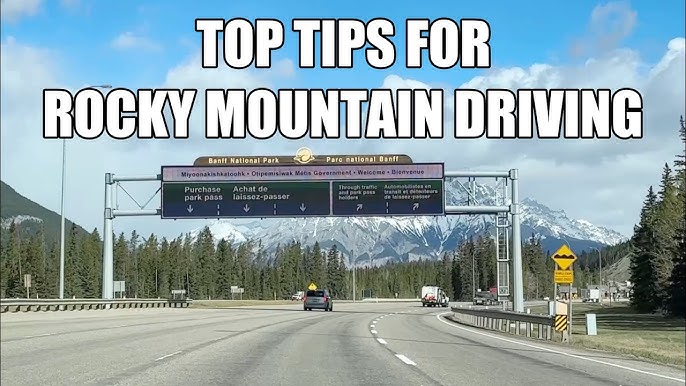
Mountain driving presents a unique set of challenges, especially for Canadians accustomed to flat prairie highways or congested city streets. From steep, winding grades to rapidly changing weather conditions, the alpine roads of British Columbia and Alberta demand heightened awareness and preparation.
Understanding the mechanics of gear selection to prevent brake fade, the necessity of maintaining a safe following distance on declines, and the proper etiquette for using pull-outs are critical skills. This article provides essential tips to ensure your mountain journey is as safe as it is scenic.
- Essential Mountain Driving Tips for Canadian Drivers
- Essential Mountain Driving Tips for Canadian Drivers
- Safe Driving Techniques on Steep Grades and Curves
- Navigating Weather and Wildlife Hazards
- Using Engine Braking Effectively in Automatic Transmissions
- Mastering Uphill Climbing Without Transmission Overload
- Managing Long Descents and Brake Conservation
- Vehicle Inspection and Maintenance for Mountain Driving
- Route Planning and Weather Assessment for Mountain Passes
- Driving Techniques for Descending and Ascending Mountain Roads
- Frequently Asked Questions
Essential Mountain Driving Tips for Canadian Drivers
Mastering mountain driving in Canada requires preparation, caution, and respect for the terrain. Whether you're crossing the Rockies in British Columbia or navigating the coastal ranges, understanding key techniques like engine braking, managing steep descents, and checking your vehicle's brakes and tires is critical.
Always anticipate changing weather conditions and be ready for sharp curves, falling rocks, and wildlife crossings. A calm attitude and proper gear, such as winter tires and an emergency kit, can make the difference between a safe journey and a stressful one.
Master Engine Braking to Preserve Your Brakes
On long downhill grades, using your brakes constantly can cause them to overheat and fade, leading to dangerous situations. Instead, shift to a lower gear (such as 2 or 1 in an automatic, or a low gear in a manual) to let the engine control your speed. This technique reduces brake wear and keeps your vehicle stable.
In extreme mountains like the Coquihalla Highway, you’ll often see signs recommending lower gears for trucks—apply the same rule for your SUV or sedan. Maintain a steady speed and tap the brakes periodically rather than riding them.
You might be interested in this content. How to Drive More Efficiently
Plan Your Passing and Lane Discipline
Mountain roads in Canada often have narrow lanes and limited visibility. Only pass slower vehicles when it is clearly safe and legal, using marked passing lanes where available. Stay in your lane at all times, especially on blind curves, and avoid crossing the center line. If you notice a line of vehicles behind you, pull over at a designated turnout to let them pass. This not only reduces road rage but also prevents dangerous tailgating scenarios on steep grades.
Prepare for Sudden Weather and Wildlife Hazards
Mountain weather in Canada can shift from sunshine to snow or fog within minutes, even in summer. Always check the forecast and pack chains if required—many mountain passes mandate winter tires from October to April. Additionally, be vigilant for wildlife such as elk, deer, or moose crossing the road, especially at dawn and dusk. Reduce your speed and scan the sides of the road. If a collision seems unavoidable, brake firmly but do not swerve, as losing control on a mountainside can be far worse.
| Mountain Pass | Province | Key Hazard | Recommended Gear |
|---|---|---|---|
| Rogers Pass | British Columbia | Heavy snow and avalanches | Winter tires & chains |
| Coquihalla Highway | British Columbia | Steep grades and fog | Low gear engine braking |
| Icefields Parkway | Alberta | Wildlife crossings | Binoculars & high beams |
| Yellowhead Highway | Alberta & BC | Sharp curves | Brake check & steady speed |
Essential Mountain Driving Tips for Canadian Drivers
Pre-Trip Vehicle Inspection and Preparation
Before driving in mountainous regions of Canada, such as the Rockies or Coastal ranges, you must check your vehicle thoroughly. Harsh gradients, low temperatures, and long descents can expose mechanical weaknesses. Ensure your brakes, tires, battery, and cooling system are in top condition. Carry chains but practice installing them in a safe area before your trip to avoid delays or accidents on snowy passes.
- Inspect tire tread depth and pressure, and install winter tires with the mountain snowflake symbol if driving in snowy conditions.
- Check brake pads and fluid levels, as brake fade can occur on long, steep descents like the Coquihalla Highway.
- Top up windshield washer fluid with a freeze-resistant formula and carry an emergency kit including blankets, food, water, and a shovel.
Safe Driving Techniques on Steep Grades and Curves
Controlling Speed and Momentum on Descending Roads
Mountain highways, such as the Icefields Parkway or the Sea-to-Sky Highway, feature sharp curves and sustained downhill gradients. To maintain control, downshift to a lower gear before descending, allowing engine braking to manage your speed instead of riding your brakes. Avoid sudden steering inputs or hard braking on loose gravel, and respect posted advisory speeds for curves, especially when road surfaces are wet or icy.
- Select a low gear (e.g., 3rd, 2nd, or L) at the top of the descent and maintain a steady, safe speed without accelerating downhill.
- Use intermittent, gentle braking to prevent brake overheating; pulse the brakes rather than holding them down continuously.
- Scan far ahead for wildlife, falling rocks, and slower vehicles, and increase your following distance to at least four seconds behind the car ahead.
Handling Rapid Weather Changes and Animal Encounters
Mountain weather in Canada can shift from clear skies to snow or fog in minutes, especially at higher elevations. Visibility may drop suddenly, and rain or thawing snow can create black ice on shaded sections. Additionally, large animals like elk, deer, and bears often cross highways near valleys and riverbanks, particularly at dawn and dusk. Reduce your speed aggressively when warning signs indicate animal crossings are common.
- Turn on low-beam headlights and fog lights in heavy rain, snow, or mist; never use high beams in fog as they reflect back.
- If you encounter an animal on the road, brake firmly but do not swerve violently, as this can cause a rollover or collision with oncoming traffic.
- Pull over at designated viewpoints if conditions become too severe, and wait until the weather passes or road crews clear obstacles before proceeding.
Using Engine Braking Effectively in Automatic Transmissions
Leveraging Lower Gears for Descent Control
Many Canadian drivers assume automatic transmissions handle all downhill work, but relying solely on brakes can cause dangerous fade on long mountain grades. Instead, manually select a lower gear using the transmission's manual mode, L, 2, or 3 settings.
You might be interested in this content. City Driving Tips to Save Fuel
This uses engine compression to maintain a safe speed without overheating brakes. For steep descents like Rogers Pass, shift to second or third gear before starting the decline. On moderate slopes, fourth gear often suffices.
- Identify the downhill grade length and steepness before shifting down.
- Engage lower gear before the descent begins to avoid sudden RPM spikes.
- Monitor engine RPM to stay below the redline, typically under 4,000 RPM for most vehicles.
- Tap brakes briefly every few seconds to keep brake rotors dry and cool if needed.
- Re-evaluate gear selection midway down if speed increases too much.
Mastering Uphill Climbing Without Transmission Overload
Maintaining Momentum and Avoiding Overheating
Climbing mountains in British Columbia or Alberta demands careful throttle management to prevent transmission overheating. In an automatic vehicle, avoid constant hunting between gears by keeping steady pressure on the accelerator.
Use the transmission's tow/haul mode if available, which holds gears longer and reduces unnecessary shifting. On steep climbs, manually downshift to third or second gear to maintain power at around 3,000 RPM. This prevents the transmission from repeatedly upshifting and downshifting, which generates heat.
- Reduce speed slightly before a steep climb to avoid sudden downshifts.
- Accelerate gently but consistently, aiming for a constant RPM around 2,500 to 3,000.
- For long grades, pull over briefly every 45-60 minutes to let the transmission cool.
- If the transmission temperature warning light activates, stop immediately in a safe area.
- Avoid using cruise control on steep ascents, as it can cause erratic shifting.
Managing Long Descents and Brake Conservation
Combining Engine Braking with Intermittent Braking
Canadian mountain highways often feature descents lasting 10 kilometres or more, such as the Coquihalla Highway. The key technique is to alternate between engine braking and brief, firm brake applications.
Use your left foot to hover near the brake while keeping your right foot on the accelerator in manual mode. Apply brakes firmly for 2-3 seconds to reduce speed by 10 km/h, then release completely to let engine braking hold the new speed. Repeat this cycle every 30-60 seconds to avoid continuous brake drag.
- Shift to a lower gear (L, 2, or manual mode 2nd gear) at the top of each major descent.
- Brake firmly to drop speed by 5-10 km/h below your target, then fully release brakes.
- Engine braking will gradually bring speed back up; reapply brakes when it reaches target speed.
- Never ride the brakes lightly; use short, decisive applications instead.
- If brakes feel soft or smell hot, pull over and let them cool for at least 15 minutes.
What are the essential steps for preparing to drive a CDL vehicle in Canadian mountain terrain?
The essential steps for preparing to drive a Commercial Driver's License (CDL) vehicle in Canadian mountain terrain involve thorough planning, vehicle inspection, and adherence to safety protocols specific to high-altitude, steep-gradient roads with variable weather.
You might be interested in this content.
Vehicle Inspection and Maintenance for Mountain Driving
Pre-Trip Check for Steep Grades and High Altitudes
Conduct a systematic pre-trip inspection focusing on components that bear higher stress in mountain conditions. Brake systems, especially air brakes, must be checked for proper adjustment, leaks, and moisture in air tanks, as steep descents can cause brake fade. Engine cooling systems require attention to prevent overheating during prolonged climbs. Tire pressure and tread depth are critical for traction on loose or icy surfaces.
- Inspect brake lining thickness and air brake adjustment, ensuring no more than one-quarter-inch slack in pushrods.
- Verify coolant level and hoses for leaks or cracks, and check the radiator fan operation at high engine load.
- Confirm tire pressure meets manufacturer specifications for heavy loads and that tread depth is at least 6/32 of an inch on steer tires and 2/32 on drive tires.
- Test the engine brake or exhaust retarder function, as it is essential for controlling speed without overheating service brakes on long downgrades.
- Ensure all lights, reflectors, and warning devices like reflective triangles are functional for low-visibility conditions in mountain passes.
Route Planning and Weather Assessment for Mountain Passes
Mapping and Evaluating Road Conditions Before Departure
Review current and forecasted weather data for mountain regions, paying attention to temperature, precipitation, and wind speeds that can create ice, snow, or fog. Identify steep grades, sharp curves, and designated runaway truck ramps along the route. Use topographic maps or GPS systems that show altitude changes and road surface conditions, and plan for rest stops at lower elevations to avoid altitude-related fatigue.
- Check alpine weather alerts from Environment Canada or provincial road condition reports via websites like DriveBC or 511 Alberta.
- Locate all runaway lanes on the planned route, noting their distance markers, as descents over 6% grade require early gear selection.
- Plan fuel stops at lower altitudes where diesel engines perform more efficiently, as high altitude reduces engine power by about 3% per 1,000 feet.
- Identify staging areas for chain-up zones if snow or ice is forecasted, and confirm local regulations for mandatory chain use.
- Schedule driving hours to avoid peak traffic in narrow mountain corridors and to allow daylight operation when visibility is best.
Driving Techniques for Descending and Ascending Mountain Roads
Controlling Speed and Gear Selection on Steep Grades
Use proper gear selection before starting a descent to avoid excessive brake use and loss of control. Downshift to a low gear that matches the grade percentage, typically using the same gear you would need for climbing that hill. Use engine braking and retarders as primary speed control, and apply service brakes in short, firm pulses to maintain a safe speed without overheating. For ascents, maintain steady momentum in a lower gear to prevent stalling or overheating.
- Select a gear before reaching the top of a hill that allows the engine to govern your speed without riding the brakes; for a 7% grade, this may be a gear as low as 4th or 5th.
- Test brakes at the top of the descent by applying them lightly to confirm they are responsive and not pulling.
- Maintain a following distance of at least five seconds from the vehicle ahead on downhill sections, increasing to ten seconds in wet or icy conditions.
- If brakes begin to fade, pull into a runaway truck ramp immediately rather than continuing downhill.
- On ascents, downshift before the engine loses RPM momentum, and avoid shifting on sharp curves where traction is uncertain.
Frequently Asked Questions
What Should I Check on My Vehicle Before Driving in the Mountains?
Before mountain driving, inspect your brakes, tires (including spare), and fluid levels. Ensure your tires have adequate tread depth for mountain roads. Check your coolant, oil, windshield washer fluid, and battery. Pack an emergency kit with blankets, extra water, and food. Verify your headlights and taillights work properly, as visibility changes quickly in mountainous terrain. Also, check your spare tire and jack are accessible.
How Should I Drive on Steep Mountain Roads?
When climbing steep mountain roads, use a lower gear to maintain consistent speed without straining your engine. Descending steep grades requires engine braking by downshifting to avoid overheating your brakes. Never ride your brakes continuously. Maintain a safe following distance of at least four seconds behind other vehicles. Watch for falling rocks or debris and stay alert for wildlife crossing the road unexpectedly.
What Should I Know About Mountain Weather Conditions?
Mountain weather changes rapidly, even in summer. Check forecasts before departing and be prepared for sudden rain, snow, or fog. Visibility can drop quickly, so slow down and use your low-beam headlights. Mountain passes may have ice or frost early in the morning even during warmer months. Always carry tire chains in winter conditions, as they may be required by law on certain mountain highways.
You might be interested in this content.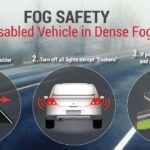 How to Drive in Fog Safely
How Do I Safely Pass Slower Vehicles on Mountain Roads?
Only pass slower vehicles on designated passing lanes or straight sections with clear visibility. Never pass on curves, hills, or no-passing zones. Before overtaking, signal your intention and check your mirrors and blind spots. Accelerate smoothly and return to your lane when you see the vehicle in your rearview mirror. Respect slower vehicles, particularly large trucks that need extra space on mountain grades.
Leave a Reply