
Ford F-150 Dashboard Symbols and Meanings: Complete Warning Light Guide

The Ford F-150 dashboard can feel like a quiet co-pilot. Most of the time, it sits in the background displaying speed, fuel level, and driving information. Then, without warning, a mysterious red, amber, green, or blue symbol appears.
What does it mean? Can we keep driving? Should we pull over immediately?
Understanding Ford F-150 dashboard symbols and meanings helps us separate ordinary status indicators from warnings that require urgent attention. Some lights simply confirm that a feature is active. Others are the truck’s way of waving a red flag before a minor fault grows into an expensive repair.
Ford explains that warning lamps alert drivers to conditions that may become serious, while indicator lights generally show when a vehicle feature is operating. The exact symbols, messages, and available systems can vary by model year, engine, trim level, powertrain, and region, so the owner’s manual for the specific truck remains the final authority.
In this guide, we will decode the most common Ford F-150 warning lights, explain what each colour means, and outline what we should do when one appears.
- Understanding Ford F-150 Dashboard Light Colours
- Ford F-150 Check Engine Light Meaning
- Ford F-150 Oil-Pressure Warning Light
- Ford F-150 Engine Coolant Temperature Warning
- Ford F-150 Battery Warning Light
- Ford F-150 Brake System Warning Light
- Ford F-150 ABS Warning Light
- Ford F-150 Traction-Control and Stability-Control Symbols
- Ford F-150 Tyre-Pressure Warning Light
- Ford F-150 Airbag Warning Light
- Ford F-150 Seat-Belt Warning Symbol
- Ford F-150 Powertrain Fault or Wrench Light
- Ford F-150 Electronic Throttle-Control Warning
- Ford F-150 Four-Wheel-Drive Symbols
- Ford F-150 Electronic Locking Differential Indicator
- Ford F-150 Hill Descent Control Symbol
- Ford F-150 Auto Start-Stop Symbols
- Ford F-150 Cruise-Control Indicator
- Ford F-150 Lane-Keeping System Symbols
- Ford F-150 Pre-Collision Assist Warning
- Ford F-150 Blind Spot Information System Indicator
- Ford F-150 Low-Fuel Warning Light
- Ford F-150 Diesel Warning Symbols
- Ford F-150 Pro Power Onboard Symbols
- Ford F-150 Lightning Dashboard Symbols
- Ford F-150 Hybrid Dashboard Symbols
- Ford F-150 Door, Hood, and Tailgate Warnings
- Ford F-150 Low Washer-Fluid Symbol
- Ford F-150 Exterior Lighting Symbols
- Ford F-150 Key and Immobilizer Symbols
- Ford F-150 Driver Alert Coffee-Cup Symbol
- Why Several Ford F-150 Warning Lights Appear at Once
- What to Do When an Unknown Symbol Appears
- Which Ford F-150 Warning Lights Mean Stop Immediately?
- Which Ford F-150 Symbols Usually Allow Careful Driving?
- How to Prevent Dashboard Warning Lights
- Final Thoughts on Ford F-150 Dashboard Symbols and Meanings
- Frequently Asked Questions
Understanding Ford F-150 Dashboard Light Colours
Before identifying individual icons, we should understand the dashboard’s colour system. Think of it like a traffic light. The colour often tells us how urgently we need to react.
Red Ford F-150 Dashboard Symbols
A red warning light usually signals a serious problem, an immediate safety concern, or a condition requiring prompt action.
Common red lights include:
- Brake system warning
- Engine oil-pressure warning
- High engine coolant temperature
- Battery or charging-system warning
- Seat-belt reminder
- Door or hood open warning
- Airbag fault warning
A red light does not always mean that the engine is about to fail. For example, the seat-belt symbol may simply tell us to buckle up. However, when a red mechanical warning remains illuminated while driving, we should treat it seriously.
Amber or Yellow Dashboard Symbols
Amber and yellow lights usually mean that the truck has detected a fault, limitation, or maintenance issue that should be inspected soon.
Examples include:
- Check engine light
- Anti-lock braking system warning
- Low tyre-pressure warning
- Traction-control warning
- Powertrain fault light
- Diesel exhaust fluid warning
- Blind Spot Information System fault
- Pre-collision assist warning
The truck may still operate normally, but ignoring an amber warning can allow a manageable issue to turn into something far more expensive.
Green, Blue, and White Indicator Lights
Green, blue, and white symbols usually confirm that a system is active rather than reporting a fault.
These may include:
- Turn signals
- Cruise control
- Automatic high beams
- High-beam headlights
- Four-wheel-drive mode
- Lane-centering assistance
- Auto Hold
- Parking lights
A blue high-beam icon, for example, simply tells us that the high beams are switched on.
Ford F-150 Check Engine Light Meaning
The check engine light resembles the outline of an engine. It may also be called the malfunction indicator lamp.
This is one of the most familiar—and misunderstood—Ford F-150 dashboard symbols.
What a Solid Check Engine Light Means
A solid check engine light means that the onboard diagnostic system has detected a fault related to the engine, emissions equipment, fuel system, ignition system, sensors, or powertrain controls.
Possible causes include:
- Loose or damaged fuel cap
- Failing oxygen sensor
- Faulty mass airflow sensor
- Ignition coil or spark-plug problem
- Evaporative-emissions leak
- Turbocharger or boost-control fault
- Catalytic-converter issue
- Fuel-injection problem
The truck may appear to drive normally even though a diagnostic trouble code has been stored.
Can We Drive With a Solid Check Engine Light?
We can often drive a short distance with a solid light if the F-150 runs smoothly, the temperature remains normal, and there are no unusual noises, smells, or additional warnings.
However, we should arrange a diagnostic scan soon. Guessing at the cause is like trying to read a book with half the pages missing. Retrieving the fault codes provides a much clearer starting point.
What a Flashing Check Engine Light Means
A flashing check engine light is more urgent. It can indicate an active engine misfire severe enough to damage the catalytic converter.
When it flashes:
- Reduce speed.
- Avoid hard acceleration and heavy towing.
- Pull over safely if the engine shakes, loses power, or runs roughly.
- Have the vehicle inspected as soon as possible.
Continuing to push the truck under heavy load could transform a relatively simple ignition repair into a costly exhaust-system replacement.
Ford F-150 Oil-Pressure Warning Light
The oil-pressure warning looks like an old-fashioned oil can, often with a drop at its tip.
This light does not simply mean that an oil change is due. It warns that the engine may not have sufficient oil pressure to protect its internal components.
What Causes the Oil-Pressure Light?
Possible causes include:
- Low engine-oil level
- Major oil leak
- Failing oil pump
- Blocked oil pickup
- Incorrect oil viscosity
- Defective oil-pressure sensor
- Internal engine wear
What Should We Do?
If the oil-pressure light appears while driving:
- Pull over as soon as it is safe.
- Switch off the engine.
- Wait several minutes.
- Check the oil level on level ground.
- Add the correct oil only if the level is low.
- Do not continue driving if the light remains on.
An engine without adequate oil pressure can suffer serious damage in a remarkably short time. Oil is the thin protective film standing between fast-moving metal components. Without it, the engine can grind itself apart like machinery running without grease.
Ford F-150 Engine Coolant Temperature Warning
The engine-temperature symbol usually resembles a thermometer dipping into waves.
It indicates that the engine coolant temperature is too high.
Common Reasons for an Overheating Warning
An F-150 may overheat because of:
- Low coolant
- Coolant leak
- Failed radiator fan
- Faulty thermostat
- Water-pump problem
- Blocked radiator
- Heavy towing in extreme heat
- Cooling-system air pocket
- Damaged drive belt
How to Respond to an Overheating F-150
Turn off the air conditioning and reduce engine load. If the warning remains illuminated or steam appears, stop in a safe location and switch off the engine.
Never remove the coolant reservoir cap while the cooling system is hot. Pressurized coolant can escape violently and cause severe burns.
Allow the truck to cool before checking the coolant level. If coolant is disappearing repeatedly, topping it up is not a repair. The leak or mechanical fault still needs to be found.
Ford F-150 Battery Warning Light
The battery-shaped dashboard symbol points to a charging-system problem. It does not necessarily mean that the battery itself is defective.
Possible causes include:
You might be interested in this content. Ford F-150 Oil Capacity: Complete Engine and Model-Year Guide
- Failed alternator
- Loose or broken accessory belt
- Corroded battery terminals
- Damaged wiring
- Faulty battery-monitoring sensor
- Weak battery
- Charging-control module fault
Can We Continue Driving?
When the battery light stays on, the truck may be running only on stored battery power. Once that energy is exhausted, the engine can stall and may not restart.
Turn off unnecessary electrical equipment, including heated seats, high-powered accessories, and climate-control loads. Drive only far enough to reach a safe location or repair facility if the truck is operating normally.
If the steering becomes unusually heavy, the temperature rises, or several warning lights appear together, stop immediately. A broken belt may affect more than the alternator.
Ford F-150 Brake System Warning Light
The brake warning may appear as the word BRAKE, an exclamation mark inside a circle, or another brake-related icon.
Ford states that this lamp can illuminate when the parking brake is applied, when the brake-fluid level is low, or when the vehicle detects a brake-system fault. Ford also warns that driving with a brake warning illuminated can be dangerous because braking performance may decrease.
What to Check First
Confirm that the parking brake is fully released.
If the warning remains on:
- Check the brake-fluid level if it is safe to do so.
- Pay attention to a soft or sinking brake pedal.
- Listen for grinding or scraping.
- Check whether stopping distance has increased.
- Avoid high speeds and towing.
- Arrange immediate inspection.
If the brake pedal feels abnormal or braking power is reduced, stop driving and have the vehicle transported.
Ford F-150 ABS Warning Light
The letters ABS inside a circle indicate a fault in the anti-lock braking system.
The conventional hydraulic brakes may continue to work, but the anti-lock function could be unavailable. During emergency braking, the wheels may lock more easily, particularly on wet, icy, or loose surfaces.
ABS and Brake Lights Together
An ABS light on its own usually indicates a fault within the anti-lock system.
If both the ABS and red brake warning lights illuminate, the problem may be more serious. Avoid driving until the braking system has been assessed, especially when pedal feel or stopping performance has changed.
Potential causes include:
- Failed wheel-speed sensor
- Damaged sensor wiring
- Faulty ABS control module
- Low system voltage
- Tone-ring damage
- Hydraulic-system fault
Ford F-150 Traction-Control and Stability-Control Symbols
The traction-control icon usually shows a vehicle with wavy skid marks behind it.
Flashing Traction-Control Light
A flashing light normally means that the system is actively reducing wheelspin or helping stabilize the truck.
We may see it when:
- Accelerating on snow
- Driving over mud
- Turning on a slippery road
- Pulling a trailer on loose gravel
- Applying too much throttle in rain
In this situation, the light is doing its job.
Traction-Control Light Stays On
A light that remains illuminated may mean:
- Traction control has been manually switched off.
- The system has detected a fault.
- Another related system, such as ABS, has failed.
- A wheel-speed sensor is not operating correctly.
Check for a message in the instrument cluster before assuming that a component has failed.
Ford F-150 Tyre-Pressure Warning Light
The tyre-pressure monitoring system symbol resembles a horseshoe-shaped tyre with an exclamation mark inside.
It indicates that one or more tyres may be significantly underinflated.
Why the TPMS Light Comes On
Common causes include:
- Naturally decreasing tyre pressure
- Colder outdoor temperatures
- Nail or puncture
- Damaged valve stem
- Slow bead leak
- Faulty TPMS sensor
- Incorrectly programmed replacement wheels
Tyre pressure often drops when temperatures fall. This is especially noticeable during cold mornings, when a tyre that was only slightly low may cross the system’s warning threshold.
Flashing TPMS Light
If the light flashes for a period and then remains on, the system may have a sensor or communication fault rather than a simple low-pressure condition.
Check all tyres with an accurate gauge and inflate them to the pressure printed on the driver-side door-jamb label, not the maximum pressure moulded into the tyre sidewall.
Ford F-150 Airbag Warning Light
The airbag warning usually depicts a seated person with a circle in front of them.
If this light stays on after startup or appears while driving, there may be a fault involving:
- Airbag control module
- Seat-belt pretensioner
- Occupant-classification sensor
- Impact sensor
- Steering-wheel clock spring
- Electrical connector or wiring
- Supplemental restraint system
The truck may still drive normally, but one or more airbags or pretensioners may not deploy correctly in a collision.
Because this directly affects occupant protection, we should have the system diagnosed promptly rather than ignoring the light.
Ford F-150 Seat-Belt Warning Symbol
The seat-belt icon shows a seated occupant wearing a belt. It may appear with a repeating chime.
Usually, the solution is simple: buckle the occupied seating positions correctly.
However, the warning may continue if:
- A heavy object is placed on a passenger seat.
- The buckle switch is faulty.
- The occupant sensor detects weight incorrectly.
- An object is trapped near the seat-belt latch.
- The seat wiring has been disturbed.
Secure heavy cargo on the floor or in the truck bed rather than allowing it to sit loose on a seat.
Ford F-150 Powertrain Fault or Wrench Light
The wrench symbol is particularly important on Ford vehicles. It can signal a fault involving the powertrain, electronic throttle control, transmission, four-wheel-drive system, or related controls.
Symptoms That May Accompany the Wrench Light
The F-150 may:
- Enter reduced-power mode
- Shift harshly
- Refuse to change gears normally
- Hesitate during acceleration
- Limit engine speed
- Disable cruise control
- Display a transmission-related message
What Should We Do?
If the truck drives normally, reduce load and arrange a diagnostic inspection.
If it loses power, jerks severely, overheats, or will not select gears properly, stop driving. Restarting the vehicle may temporarily clear the warning, but this does not prove that the fault has repaired itself.
A stored code may remain available even if the light disappears.
You might be interested in this content.Ford F-150 Gas Type Canada: Regular or Premium Fuel?Ford F-150 Electronic Throttle-Control Warning
Some F-150 configurations may display a throttle-control or powertrain-related warning when the electronic throttle system detects a problem.
Potential causes include:
- Throttle-body fault
- Accelerator-pedal position sensor issue
- Wiring or connector damage
- Powertrain control module fault
- Carbon buildup
- Low system voltage
The truck may enter limp mode to protect the engine and transmission. This reduced-performance state can feel as though the accelerator pedal has suddenly become disconnected from the truck’s usual strength.
Ford F-150 Four-Wheel-Drive Symbols
Depending on year and equipment, the instrument panel may display indicators for:
- 2H or two-wheel drive
- 4A or automatic four-wheel drive
- 4H or four-wheel-drive high
- 4L or four-wheel-drive low
- Electronic locking differential
- Off-road drive modes
4H Indicator Meaning
The 4H light confirms that four-wheel-drive high is engaged. It is generally intended for slippery or loose surfaces rather than dry pavement with strong grip.
4L Indicator Meaning
The 4L symbol indicates four-wheel-drive low. This mode multiplies low-speed torque and is useful for steep terrain, deep mud, sand, rocks, or controlled manoeuvring.
It is not intended for normal highway driving.
Flashing Four-Wheel-Drive Light
A flashing light may mean that the system is attempting to complete a shift.
Follow the cluster instructions. Depending on the shift requested, the truck may need to be stopped, placed in Neutral, or moved slowly in a straight line.
A symbol that keeps flashing could indicate that the shift was not completed or that a fault is present.
Ford F-150 Electronic Locking Differential Indicator
The differential-lock symbol confirms that the rear differential is locked or being commanded to lock.
Locking the differential allows both rear wheels to rotate together, improving traction on uneven or slippery terrain.
Use it only under appropriate low-traction conditions. On high-grip pavement, a locked differential can make turning difficult and place unnecessary stress on drivetrain components.
Ford F-150 Hill Descent Control Symbol
The hill-descent-control icon typically shows a vehicle travelling down a slope.
When active, the system helps maintain a controlled speed while descending steep terrain. It may apply the brakes automatically, allowing us to concentrate on steering.
A flashing or unavailable message may indicate that:
- Vehicle speed is too high.
- The brakes are too hot.
- The selected drive mode is incompatible.
- The system has detected a fault.
Ford F-150 Auto Start-Stop Symbols
The Auto Start-Stop indicator is commonly represented by the letter A surrounded by a circular arrow.
Green Auto Start-Stop Symbol
A green symbol usually means the engine has automatically stopped while the truck is stationary.
Grey or Crossed-Out Auto Start-Stop Symbol
A grey or unavailable symbol may mean the system is ready but current conditions do not allow an automatic engine stop.
Reasons may include:
- Engine has not reached operating temperature
- Battery charge is low
- Cabin heating or cooling demand is high
- Steering wheel is turned
- Driver’s door is open
- Seat belt is unfastened
- Trailer or drive-mode conditions prevent operation
- Vehicle is on a steep incline
This is not necessarily a fault.
Ford F-150 Cruise-Control Indicator
The cruise-control symbol often resembles a small speedometer with an arrow.
The light confirms that cruise control is switched on, active, or ready to be set.
Adaptive cruise control may use additional graphics showing a vehicle, lane lines, or following-distance bars.
The system may become unavailable because of:
- Radar blocked by snow, mud, or insects
- Dirty camera area on the windscreen
- Heavy rain or fog
- Direct sunlight
- Sensor misalignment
- System fault
Clean the relevant sensor areas carefully. If the warning remains in clear conditions, professional calibration or diagnosis may be required.
Ford F-150 Lane-Keeping System Symbols
Lane-keeping symbols generally show a vehicle between two lane markings.
The colour may change according to the system’s status:
- Grey may mean that the system is switched on but cannot detect lane markings.
- Green may mean that lane lines are detected.
- Yellow may indicate an intervention or warning.
- Red may accompany an urgent lane-departure alert.
Worn road markings, construction zones, snow, heavy rain, and camera obstruction can reduce system availability.
These systems assist the driver; they do not replace attentive steering.
Ford F-150 Pre-Collision Assist Warning
The pre-collision warning may display a vehicle, an impact graphic, a red visual alert, or a message on the instrument cluster.
It can activate when the system detects a potential frontal collision.
We should:
- Look ahead immediately.
- Reduce speed.
- Prepare to brake.
- Increase following distance.
- Check whether the camera or radar is obstructed if the system reports a fault.
False or unexpected alerts can occasionally occur around unusual road geometry, metal structures, tightly parked vehicles, or rapidly changing traffic. Repeated alerts under normal conditions deserve inspection.
Ford F-150 Blind Spot Information System Indicator
Blind Spot Information System indicators usually appear in the exterior mirrors rather than solely in the instrument cluster. A warning light illuminates when another vehicle enters the monitored blind-spot area.
Ford quick-reference material also describes yellow indicators in the exterior mirrors for blind-spot and cross-traffic alerts on equipped F-150 models.
A system fault or unavailable message may occur when:
- Radar sensors are covered in dirt or snow.
- A trailer has been attached but not configured correctly.
- The rear bumper has been damaged.
- Sensor alignment has changed.
- Wiring or a control module has failed.
Always check the mirrors and surroundings directly. The indicator is an extra set of electronic eyes, not a substitute for our own.
You might be interested in this content.Ford F150 Charging System Service Now: Causes, Diagnosis, and FixesFord F-150 Low-Fuel Warning Light
The fuel-pump symbol indicates that the fuel level is low.
The remaining range displayed by the trip computer is an estimate. It can fall more quickly when:
- Towing a heavy trailer
- Driving uphill
- Idling for long periods
- Facing strong headwinds
- Operating in very cold weather
- Accelerating aggressively
Running the tank extremely low can leave us stranded and may cause some fuel-system components to operate under less favourable conditions.
Ford F-150 Diesel Warning Symbols
Diesel F-150 models and other diesel-equipped Ford trucks can display additional symbols not found on gasoline-only vehicles.
Glow Plug Indicator
The coil-shaped glow-plug light means that the diesel preheating system is operating.
Wait for the light to switch off before starting the engine in cold conditions. A flashing or persistent glow-plug light can indicate a fault requiring diagnosis.
Diesel Exhaust Fluid Warning
A diesel exhaust fluid warning means that the DEF level is low, the fluid quality is unsuitable, or the emissions system has detected a problem.
Do not ignore countdown messages. Some systems may limit speed or prevent restarting after the available distance reaches zero.
Diesel Particulate Filter Warning
The diesel particulate filter light can indicate that soot accumulation has reached a level requiring regeneration.
A sustained drive under the conditions described in the owner’s manual may allow regeneration to complete. If the warning persists, changes colour, or is accompanied by reduced power, arrange service.
Water-in-Fuel Warning
This symbol indicates that water may have accumulated in the diesel fuel-water separator.
Water in a high-pressure diesel system can damage expensive components, so the separator should be drained according to Ford’s specified procedure.
Ford F-150 Pro Power Onboard Symbols
F-150 models equipped with Pro Power Onboard can display generator, outlet, power-flow, or system-fault messages.
Pro Power Onboard allows compatible trucks to provide electrical power through onboard outlets. Ford notes that the feature can be accessed through the centre display, where Generator Mode and related settings are available on equipped models.
Warnings may relate to:
- Electrical load exceeding available output
- Outlet ground fault
- System overheating
- Low fuel level
- Hybrid battery operating conditions
- Generator Mode status
- Connected device fault
Disconnect high-load appliances one at a time if the system reports an overload.
Ford F-150 Lightning Dashboard Symbols
The all-electric F-150 Lightning uses several EV-specific indicators.
These may include:
- High-voltage battery state
- Charging status
- Reduced-power warning
- Regenerative-braking information
- Electrical-system fault
- Battery-temperature warning
- Charge-port status
- Low-range warning
Turtle or Reduced-Power Symbol
A reduced-power symbol can mean that available propulsion power has been limited.
Possible reasons include:
- Very low battery charge
- Battery too hot or too cold
- High-voltage system fault
- Temporary protective strategy
Reduce speed and energy demand. Follow any instructions displayed in the cluster.
High-Voltage System Warning
A high-voltage warning requires prompt attention, particularly if accompanied by reduced power, inability to start, charging failure, unusual smells, smoke, or heat.
Do not attempt to service orange high-voltage cables or components without proper training.
Ford F-150 Hybrid Dashboard Symbols
PowerBoost hybrid F-150 models may display symbols related to:
- Electric driving
- Hybrid battery state
- Engine operation
- Regenerative braking
- Power-flow direction
- Pro Power Onboard
- Hybrid-system faults
The gasoline engine may start and stop automatically based on power demand, battery charge, climate control, and temperature. This behaviour is usually normal.
A hybrid-system fault message, however, should be diagnosed—especially when combined with reduced power or a no-start condition.
Ford F-150 Door, Hood, and Tailgate Warnings
A vehicle-outline symbol may identify an open door, hood, or tailgate.
Before driving, verify that every opening is securely latched. A tailgate that looks closed may not be fully engaged on both sides.
Some newer F-150 models include more advanced tailgate warnings and powered-tailgate status information, with the available functions varying by equipment.
These warnings matter because an unsecured tailgate can allow cargo to fall onto the road.
Ford F-150 Low Washer-Fluid Symbol
The washer-fluid light usually resembles a windscreen with spray above it.
It means that the washer reservoir is low.
Although it is not a mechanical emergency, visibility can disappear surprisingly quickly when road salt, dust, insects, or mud coats the windscreen. Refill the reservoir with a suitable fluid, particularly one rated for freezing conditions in cold climates.
Ford F-150 Exterior Lighting Symbols
Lighting indicators help confirm which exterior lights are active.
High-Beam Indicator
A blue headlamp icon with straight horizontal beams means that the high-beam headlights are on.
Dim them when approaching other traffic.
Fog-Light Indicator
The fog-light symbol confirms that the front or rear fog lights are switched on, depending on the direction and colour of the graphic.
Automatic High-Beam Symbol
An automatic high-beam icon may include the letter A within or beside a headlamp symbol.
You might be interested in this content. Buick Encore Dashboard Symbols: Complete Warning Light Guide
It indicates that the system is available or actively managing high-beam operation.
Turn-Signal Indicator
Green arrows flash when the indicators or hazard lights are operating.
A signal flashing much faster than usual can indicate a failed exterior bulb or circuit fault on vehicles using traditional bulb monitoring.
Ford F-150 Key and Immobilizer Symbols
A key, padlock, or vehicle-security symbol may relate to the immobilizer, key recognition, or passive entry system.
No Key Detected Message
This message can appear because:
- The key-fob battery is weak.
- The key is outside the cab.
- Electronic interference is present.
- The key has been damaged.
- The truck’s receiver has a fault.
Use the backup starting position described in the owner’s manual and replace the key-fob battery when appropriate.
Security Light Flashing When Parked
A security indicator that flashes slowly when the truck is switched off may simply confirm that the anti-theft system is armed.
Rapid flashing or a no-start condition can point to a key-recognition or immobilizer issue.
Ford F-150 Driver Alert Coffee-Cup Symbol
The coffee-cup symbol belongs to the Driver Alert System on equipped models.
Ford explains that the system monitors driving behaviour and can warn the driver when it detects patterns that may suggest reduced alertness.
When it appears, take the hint seriously. Stop somewhere safe, stretch, rest, or change drivers.
Opening a window and turning up the radio may make us feel more awake for a few minutes, but they are poor substitutes for proper rest.
Why Several Ford F-150 Warning Lights Appear at Once
Multiple warning lights do not always mean that several independent systems failed simultaneously.
Modern vehicle systems share information. One failed wheel-speed sensor, for instance, may affect:
- ABS
- Traction control
- Stability control
- Hill-descent control
- Drive modes
- Cruise control
- Four-wheel-drive functions
Likewise, low battery voltage can create a Christmas-tree effect across the instrument panel, with several modules reporting communication or voltage faults.
A complete diagnostic scan is more useful than replacing parts based only on the visible icons.
What to Do When an Unknown Symbol Appears
When we do not recognize a Ford F-150 dashboard symbol, follow this simple process.
Step 1: Check the Colour
Red normally deserves the fastest response. Amber requires investigation. Green, white, or blue usually indicates system operation.
Step 2: Read the Instrument-Cluster Message
Many F-150 warning lights appear with a written explanation. Do not clear the message before reading it carefully.
Step 3: Observe How the Truck Feels
Ask:
- Is the engine shaking?
- Has power dropped?
- Does the brake pedal feel different?
- Is steering unusually heavy?
- Is the temperature rising?
- Are there strange noises or smells?
- Is smoke visible?
A warning accompanied by physical symptoms is more urgent than a light appearing by itself.
Step 4: Reduce Load
Stop towing, avoid hard acceleration, and switch off unnecessary accessories when a mechanical or electrical fault is suspected.
Step 5: Consult the Correct Owner’s Manual
Do not rely solely on a generic online image chart. Symbols and instructions can differ between model years and equipment packages.
Ford provides model-year-specific digital and downloadable owner’s manuals, including searchable F-150 manuals.
Step 6: Scan Diagnostic Codes
A compatible diagnostic scanner can reveal stored trouble codes. Basic readers may retrieve engine codes, but advanced systems may require equipment capable of accessing Ford-specific modules.
Record the codes and freeze-frame data before clearing anything.
Which Ford F-150 Warning Lights Mean Stop Immediately?
We should generally stop as soon as it is safe when we see:
- Low oil-pressure warning
- High engine-temperature warning
- Red brake warning with poor braking
- Flashing check engine light with severe misfire
- Charging light with overheating or heavy steering
- High-voltage warning with smoke, heat, or unusual odour
- Major steering-system warning
- Stop-safely-now message
- Rapid loss of engine power in traffic
- Any warning accompanied by smoke or fluid loss
Pull off the roadway, activate the hazard lights, and avoid standing near moving traffic.
Which Ford F-150 Symbols Usually Allow Careful Driving?
Careful, limited driving may be possible when:
- The check engine light is solid and the truck runs normally.
- One tyre is slightly low but not visibly damaged.
- The ABS light is on but normal braking remains available.
- A driver-assistance system is temporarily unavailable.
- Washer fluid is low.
- Auto Start-Stop is unavailable.
- A sensor is obstructed by weather.
- A maintenance reminder appears.
This is not permission to ignore the warning. It simply means that immediate shutdown may not be necessary.
How to Prevent Dashboard Warning Lights
We cannot prevent every electrical sensor failure, but routine care reduces the likelihood of many warnings.
Practical Preventive Checklist
- Check engine oil regularly.
- Monitor coolant level when the engine is cold.
- Maintain correct tyre pressure.
- Replace a weak battery before it causes voltage-related faults.
- Keep cameras, radar areas, and parking sensors clean.
- Service the transmission and drivetrain as specified.
- Use the correct engine oil and fluids.
- Repair minor leaks before levels fall dangerously.
- Avoid installing poorly grounded electrical accessories.
- Inspect trailer wiring for corrosion or short circuits.
- Address warning lights before towing heavy loads.
- Follow the maintenance schedule for the exact model year.
Prevention is rarely glamorous, but it is much cheaper than waiting for the dashboard to light up like a holiday display.
Final Thoughts on Ford F-150 Dashboard Symbols and Meanings
Learning the Ford F-150 dashboard symbols and meanings gives us something every truck owner needs: context.
Not every light is a crisis. A green cruise-control symbol or flashing traction indicator simply confirms that a system is operating. An amber check engine light asks us to investigate. A red oil-pressure, brake, or temperature warning demands immediate respect.
The smartest response is not panic, and it is not indifference. We should read the message, note the colour, observe how the truck behaves, and consult the manual for the specific year and configuration.
The dashboard is the F-150’s language. Once we understand it, those glowing symbols stop looking like cryptic hieroglyphics and start becoming useful early warnings.
Frequently Asked Questions
1. What is the most serious Ford F-150 dashboard warning light?
Oil-pressure, overheating, brake-system, and stop-safely-now warnings are among the most serious. Pull over safely and switch off the truck when continued operation could damage the vehicle or compromise safety.
2. Can I drive my Ford F-150 with the wrench light on?
A short, careful drive may be possible if the truck operates normally. However, the wrench light can indicate a powertrain, throttle, transmission, or four-wheel-drive fault. Stop driving if the truck loses power, shifts violently, overheats, or displays additional critical warnings.
You might be interested in this content.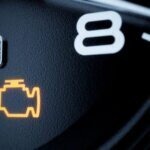 Why Does My Check Engine Light Come On?
3. Why is my Ford F-150 traction-control light on?
A flashing traction-control light usually means the system is actively controlling wheelspin. A light that stays on can mean the system has been switched off or has detected a fault, often involving a wheel-speed sensor or the ABS system.
4. Why did several dashboard lights appear after starting my F-150?
Several lights may appear because of low battery voltage, a charging fault, a communication problem, or one shared sensor failure. A complete module scan can identify whether the warnings have a common cause.
5. How do I find the exact meaning of a symbol on my F-150?
Read the accompanying cluster message and check the owner’s manual for the truck’s exact model year, engine, trim, and region. Ford’s digital owner manuals are searchable and provide information specific to each vehicle configuration.
Leave a Reply