
Why Is the Ford Maverick a Truck? The Compact Pickup That Rewrites the Rules

The Ford Maverick is a truck because it does truck things. Simple, right? Well, yes and no. The real answer is a little more interesting than just pointing at the open bed and saying, “There it is.” The Maverick has a pickup bed, payload capability, towing ability, a practical utility-first layout, and a design built around hauling stuff that would make most compact SUVs sweat. But it also drives more like a small crossover than a traditional body-on-frame pickup, which is why some people look at it sideways and ask, “Wait… is this really a truck?”
We get it. For decades, many of us were taught that a “real truck” had to be huge, heavy, thirsty, tall, loud, and slightly intimidating in a grocery store parking lot. The Ford Maverick walks in wearing sneakers instead of work boots. It is smaller, easier to park, more fuel-conscious, and much friendlier for daily life. But that does not kick it out of the truck club. In fact, it might make it one of the smartest trucks Ford has built in years.
So, why is the Ford Maverick a truck? Because it blends the essential DNA of a pickup with the comfort and efficiency modern drivers actually want. It is not trying to be an F-150. It is not trying to tow a house. It is built for people who need a bed, need utility, need versatility, and do not need a massive full-size pickup sitting in the driveway like a steel elephant.
Let’s break it down.
- The Short Answer: The Ford Maverick Is a Pickup Truck
- What Makes a Vehicle a Truck in the First Place?
- The Maverick Has a Real Pickup Bed
- Payload Capacity Is a Major Truck Trait
- The Maverick Can Tow, Too
- Unibody Construction Does Not Disqualify It
- The Ford Maverick Is a Compact Truck
- The Maverick Changed the Truck Conversation
- The Maverick Is Built for Real-Life Truck Buyers
- It Looks Like a Truck Because It Is One
- The Maverick’s Interior Does Not Make It Less Truck-Like
- The Hybrid Powertrain Does Not Change Its Truck Identity
- The Maverick Is Not an F-150, and That Is the Point
- Truck Identity Is About Function, Not Ego
- The Maverick’s Bed Makes Everyday Life Easier
- The Maverick Is a Lifestyle Truck and a Work Truck
- The Maverick Competes With Trucks, Not Cars
- Why Some People Say the Maverick Is Not a Truck
- The Ford Maverick vs SUV Question
- The Ford Maverick vs Traditional Truck Question
- The Maverick Proves Trucks Can Be Sensible
- Is the Ford Maverick a Real Truck?
- Final Thoughts: The Maverick Is a Truck for the Real World
- FAQs About Why the Ford Maverick Is a Truck
The Short Answer: The Ford Maverick Is a Pickup Truck
The Ford Maverick is classified as a compact pickup truck because it has the core features that define a pickup: a separate open cargo bed, a cab for passengers, payload capacity, towing capability, and a work-friendly design. That open bed is not a decoration. It is the Maverick’s main argument.
Unlike an SUV, where the cargo area is enclosed and shared with the cabin, the Maverick separates people from cargo. Muddy tools, mulch bags, bicycles, camping gear, furniture, sports equipment, and weekend project supplies can all ride outside the cabin. That is one of the oldest and clearest pickup truck traits.
But the Maverick adds a twist. It uses a unibody platform instead of the classic body-on-frame construction found in larger pickups. That is where the debate begins. Some traditional truck fans see unibody construction and immediately raise an eyebrow. But construction style alone does not erase truck identity. A vehicle can be unibody and still be a pickup. The Maverick proves that.
What Makes a Vehicle a Truck in the First Place?
Before we judge the Maverick, we need to ask a better question: what actually makes a truck a truck?
A truck is generally designed to move people and cargo with utility as a central purpose. In the pickup world, that usually means a passenger cab connected to an open cargo bed. Trucks are built to handle practical jobs: hauling, towing, carrying, transporting, and surviving the messy stuff of everyday life.
A pickup truck usually includes:
- An open cargo bed
- A cab for passengers
- Payload capability
- Towing capability
- Durable cargo management options
- Utility-focused design
- Ground clearance suitable for mixed use
- Available all-wheel drive or four-wheel drive on many models
- Work, recreation, and lifestyle flexibility
The Ford Maverick checks these boxes. It may check them in a smaller, more efficient, more city-friendly way, but it checks them all the same.
The Maverick Has a Real Pickup Bed
The biggest reason the Ford Maverick is a truck is right behind the cab. The bed is the heart of the Maverick’s identity. Without it, we would probably be talking about another compact crossover. With it, the Maverick becomes something more practical, more flexible, and more useful.
The Maverick’s bed is designed for everyday hauling. We are talking about home improvement supplies, small appliances, garden equipment, camping gear, bikes, coolers, tailgate gear, and all the awkward items that do not fit neatly inside an SUV.
That matters. Anyone who has tried to load dirty bags of soil into a nice carpeted cargo area knows the pain. A pickup bed changes the whole experience. You toss things in, tie them down, rinse things out, and move on with your day.
The Bed Separates the Maverick From SUVs
An SUV can carry cargo, but it carries cargo inside the same protected space as passengers. That is great for luggage. It is less great for wet plants, paint cans, dusty tools, oily parts, firewood, or anything with sharp corners.
The Maverick’s bed gives us a physical barrier between clean cabin life and dirty cargo life. That separation is one of the most practical reasons pickups exist. The Maverick may be compact, but the concept is classic.
The Bed Is Not Just for Looks
Some vehicles wear rugged styling like a costume. The Maverick does not simply look truck-ish. Its bed is built to be used. The tailgate, tie-down points, cargo flexibility, and available accessories turn it into a working space.
That is what gives the Maverick credibility. It is not a crossover with a fake adventure badge. It is a small pickup with a real utility zone.
Payload Capacity Is a Major Truck Trait
A truck is not just about having space. It is about carrying weight. Payload capacity is the amount of weight a vehicle can carry in passengers and cargo. This is one of the clearest signs that the Ford Maverick belongs in the truck category.
The Maverick can carry a meaningful amount of weight for its size. That makes it useful for small business owners, DIY homeowners, students moving furniture, weekend campers, and anyone who regularly carries gear.
Think of payload like the Maverick’s backpack strength. Some vehicles have a cute little tote bag. The Maverick brings a proper utility backpack.
What Can the Maverick Carry?
Depending on configuration and load limits, the Maverick can be useful for carrying things like:
- Bags of mulch or soil
- Small furniture
- Bicycles
- Coolers and camping equipment
- Tools and hardware
- Sports gear
- Ladders
- Moving boxes
- Light construction materials
- Outdoor equipment
This is where the Maverick feels more like a truck than many people expect. It is not just a commuter car with a bed slapped onto the back. It was designed around usable carrying ability.
The Maverick Can Tow, Too
Another major reason the Ford Maverick is a truck is towing. No, it is not built to tow like a heavy-duty pickup. That would be like expecting a pocketknife to replace a chainsaw. But for its class and size, the Maverick offers useful towing capability.
The Maverick can handle small trailers, lightweight campers, utility trailers, motorcycles, small boats, and other modest towing needs when properly equipped. That makes it practical for owners who need occasional towing without paying for a bigger truck they do not actually need.
Towing Makes the Maverick More Than a Small Car
A compact car might be efficient. A crossover might be comfortable. But a compact pickup that can tow and haul gives drivers a more flexible tool. The Maverick exists in that sweet spot where daily driving meets weekend usefulness.
That is the secret sauce. It is not about being the strongest truck. It is about being strong enough for real life.
You might be interested in this content.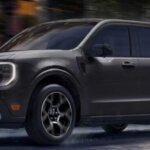 Is Ford Maverick Good in Snow? A Real-World Winter Driving Guide
Unibody Construction Does Not Disqualify It
Here is where the debate gets spicy. The Ford Maverick uses unibody construction, meaning the body and frame are integrated into one structure. Traditional full-size pickups like the Ford F-150 use body-on-frame construction, where the body sits on a separate ladder frame.
Some people say a “real truck” must be body-on-frame. But that is more tradition than rule. The Maverick is still a pickup because its purpose, layout, and utility match what people use pickups for.
Unibody vs Body-on-Frame
Body-on-frame trucks are usually stronger for heavy towing, severe hauling, and off-road punishment. They are the big hammers of the truck world. Unibody vehicles are often lighter, smoother, more efficient, and more comfortable for daily driving.
The Maverick’s unibody setup helps it feel easier to drive, more car-like, and more approachable. That does not make it less useful. It simply means Ford built it for a different type of truck buyer.
The Maverick Is a Modern Truck, Not an Old-School Truck
The Maverick is not trying to win a tug-of-war against a Super Duty. It is designed for city streets, suburban errands, weekend adventures, and light-duty work. That is still truck territory.
Calling the Maverick “not a truck” because it is unibody is like saying a smartphone is not a phone because it does not have a curly cord. The category evolved.
The Ford Maverick Is a Compact Truck
The Maverick belongs to the compact pickup segment. That is important because we should judge it against its mission, not against giant pickups with completely different jobs.
A compact truck is smaller, lighter, and easier to live with than a midsize or full-size truck. It gives owners some of the best parts of truck ownership without the size penalty.
Why Compact Trucks Make Sense
Not everyone needs a massive pickup. Many drivers want truck utility but also care about fuel economy, parking, price, comfort, and everyday usability. The Maverick serves those people.
It is a truck for the person who says:
“I need a bed, but I do not need a monster.”
That is a huge audience. Homeowners, young families, commuters, outdoor lovers, side hustlers, and first-time truck buyers all fit into the Maverick’s world.
The Maverick Changed the Truck Conversation
For a long time, trucks kept getting bigger and more expensive. The Maverick arrived like a reset button. It reminded us that a truck does not have to be oversized to be useful.
This is one reason the Maverick became so interesting. It challenges the idea that truck ownership must come with bulk, high fuel costs, and intimidating dimensions. Instead, it says, “What if a truck could be simple, efficient, affordable, and practical?”
That question hit a nerve. A good nerve.
It Brought Back the Small Truck Spirit
Many people remember older compact pickups fondly. They were simple, handy, and easy to maintain. The Maverick is not a retro truck, but it carries some of that spirit. It gives us the usefulness of a small pickup in a modern package.
It is not pretending to be old-school. It is reviving the useful part of old-school thinking.
The Maverick Is Built for Real-Life Truck Buyers
The Maverick is a truck because it solves truck problems. It helps people carry things that are too dirty, tall, heavy, or awkward for a normal car. It can tow light loads. It gives us a bed. It gives us utility. It gives us flexibility.
But it also fits into normal life. That is the part that makes it different.
Who Is the Ford Maverick For?
The Maverick is ideal for drivers who want:
- A daily driver with pickup utility
- Better fuel efficiency than many larger trucks
- A practical bed for home projects
- A lower, easier-to-access cargo area
- A smaller footprint for city driving
- Occasional towing ability
- Weekend adventure flexibility
- Truck usefulness without full-size truck costs
This is not a truck for everyone. But no truck is. The Maverick knows its audience, and that is part of its charm.
It Looks Like a Truck Because It Is One
Design matters. The Maverick has a cab-and-bed profile. It has a tailgate. It has truck-like proportions. It has an upright front end, practical stance, and cargo-focused rear layout.
It does not look like a sedan. It does not look like a hatchback. It does not look like a traditional SUV. Its shape tells us what it is before the spec sheet even gets involved.
The Pickup Shape Still Matters
A pickup truck’s silhouette is one of the most recognizable vehicle shapes in the world: front engine area, passenger cabin, open bed. The Maverick follows that pattern.
It may be smaller and softer around the edges than a big pickup, but the structure is unmistakably pickup.
The Maverick’s Interior Does Not Make It Less Truck-Like
Some critics say the Maverick feels too comfortable or too car-like inside to be a truck. But comfort is not the enemy of utility. We should not punish a truck for being pleasant to drive.
Modern trucks have become family vehicles, commuter vehicles, road-trip vehicles, and mobile offices. The Maverick simply takes that idea and makes it smaller.
You might be interested in this content.Ford Maverick vs Hyundai Santa Cruz: Which Compact Truck Fits Real Life Better?A Truck Can Be Comfortable
A comfortable truck is still a truck. A fuel-efficient truck is still a truck. A compact truck is still a truck. The Maverick proves that a pickup does not need to feel rough to be useful.
In fact, comfort may be one of the Maverick’s biggest strengths. It invites people into truck ownership who might never consider a traditional pickup.
The Hybrid Powertrain Does Not Change Its Truck Identity
The Maverick helped make hybrid truck ownership feel normal. Some people still associate trucks with big gasoline engines, roaring exhaust notes, and heavy fuel consumption. But a hybrid powertrain does not remove the bed, payload, towing capability, or pickup layout.
A hybrid truck is still a truck. It is just a smarter one for certain drivers.
Efficiency Is a Feature, Not a Weakness
The Maverick’s efficient nature is one of the reasons it stands out. It gives us truck utility without making every fuel stop feel like a financial confession.
For drivers who mostly commute but occasionally need a truck bed, this balance is golden. Why buy more truck than we need?
The Maverick Is Not an F-150, and That Is the Point
A lot of the “is it really a truck?” debate comes from comparing the Maverick to the Ford F-150. But that comparison can be misleading. The F-150 is a full-size truck. The Maverick is a compact truck. They serve different buyers.
The F-150 is for heavier towing, bigger payloads, larger work demands, and traditional pickup needs. The Maverick is for lighter-duty use, better efficiency, easier parking, and everyday practicality.
Different Tools for Different Jobs
We would not use a sledgehammer to hang a picture frame. We would not use a tiny screwdriver to break concrete. Tools are judged by their intended purpose.
The Maverick is a smaller tool, but it is still a tool. And for many people, it is exactly the right one.
Truck Identity Is About Function, Not Ego
This is the heart of the issue. Some people use “truck” as a badge of toughness. But function matters more than image. The Maverick is a truck because it functions like a truck for the jobs it was built to handle.
It hauls. It tows. It has a bed. It carries cargo outside the cabin. It supports work and recreation. That is truck behavior.
A Truck Does Not Need to Be Huge to Be Useful
Bigger is not always better. Sometimes bigger is just harder to park, more expensive to fuel, and more than we need. The Maverick challenges truck culture in a healthy way. It says utility can be right-sized.
That is not weakness. That is intelligence.
The Maverick’s Bed Makes Everyday Life Easier
Let’s get practical. The Maverick shines in normal life. You can use it for hardware store runs, weekend cleanups, moving day, beach trips, gardening projects, cycling trips, and tailgating.
That is the magic of a small truck. It is useful even when you are not doing “truck guy” things.
Everyday Uses for the Ford Maverick
The Maverick makes sense for:
- Carrying bikes without stuffing them into the cabin
- Picking up lumber for small projects
- Taking old furniture to donation centers
- Hauling camping gear
- Transporting muddy sports equipment
- Buying plants, soil, and mulch
- Moving boxes
- Carrying coolers and chairs for events
- Helping friends move small loads
- Running small business errands
These jobs do not require a giant truck. They require a useful one.
The Maverick Is a Lifestyle Truck and a Work Truck
The Maverick sits between worlds. It can be a lifestyle vehicle for outdoor fun, but it can also be a practical work vehicle for light-duty jobs. That mix is exactly why it has such broad appeal.
A contractor who needs heavy towing may want something bigger. But a mobile detailer, photographer, gardener, handyman, delivery worker, or weekend seller may find the Maverick incredibly useful.
Small Businesses Can Use It Well
The Maverick can work for people who carry tools, samples, equipment, or supplies without needing a full-size commercial truck. Its compact size can be a benefit in cities, apartment complexes, tight streets, and crowded job sites.
It is not a heavy-duty workhorse. It is more like a clever utility knife: compact, useful, and ready for many jobs.
The Maverick Competes With Trucks, Not Cars
Another reason the Maverick is clearly a truck is its market position. Buyers compare it with other small pickups and truck-like vehicles. They shop it for bed utility, towing, payload, and price.
People are not usually cross-shopping the Maverick because they want a sedan. They are considering it because they want truck usefulness in a smaller package.
It Created a Practical Alternative
The Maverick gives buyers an option below midsize trucks like the Ford Ranger, Toyota Tacoma, Chevrolet Colorado, and Nissan Frontier. It fills the gap for people who think midsize trucks have also become too large or too expensive.
That is not a fake truck category. That is a real need.
Why Some People Say the Maverick Is Not a Truck
To be fair, we should understand the other side. Some people hesitate to call the Maverick a truck because it does not match the old-school pickup formula.
You might be interested in this content.Ford Maverick vs Toyota Tacoma: Which Pickup Makes More Sense for Real-World Drivers?Common objections include:
- It uses unibody construction
- It is smaller than traditional pickups
- It has a car-like ride
- It offers hybrid power
- It is not built for extreme towing
- It shares some crossover-like characteristics
- It does not feel rugged enough to some buyers
These points explain the debate, but they do not erase the Maverick’s truck credentials. They simply show that it is a different kind of truck.
The Definition of Truck Has Expanded
The automotive world changes. SUVs changed. Sports cars changed. Electric vehicles changed. Trucks are changing too. The Maverick is part of that evolution.
A compact unibody pickup can still be a pickup. The key question is not “Does it match the trucks we grew up with?” The better question is “Does it perform the role of a truck for its intended buyer?”
The Maverick does.
The Ford Maverick vs SUV Question
Some shoppers wonder why they should buy a Maverick instead of a compact SUV. The answer comes down to cargo style. SUVs are better for enclosed cargo and passenger comfort. The Maverick is better for dirty, bulky, awkward, and outdoor cargo.
If you regularly carry people and groceries, an SUV may be better. If you carry gear, tools, bikes, supplies, or messy items, the Maverick starts making a lot of sense.
Maverick Advantages Over an SUV
The Maverick offers:
- An open bed for messy cargo
- Easier loading for tall items
- Better separation between passengers and cargo
- Pickup-style tie-down flexibility
- Tailgate usefulness
- More utility for DIY jobs
- A truck identity without huge size
An SUV is like a backpack. The Maverick is like a backpack with a utility trailer attached.
The Ford Maverick vs Traditional Truck Question
Compared with larger trucks, the Maverick gives up maximum capability but gains convenience. That trade-off is exactly why many people like it.
A traditional truck may tow more, haul more, and handle harder work. But it may also cost more, use more fuel, and feel bulky in everyday driving. The Maverick accepts lighter-duty limits in exchange for being easier to live with.
Maverick Advantages Over Bigger Trucks
The Maverick can offer:
- Easier parking
- Better maneuverability
- Lower operating costs
- More approachable size
- Strong daily-driver comfort
- Useful bed capability
- Better fit for urban and suburban life
For many drivers, that is not a compromise. It is the whole point.
The Maverick Proves Trucks Can Be Sensible
Truck culture sometimes celebrates excess. More power. More height. More towing. More grille. More everything. The Maverick goes in another direction. It asks, “What do we actually need?”
That is why it feels refreshing. It brings common sense back into the truck conversation.
Right-Sized Utility Matters
The Maverick is not about having the biggest numbers at the barbecue. It is about using the right vehicle for the right job. For light hauling, daily commuting, home projects, and weekend fun, the Maverick can be enough truck.
And enough is powerful.
Is the Ford Maverick a Real Truck?
Yes, the Ford Maverick is a real truck. It is a compact pickup truck with a real bed, real payload capability, real towing ability, and real-world utility. It is not a full-size truck. It is not a heavy-duty truck. It is not built for every truck task. But it is absolutely a truck.
The confusion comes from expectations. If someone believes a truck must be body-on-frame, oversized, and thirsty, the Maverick feels strange. But if we define a truck by utility, cargo function, and pickup layout, the Maverick fits naturally.
The Best Way to Understand the Maverick
Think of the Maverick as a city-friendly pickup. It is the truck for people who want practical capability without turning every commute into a commitment. It is small enough to be easy, useful enough to matter, and efficient enough to make sense.
That is a rare combination.
Final Thoughts: The Maverick Is a Truck for the Real World
So, why is the Ford Maverick a truck? Because it does what a truck is supposed to do, just in a smaller and smarter way. It has a pickup bed, it can carry payload, it can tow, and it gives drivers a practical tool for work, hobbies, errands, and adventure.
The Maverick is not trying to replace every truck. It is not the answer for heavy-duty towing or hardcore job sites. But for everyday drivers who need utility without bulk, it may be one of the most logical trucks on the road.
We can call it compact. We can call it unibody. We can call it efficient. We can call it modern. But we should also call it what it is: a truck.
And maybe that is what makes the Maverick so interesting. It does not shout. It does not flex. It simply works. Like a pocket-sized toolbox, it proves that useful things do not always need to be huge.
FAQs About Why the Ford Maverick Is a Truck
1. Why is the Ford Maverick considered a truck?
The Ford Maverick is considered a truck because it has a pickup bed, payload capability, towing ability, and a cab-and-bed layout. Even though it is smaller than traditional pickups, it performs the core functions expected from a compact truck.
2. Is the Ford Maverick a real pickup truck?
Yes, the Ford Maverick is a real pickup truck. It is classified as a compact pickup and is designed for light-duty hauling, towing, commuting, and everyday utility.
You might be interested in this content.Ford Maverick or Nissan Frontier: Which Pickup Fits Your Real Life Better?3. Is the Ford Maverick built like an SUV?
The Maverick uses unibody construction, which is common in SUVs and crossovers. However, its open bed, pickup layout, and cargo-focused design make it a truck, not an SUV.
4. Can the Ford Maverick tow like a truck?
The Ford Maverick can tow light loads when properly equipped. It is not designed for heavy-duty towing like a full-size pickup, but it can handle many everyday towing needs such as small trailers, lightweight campers, and recreational equipment.
5. Who should buy a Ford Maverick truck?
The Ford Maverick is a great fit for drivers who want truck utility without the size, fuel use, or cost of a larger pickup. It works well for commuters, homeowners, small business owners, outdoor enthusiasts, and anyone who needs a practical compact truck.
Leave a Reply