
Hyundai Tucson Hybrid vs Toyota RAV4 Hybrid Canada: Which SUV Is Better?

The Hyundai Tucson Hybrid and Toyota RAV4 Hybrid are two of the most attractive compact hybrid SUVs available in Canada. Both combine impressive fuel efficiency, all-wheel-drive capability, modern technology and practical interiors suitable for Canadian families.
However, there are significant differences in fuel consumption, pricing, powertrain design, warranty coverage, towing capacity and long-term ownership costs.
The redesigned 2026 Toyota RAV4 Hybrid offers improved performance and excellent fuel economy, while the Hyundai Tucson Hybrid stands out for its comfortable interior, generous equipment and longer comprehensive warranty.
In this Hyundai Tucson Hybrid vs Toyota RAV4 Hybrid Canada comparison, we examine the 2026 Canadian-market models to help you determine which hybrid SUV offers better value for your needs.
- Hyundai Tucson Hybrid vs Toyota RAV4 Hybrid: Specifications
- Hyundai Tucson Hybrid vs Toyota RAV4 Hybrid: Engine and Performance
- Hyundai Tucson Hybrid vs Toyota RAV4 Hybrid: Fuel Economy
- Hyundai Tucson Hybrid vs Toyota RAV4 Hybrid: Fuel Tank Size and Range
- Hyundai Tucson Hybrid vs Toyota RAV4 Hybrid: Price in Canada
- Hyundai Tucson Hybrid vs Toyota RAV4 Hybrid: Reliability
- Hyundai Tucson Hybrid vs Toyota RAV4 Hybrid: Winter Driving
- Hyundai Tucson Hybrid vs Toyota RAV4 Hybrid: Interior and Comfort
- Hyundai Tucson Hybrid vs Toyota RAV4 Hybrid: Cargo Space
- Hyundai Tucson Hybrid vs Toyota RAV4 Hybrid: Towing Capacity
- Hyundai Tucson Hybrid vs Toyota RAV4 Hybrid: Technology
- Hyundai Tucson Hybrid vs Toyota RAV4 Hybrid: Safety
- Hyundai Tucson Hybrid vs Toyota RAV4 Hybrid: Warranty
- Hyundai Tucson Hybrid vs Toyota RAV4 Hybrid: Maintenance Costs
- Hyundai Tucson Hybrid vs Toyota RAV4 Hybrid: Resale Value
- Hyundai Tucson Hybrid: Pros and Cons
- Toyota RAV4 Hybrid: Pros and Cons
- Which Hybrid SUV Should You Buy in Canada?
- Conclusion
- Frequently Asked Questions
- 1. Is the Hyundai Tucson Hybrid better than the Toyota RAV4 Hybrid?
- 2. Which is more fuel-efficient, the Tucson Hybrid or RAV4 Hybrid?
- 3. Is the Toyota RAV4 Hybrid more reliable than the Hyundai Tucson Hybrid?
- 4. Are the Hyundai Tucson Hybrid and Toyota RAV4 Hybrid good in snow?
- 5. Which hybrid SUV is cheaper in Canada?
Hyundai Tucson Hybrid vs Toyota RAV4 Hybrid: Specifications
| Specification | Hyundai Tucson Hybrid 2026 | Toyota RAV4 Hybrid 2026 |
|---|---|---|
| Engine | 1.6L turbocharged 4-cylinder | 2.5L naturally aspirated 4-cylinder |
| Combined horsepower | 231 hp | 236 hp |
| Transmission | 6-speed automatic | Electronic CVT |
| Drivetrain | AWD | AWD |
| Combined fuel economy | 6.7 L/100 km | 5.5–6.2 L/100 km |
| Starting MSRP | $42,799 CAD | $37,500 CAD |
| Maximum towing capacity | 2,000 lbs | 1,750–3,500 lbs |
| Seating capacity | 5 | 5 |
| External charging required | No | No |
| Comprehensive warranty | 5 years/100,000 km | 3 years/60,000 km |
| Powertrain warranty | 5 years/100,000 km | 5 years/100,000 km |
Specifications and starting prices refer to 2026 Canadian models. Pricing excludes applicable taxes and additional charges, while equipment and towing capacity depend on the trim level. autotrader.ca+3
The Toyota RAV4 Hybrid has an advantage in fuel economy, starting price and maximum towing capacity. However, the Tucson Hybrid offers a more conventional automatic transmission and longer comprehensive warranty.
Hyundai Tucson Hybrid vs Toyota RAV4 Hybrid: Engine and Performance
Hyundai Tucson Hybrid engine
The Hyundai Tucson Hybrid uses a 1.6-litre turbocharged four-cylinder gasoline engine combined with an electric motor and a hybrid battery.
Its main mechanical characteristics include:
- 231 combined horsepower.
- Turbocharged gasoline engine.
- Six-speed automatic transmission.
- HTRAC all-wheel drive.
- Regenerative braking.
- Automatic switching between gasoline and electric power.
The combination of turbocharging and electric assistance provides responsive acceleration, particularly when merging onto highways or overtaking slower vehicles.
Unlike many hybrid SUVs, the Tucson uses a conventional automatic transmission with physical gear changes. This makes the driving experience feel familiar to motorists transitioning from a traditional gasoline vehicle.
Toyota RAV4 Hybrid engine
The 2026 Toyota RAV4 Hybrid features a 2.5-litre naturally aspirated four-cylinder engine combined with Toyota's fifth-generation hybrid system.
It produces 236 combined horsepower, compared with 219 horsepower in the previous-generation RAV4 Hybrid.
Toyota uses an electronic continuously variable transmission, commonly called an eCVT, to manage power delivery between the gasoline engine and electric motors.
The absence of a turbocharger and conventional stepped automatic transmission gives the Toyota a fundamentally different mechanical design.
Which hybrid SUV has better performance?
The Toyota RAV4 Hybrid produces five more horsepower, but both vehicles offer sufficient performance for everyday driving, highway journeys and family transportation.
We prefer the Tucson Hybrid for drivers who enjoy conventional gear changes and responsive turbocharged power delivery. The RAV4 Hybrid is particularly attractive for drivers who prioritize smooth operation and maximum efficiency.
Winner: Tie.
Hyundai Tucson Hybrid vs Toyota RAV4 Hybrid: Fuel Economy
Fuel efficiency is one of the most important considerations when purchasing a hybrid SUV in Canada, especially for drivers who travel long distances.
Fuel consumption comparison
| Driving conditions | Tucson Hybrid | RAV4 Hybrid LE |
|---|---|---|
| City | 6.7 L/100 km | 5.1 L/100 km |
| Highway | 6.7 L/100 km | 6.0 L/100 km |
| Combined | 6.7 L/100 km | 5.5 L/100 km |
The Toyota RAV4 Hybrid LE consumes approximately 18% less fuel than the Hyundai Tucson Hybrid according to Canadian fuel consumption ratings.
Toyota RAV4 Hybrid fuel consumption by trim
| Trim | Combined fuel consumption |
|---|---|
| LE | 5.5 L/100 km |
| XLE | 5.7 L/100 km |
| Limited | 5.8 L/100 km |
| XSE | 5.8 L/100 km |
| Woodland | 6.2 L/100 km |
Even the adventure-oriented RAV4 Woodland is officially more fuel-efficient than the Tucson Hybrid. Hyundai Canada+1
Annual fuel costs in Canada
Assuming you drive 20,000 kilometres annually and gasoline costs $1.60 per litre, we can estimate the following expenses:
| Vehicle | Annual fuel consumption | Annual fuel cost |
|---|---|---|
| Hyundai Tucson Hybrid | 1,340 L | $2,144 |
| Toyota RAV4 Hybrid LE | 1,100 L | $1,760 |
| Toyota RAV4 Hybrid XLE | 1,140 L | $1,824 |
| Toyota RAV4 Hybrid Limited | 1,160 L | $1,856 |
| Toyota RAV4 Hybrid Woodland | 1,240 L | $1,984 |
The RAV4 Hybrid LE could save approximately $384 annually or $1,920 over five years compared with the Tucson Hybrid under these assumptions.
Winner: Toyota RAV4 Hybrid.
Hyundai Tucson Hybrid vs Toyota RAV4 Hybrid: Fuel Tank Size and Range
The Toyota RAV4 Hybrid combines a larger fuel tank with better fuel efficiency, allowing drivers to travel farther between visits to gas stations.
| Specification | Tucson Hybrid | RAV4 Hybrid LE |
|---|---|---|
| Fuel tank capacity | 52 litres | 55 litres |
| Combined consumption | 6.7 L/100 km | 5.5 L/100 km |
| Theoretical maximum range | 776 km | 1,000 km |
Actual driving range depends on weather, traffic, driving habits, vehicle load and road conditions. These theoretical figures should not be treated as guaranteed distances between refuelling stops.
For Canadians travelling between provinces or regularly driving through rural areas, the Toyota's greater potential range is particularly useful. Hyundai Canada+1
You might be interested in this content.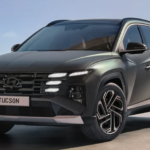 Hyundai Tucson Hybrid vs Kia Sportage Hybrid Canada: Which SUV Is Better?
Winner: Toyota RAV4 Hybrid.
Hyundai Tucson Hybrid vs Toyota RAV4 Hybrid: Price in Canada
Toyota has a considerable advantage in entry-level affordability for the 2026 model year.
Hyundai Tucson Hybrid Canadian trim levels
The Tucson Hybrid lineup includes:
- Night Edition Hybrid AWD.
- N Line Hybrid AWD.
- Ultimate Hybrid AWD.
The Night Edition provides a more affordable entry point into Hyundai's hybrid SUV lineup, while the Ultimate offers additional luxury and technology features.
Canadian pricing starts at approximately $42,799 before additional charges, although advertised prices vary between dealerships.
Toyota RAV4 Hybrid Canadian prices
| Trim level | Starting MSRP |
|---|---|
| RAV4 LE AWD | $37,500 |
| RAV4 XLE AWD | $41,300 |
| RAV4 XLE Premium AWD | $43,800 |
| RAV4 Woodland AWD | $47,000 |
| RAV4 XSE AWD | $50,900 |
| RAV4 Limited AWD | $52,000 |
| RAV4 XSE Technology AWD | $52,450 |
These are Canadian manufacturer-suggested retail prices before freight, dealership charges and applicable taxes. Toyota Media+1
The Toyota RAV4 Hybrid LE starts approximately $5,299 below the Tucson Hybrid's reported starting MSRP. However, comparing similarly equipped versions may produce a smaller price difference.
Winner: Toyota RAV4 Hybrid.
Hyundai Tucson Hybrid vs Toyota RAV4 Hybrid: Reliability
Reliability is a major consideration for Canadian drivers planning to keep their vehicles for several years.
Hyundai Tucson Hybrid reliability
The Hyundai Tucson Hybrid combines a turbocharged engine, electric motor, hybrid battery and conventional automatic transmission.
While this configuration delivers excellent everyday performance, it incorporates components that may require additional attention as the vehicle ages.
Potential areas to monitor include turbocharger condition, electronic sensors, transmission operation, hybrid cooling systems and battery performance.
These are inspection considerations rather than confirmed widespread defects affecting every Tucson Hybrid.
Following the manufacturer's maintenance schedule is particularly important for maintaining long-term reliability.
Toyota RAV4 Hybrid reliability
Toyota has extensive experience developing hybrid vehicles. Its hybrid powertrain architecture has been used across several generations of SUVs and passenger cars.
The naturally aspirated engine and power-split hybrid transmission avoid certain components associated with turbocharged engines and conventional stepped automatic transmissions.
However, the 2026 RAV4 introduces a redesigned generation with updated electronics and hybrid components. Its long-term reliability cannot yet be established with certainty.
Buyers considering older RAV4 Hybrid models should also investigate rear electric motor high-voltage cable corrosion, particularly in regions where road salt is heavily used.
Winner: Toyota RAV4 Hybrid, based on Toyota's established hybrid track record rather than proven reliability data for the new 2026 generation.
Hyundai Tucson Hybrid vs Toyota RAV4 Hybrid: Winter Driving
Canadian winters demand vehicles capable of handling snow, ice, freezing temperatures and slippery roads.
Fortunately, both hybrid SUVs come standard with all-wheel drive.
Hyundai Tucson Hybrid HTRAC AWD
Hyundai's HTRAC system distributes engine and motor power between the front and rear wheels through a mechanical all-wheel-drive arrangement.
It can provide additional traction when accelerating on snow-covered roads, climbing slippery hills or travelling through challenging weather.
Toyota RAV4 Hybrid AWD
The Toyota RAV4 Hybrid uses an electrically driven rear axle to provide all-wheel-drive capability.
This system delivers additional rear-wheel traction when required without relying on a conventional mechanical connection between the front and rear axles.
Both vehicles are suitable for winter driving in Ontario, Quebec, Alberta, Manitoba and other Canadian provinces.
You might be interested in this content.10 Best Hyundai Tucson Competitors in CanadaHowever, dedicated winter tires remain essential for improving braking, cornering and traction. AWD alone cannot compensate for inadequate tires on icy roads.
Winner: Tie.
Hyundai Tucson Hybrid vs Toyota RAV4 Hybrid: Interior and Comfort
The Hyundai Tucson Hybrid features a contemporary interior with generous passenger space and a strong emphasis on comfort and technology.
Depending on the trim, available equipment includes heated and ventilated front seats, heated rear seats, a heated steering wheel, panoramic sunroof, premium audio and digital instrumentation.
The redesigned Toyota RAV4 Hybrid also offers a modernized interior with improved infotainment, practical storage compartments and upgraded materials.
The Tucson is particularly appealing to buyers who appreciate a premium-looking cabin, while the RAV4 emphasizes everyday functionality and practicality.
Both vehicles comfortably accommodate five passengers and are suitable for family transportation.
Winner: Hyundai Tucson Hybrid for interior comfort and perceived refinement.
Hyundai Tucson Hybrid vs Toyota RAV4 Hybrid: Cargo Space
Both SUVs provide generous cargo capacity for groceries, luggage, sporting equipment and family road trips.
| Cargo capacity | Tucson Hybrid | RAV4 Hybrid |
|---|---|---|
| Behind rear seats | 1,097 L | Up to 1,070 L |
| Rear seats folded | 2,108 L | 1,994 L |
Cargo capacity may vary depending on roof configuration, equipment and measurement methods.
The Hyundai Tucson Hybrid provides additional maximum cargo space, making it especially attractive for families carrying bulky items or travelling with substantial luggage. Groupe Beaucage+2
Winner: Hyundai Tucson Hybrid.
Hyundai Tucson Hybrid vs Toyota RAV4 Hybrid: Towing Capacity
Towing capability can be important for Canadians who own small boats, utility trailers or recreational camping equipment.
| Vehicle | Maximum towing capacity |
|---|---|
| Hyundai Tucson Hybrid | 2,000 lbs (907 kg) |
| Toyota RAV4 Hybrid LE | 1,750 lbs (794 kg) |
| Toyota RAV4 Hybrid XLE and higher trims | 3,500 lbs (1,588 kg) |
The Tucson Hybrid can tow slightly more than the entry-level RAV4 Hybrid LE. However, the remaining RAV4 Hybrid grades offer substantially greater towing capacity.
Always verify trailer braking requirements, tongue weight, payload limits and manufacturer towing recommendations before connecting a trailer.
Winner: Toyota RAV4 Hybrid.
Hyundai Tucson Hybrid vs Toyota RAV4 Hybrid: Technology
Both manufacturers offer advanced infotainment systems and driver assistance features.
The Tucson Hybrid offers available equipment such as a 12.3-inch infotainment display, digital instrument cluster, smartphone connectivity, wireless charging, surround-view cameras and premium Bose audio.
The 2026 Toyota RAV4 Hybrid introduces a new multimedia platform, wireless Apple CarPlay and Android Auto, digital instrumentation and upgraded connectivity.
Higher trim levels provide additional camera systems, larger infotainment displays and premium audio equipment.
The Toyota's redesigned technology makes this comparison considerably closer than in previous model years.
Winner: Tie.
Hyundai Tucson Hybrid vs Toyota RAV4 Hybrid: Safety
Both SUVs incorporate modern active safety technologies designed to reduce the risk of collisions and improve driver awareness.
Depending on the model and equipment, these systems include automatic emergency braking, blind-spot monitoring, rear cross-traffic alerts, lane-keeping assistance, adaptive cruise control and pedestrian detection.
The Hyundai Tucson Hybrid features Hyundai SmartSense technology, while the redesigned Toyota RAV4 Hybrid introduces Toyota Safety Sense 4.0.
Both vehicles are attractive options for safety-conscious Canadian families. However, independent crash-test results should be checked for the specific model year rather than assuming that previous-generation ratings remain applicable.
You might be interested in this content.Hyundai Tucson Best and Worst Years in Canada: Complete Reliability GuideWinner: Tie.
Hyundai Tucson Hybrid vs Toyota RAV4 Hybrid: Warranty
Hyundai offers excellent comprehensive warranty coverage in Canada, while Toyota provides longer coverage specifically for its hybrid battery.
| Warranty coverage | Hyundai Tucson Hybrid | Toyota RAV4 Hybrid |
|---|---|---|
| Comprehensive warranty | 5 years/100,000 km | 3 years/60,000 km |
| Powertrain warranty | 5 years/100,000 km | 5 years/100,000 km |
| Hybrid system warranty | 8 years/160,000 km | 8 years/160,000 km |
| Hybrid battery warranty | 8 years/160,000 km | 10 years/240,000 km |
| Roadside assistance | 5 years | 3 years |
Coverage is subject to manufacturer conditions and exclusions. Hyundai Canada+3
The Tucson Hybrid is particularly attractive to buyers who want longer comprehensive protection during the first five years of ownership.
The RAV4 Hybrid offers greater peace of mind regarding the high-voltage battery over extended ownership periods.
Winner: Hyundai for comprehensive coverage; Toyota for hybrid battery coverage.
Hyundai Tucson Hybrid vs Toyota RAV4 Hybrid: Maintenance Costs
Both hybrid SUVs require regular maintenance, including engine oil changes, filter replacements, fluid inspections, tire rotations and brake system checks.
Regenerative braking can help reduce conventional brake pad wear in both vehicles.
The Toyota RAV4 Hybrid may have an advantage in long-term mechanical simplicity because it does not use a turbocharger or conventional stepped automatic transmission.
However, actual maintenance and repair costs depend on mileage, driving conditions, dealership labour rates and individual vehicle condition.
Canadian owners should also consider winter tire expenses, corrosion prevention and insurance premiums when calculating total ownership costs.
Winner: Toyota RAV4 Hybrid for potential long-term maintenance advantages.
Hyundai Tucson Hybrid vs Toyota RAV4 Hybrid: Resale Value
The Toyota RAV4 Hybrid has historically benefited from strong demand in the Canadian used vehicle market.
Its reputation for fuel efficiency, hybrid reliability and practicality makes it attractive to second-hand buyers.
The Hyundai Tucson Hybrid also offers competitive resale potential, particularly when it has a complete service history, desirable equipment and remaining warranty coverage.
Nevertheless, we expect the Toyota to remain a strong choice for drivers concerned about depreciation. Actual resale values for the redesigned 2026 model will depend on future market conditions.
Winner: Toyota RAV4 Hybrid.
Hyundai Tucson Hybrid: Pros and Cons
| Pros | Cons |
|---|---|
| Spacious and modern interior | Higher fuel consumption |
| Excellent comprehensive warranty | Higher starting price |
| Conventional automatic transmission | More complex turbocharged engine |
| Generous cargo capacity | Lower maximum towing capacity |
| Standard AWD | Shorter hybrid battery warranty |
| Attractive premium equipment | Shorter theoretical driving range |
Toyota RAV4 Hybrid: Pros and Cons
| Pros | Cons |
|---|---|
| Excellent fuel economy | Shorter comprehensive warranty |
| Lower starting MSRP | eCVT may not appeal to every driver |
| Established hybrid technology | Slightly less maximum cargo space |
| Strong resale potential | Higher trims can be expensive |
| Longer hybrid battery warranty | New generation lacks long-term reliability data |
| Higher towing capacity on most trims | LE has limited towing capacity |
Which Hybrid SUV Should You Buy in Canada?
| Category | Winner |
|---|---|
| Purchase price | Toyota RAV4 Hybrid |
| Fuel economy | Toyota RAV4 Hybrid |
| Driving range | Toyota RAV4 Hybrid |
| Performance | Tie |
| Long-term reliability potential | Toyota RAV4 Hybrid |
| Winter driving | Tie |
| Interior comfort | Hyundai Tucson Hybrid |
| Cargo capacity | Hyundai Tucson Hybrid |
| Towing capacity | Toyota RAV4 Hybrid |
| Technology | Tie |
| Comprehensive warranty | Hyundai Tucson Hybrid |
| Hybrid battery warranty | Toyota RAV4 Hybrid |
| Resale potential | Toyota RAV4 Hybrid |
| Overall value | Toyota RAV4 Hybrid |
The Hyundai Tucson Hybrid is an excellent choice for drivers who prioritize interior comfort, cargo space, premium equipment and comprehensive warranty coverage.
The Toyota RAV4 Hybrid is better suited to buyers who prioritize fuel efficiency, affordability, long-term ownership costs and towing capability.
Conclusion
The Toyota RAV4 Hybrid is our overall winner in this Hyundai Tucson Hybrid vs Toyota RAV4 Hybrid Canada comparison.
The redesigned 2026 RAV4 offers a lower starting price, better fuel economy, greater driving range and a longer hybrid battery warranty. Its established hybrid technology also makes it an attractive option for long-term ownership.
Nevertheless, the Hyundai Tucson Hybrid remains one of the strongest alternatives in the Canadian compact SUV market. Its spacious cabin, conventional automatic transmission, excellent comprehensive warranty and generous cargo capacity make it an appealing family vehicle.
For most Canadian drivers seeking maximum fuel savings and overall value, we recommend the Toyota RAV4 Hybrid. For buyers prioritizing comfort, interior space and warranty protection, the Hyundai Tucson Hybrid is an excellent alternative.
Frequently Asked Questions
1. Is the Hyundai Tucson Hybrid better than the Toyota RAV4 Hybrid?
The Hyundai Tucson Hybrid offers more maximum cargo space, a longer comprehensive warranty and a conventional automatic transmission. However, the Toyota RAV4 Hybrid offers better fuel economy, a lower starting price and higher maximum towing capacity.
2. Which is more fuel-efficient, the Tucson Hybrid or RAV4 Hybrid?
The Toyota RAV4 Hybrid is more fuel-efficient. Canadian 2026 models consume between 5.5 and 6.2 L/100 km combined, compared with 6.7 L/100 km for the Hyundai Tucson Hybrid.
3. Is the Toyota RAV4 Hybrid more reliable than the Hyundai Tucson Hybrid?
Toyota has a longer established track record in hybrid technology and a mechanically different powertrain without turbocharging. However, definitive long-term reliability comparisons for the redesigned 2026 RAV4 are not yet available.
You might be interested in this content. Nissan Rogue or Toyota RAV4 in Canada: Which SUV Should You Buy?
4. Are the Hyundai Tucson Hybrid and Toyota RAV4 Hybrid good in snow?
Yes. Both vehicles feature standard all-wheel drive in Canada and are suitable for winter driving when equipped with appropriate winter tires.
5. Which hybrid SUV is cheaper in Canada?
The 2026 Toyota RAV4 Hybrid has a lower starting MSRP of $37,500 CAD, compared with approximately $42,799 CAD for the Hyundai Tucson Hybrid. Final purchase prices depend on trim level, dealership charges, provincial taxes and available incentives.
Leave a Reply