
How to Drive an AWD Vehicle Properly
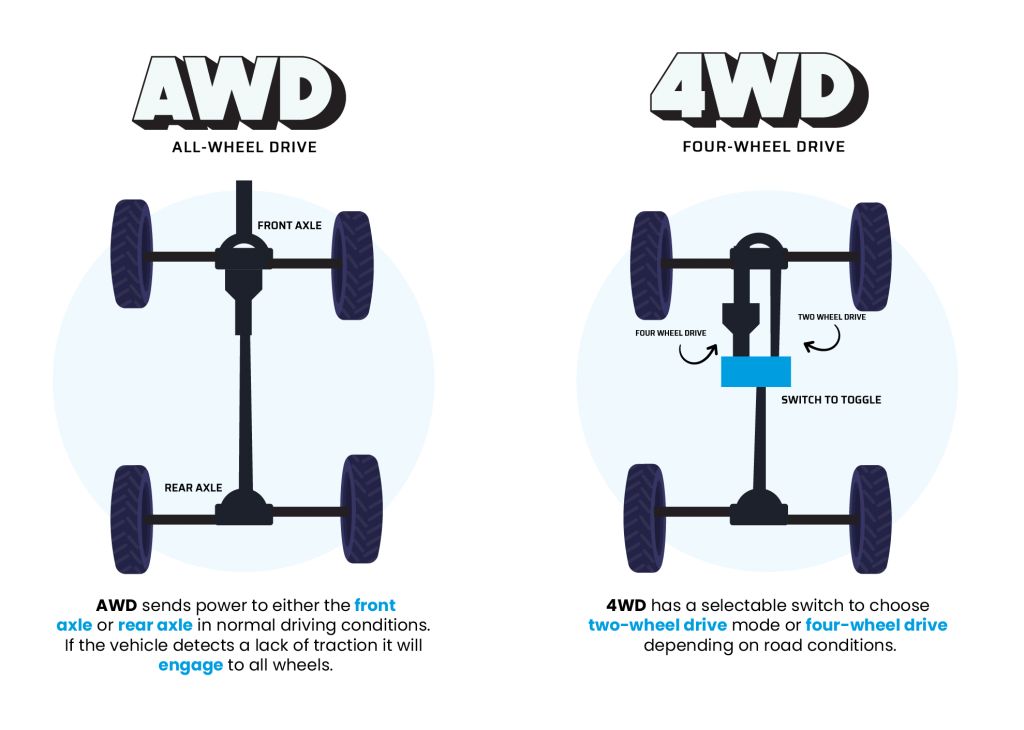
Driving an all-wheel-drive (AWD) vehicle offers enhanced traction and stability, but common misconceptions often lead to improper use and reduced efficiency. Many drivers assume AWD makes their car invincible in adverse conditions, overlooking key techniques that maximize its benefits. From smooth throttle application to adjusting cornering strategies, mastering AWD requires understanding how power distribution affects handling.
This guide covers essential practices for accelerating, braking, and navigating slippery roads, ensuring your vehicle performs optimally while minimizing wear. Whether you're navigating rain, snow, or gravel, proper AWD driving habits extend component life and improve safety. Learn to leverage your vehicle’s capabilities without overconfidence.
- Understanding the Unique Dynamics of All-Wheel Drive for Optimal Control
- Mastering AWD Driving Techniques for Optimal Traction and Control
- Proper Acceleration Techniques for AWD Vehicles
- Cornering and Steering Dynamics in AWD Vehicles
- Driving AWD on Different Road Surfaces
- Understanding Your Vehicle's AWD System
- Managing Weight Transfer and Braking Techniques
- Adapting Driving Style to Different Surfaces and Conditions
- Frequently Asked Questions
- How does driving an AWD vehicle differ from FWD or RWD in regular conditions?
- Should you accelerate or brake differently in an AWD vehicle on slick roads?
- Is it safe to drive an AWD vehicle off-road without any special preparation?
- Does using AWD cause higher maintenance requirements compared to 2WD?
Understanding the Unique Dynamics of All-Wheel Drive for Optimal Control
Mastering an all-wheel drive (AWD) vehicle requires a shift in mindset from two-wheel drive driving, as AWD provides enhanced traction but not invincibility. The system automatically distributes power to all four wheels, which helps you accelerate more confidently on slippery surfaces like rain, snow, or loose gravel. However, the key to driving properly is understanding that AWD does not improve braking or cornering limits; it only helps you get moving and maintain stability.
Always maintain a smooth, steady throttle input and avoid sudden jerks of the steering wheel. Overconfidence can lead to a false sense of security, so remember that your stopping distance remains the same as any other vehicle. The most critical rule is to anticipate road conditions and adjust your speed well before turns, as AWD can make the car feel more planted but will not negate the laws of physics.
Master Throttle Application and Cornering Techniques
When driving an AWD vehicle, the way you apply the throttle is crucial for maintaining grip and preventing understeer. Unlike rear-wheel drive cars that require lift-off to rotate, AWD systems often benefit from applying gentle power through a corner. As you approach a turn, brake smoothly in a straight line to shift weight to the front tires, then turn the steering wheel while gradually feeding in the throttle.
This slight power application helps pull the car through the curve by engaging the rear wheels, reducing understeer. Avoid being too aggressive with the gas pedal, as jabbing the throttle mid-corner can overload the system and cause the front tires to wash out. Practice this slow in, fast out” technique on a safe, empty road to feel how the car responds to power delivery.
On loose surfaces like snow, sand, or mud, the advantage of AWD is best exploited through controlled momentum rather than aggressive acceleration. If you find yourself stuck, do not spin the tires wildly; this only digs the car deeper. Instead, apply steady, light throttle while using small steering inputs to find traction.
If possible, reduce tire pressure slightly for better flotation on sand or snow, but remember to reinflate afterward. On downhill slippery descents, shift to a lower gear to use engine braking, as AWD does not shorten your stopping distance. Keep your wheels pointed straight if you start to slide, and let the system manage the power distribution to regain grip.
You might be interested in this content. Common Driving Mistakes to Avoid
Maintain Your AWD System for Longevity and Safety
Proper driving extends beyond technique to include consistent vehicle maintenance. AWD systems are complex and rely on all four tires having the same rolling diameter; therefore, always replace tires in sets of four and maintain equal tread depth across all positions.
Check tire pressure monthly, as mismatched air pressure can confuse the system and cause driveline binding or premature wear on the differential. Additionally, follow the manufacturer’s schedule for transfer case and differential fluid changes. Overheating these fluids can lead to catastrophic failure. If you see the AWD warning light on the dashboard while driving, reduce speed and have the system inspected immediately to prevent damage.
| Situation | Recommended Technique | Common Mistake |
|---|---|---|
| Accelerating from a stop on ice | Feather the throttle gently to avoid wheelspin | Mashing the gas pedal, causing tire slip |
| Driving up a steep, snowy hill | Maintain steady momentum without stopping | Slowing down too much, losing forward traction |
| Navigating a tight, wet corner | Brake before the turn, then smoothly apply power | Braking while turning or lifting off abruptly |
Mastering AWD Driving Techniques for Optimal Traction and Control
What is the correct way to drive an AWD vehicle?
The correct way to drive an All-Wheel Drive (AWD) vehicle involves understanding its unique handling characteristics, which differ from front-wheel drive or rear-wheel drive cars. AWD systems provide power to all four wheels, enhancing traction and stability, but they require careful throttle management, smooth steering inputs, and awareness of their limitations.
Begin by accelerating gradually to avoid overwhelming the system, as sudden hard throttle can cause the vehicle to understeer or transfer torque unexpectedly. On dry pavement, the AWD system primarily functions as a safety net, but on slippery surfaces like snow or ice, it helps maintain grip.
However, drivers must remember that AWD aids in acceleration, not braking, so maintain greater following distances and brake earlier than in a two-wheel-drive car. Regularly check tire pressure and ensure all tires have similar tread depth, as mismatched tires can damage the AWD differentials. Finally, practice driving in a safe area to learn how your specific AWD system responds to cornering and low-traction conditions.
Proper Acceleration Techniques for AWD Vehicles
Managing Power Delivery to Avoid Traction Loss
To accelerate correctly in an AWD vehicle, apply throttle smoothly and progressively. Avoid flooring the accelerator, especially on slick surfaces, as this can cause the system to overwork and lead to torque steer or understeer. The AWD system automatically distributes power, but aggressive input can overwhelm it, reducing effectiveness.
For maximum grip, keep the steering wheel straight during acceleration, and use the vehicle's traction control system—do not disable it unless in deep snow or mud where wheel spin is necessary. In such conditions, escalate throttle gradually to let the wheels dig for grip.
- Apply steady, gentle pressure on the accelerator pedal to let the AWD system distribute power evenly.
- Avoid sudden jerks or rapid throttle changes, which can cause the system to react unpredictably.
- Use the lowest gear or hill-descent control on steep, loose terrain to maintain controlled forward motion.
Cornering and Steering Dynamics in AWD Vehicles
Adjusting Entry Speed and Steering Input for Stability
When cornering in an AWD vehicle, reduce speed before entering the turn, as the extra weight of the AWD system increases momentum. Enter the corner under gentle acceleration rather than braking, which helps the system pull the car through.
You might be interested in this content. Driving Tips for New Drivers
Steer smoothly; sudden steering movements can cause the car to understeer (plow straight) or oversteer (rear sliding out). On loose surfaces, a slight amount of throttle can help rotate the car, but only if you understand the system's behavior. Practice in a safe environment to feel how your vehicle responds to different speeds and steering angles.
- Approach corners at a moderate speed, braking in a straight line before turning the wheel.
- Begin accelerating gently as you start turning, letting the AWD system help maintain traction.
- If the front end starts to slide (understeer), ease off throttle slightly and steer less, then reapply power smoothly.
Driving AWD on Different Road Surfaces
Tailoring Your Approach for Snow, Rain, Gravel, and Pavement
While AWD offers excellent traction on snow and ice, it does not replace winter tires. On snowy roads, drive at reduced speeds, avoid sudden maneuvers, and use low gears for engine braking. On wet pavement, AWD helps with hydroplaning resistance but does not eliminate it; maintain moderate speeds.
On gravel or dirt, AWD provides stability, but loose surfaces require you to anticipate slides. On dry pavement, AWD behaves like a front- or rear-wheel drive car, but its added weight and drivetrain drag can reduce fuel economy, so drive gently to conserve gas.
- On snow and ice, start in a higher gear (if manual) to reduce wheel spin, and always use winter tires.
- On gravel, reduce speed before turns and avoid heavy braking, as the rear wheels can lose grip faster.
- On dry pavement, drive as you would in a standard car, but be mindful of the added weight affecting braking distance.
How can you properly drive an all-wheel-drive vehicle to enhance handling performance?
Driving an all-wheel-drive (AWD) vehicle to enhance handling performance requires a combination of smooth inputs, understanding your vehicle's torque distribution, and adapting to different terrains. Unlike two-wheel-drive cars, AWD systems often have more traction, but can also induce understeer or oversteer if mishandled.
Start by reducing your steering angle and smoothly applying throttle when cornering, as abrupt inputs can upset the balance. In dry conditions, use the extra grip to carry more speed through corners, but avoid overdriving, as AWD can mask loss of control until the limit is reached. On slippery surfaces, maintain momentum and use gradual acceleration to distribute power evenly across all wheels. Practice left-foot braking to manage weight transfer, keeping the vehicle stable on entry and exit.
Understanding Your Vehicle's AWD System
Optimizing Traction and Balance Based on Drivetrain Type
Different AWD systems—such as full-time, part-time, or torque-vectoring—behave uniquely. For example, a symmetrical AWD like Subaru's may feel more neutral, while a rear-biased system like BMW's xDrive can allow for controlled slides. To enhance handling, learn whether your system sends power predominantly to one axle in normal conditions.
Adjust your driving style accordingly: for front-biased AWD, apply throttle earlier in turns to reduce understeer; for rear-biased systems, modulate throttle to manage oversteer. On loose surfaces, use the system's lock mode if available to maximize grip.
- Identify your AWD type from the owner's manual or vehicle badge (e.g., 4Matic, Quattro).
- Test the system's behavior on a safe, empty road or skidpad by gradually increasing cornering speed.
- Practice adjusting throttle application during corner exit to feel how power shifts between axles.
Managing Weight Transfer and Braking Techniques
Enhancing Cornering Stability Through Precise Inputs
Weight transfer is crucial for AWD handling, as the system relies on traction from all four wheels. Brake in a straight line before entering a corner to shift weight forward, increasing front tire grip for steering.
You might be interested in this content. How to Drive in Extreme Cold Weather
As you turn in, smoothly release the brakes and begin a slight throttle application to shift weight rearward, which helps both axles maintain contact. Avoid trail braking too aggressively unless your vehicle has a rear-wheel drive bias, as it can upset the front tires. For high-performance driving, use heel-and-toe downshifting to match revs and keep the chassis stable.
- Brake progressively from higher speeds, releasing before turn-in to avoid locking up any wheel.
- Use a small amount of steering input and gradually increase as you apply throttle.
- Practice rolling onto the throttle at the apex, not stabbing it, to maintain balance.
Adapting Driving Style to Different Surfaces and Conditions
Maximizing AWD Advantage on Wet, Snow, or Gravel Roads
AWD shines on low-traction surfaces, but improper technique can still lead to loss of control. On wet asphalt, reduce speed by 10-15% compared to dry conditions and use less steering angle to prevent hydroplaning.
In snow or gravel, maintain a constant throttle to avoid wheel spin; if the system detects slip, it will automatically redistribute torque. On steep, loose inclines, use a low gear and keep momentum steady without sudden acceleration. Avoid full-throttle applications on slippery roads, as AWD can induce understeer when all wheels spin simultaneously.
- On gravel, reduce tire pressure slightly (if safe) to increase contact patch and grip.
- In snow, use higher gears to limit torque spikes that unsettle the rear axle.
- When driving on wet roads, increase following distance and avoid sudden steering corrections.
Frequently Asked Questions
How does driving an AWD vehicle differ from FWD or RWD in regular conditions?
All-wheel drive distributes power to all four wheels, providing enhanced traction on slippery or uneven surfaces. Unlike front-wheel drive, where power goes only to the front, or rear-wheel drive, which sends power to the back, AWD automatically adjusts torque to wheels with the most grip. This offers more stability during acceleration on wet or snowy roads, but it doesn't improve braking or cornering beyond a standard vehicle. Drivers should still maintain smooth inputs and be aware that AWD can overconfidence in poor conditions.
Should you accelerate or brake differently in an AWD vehicle on slick roads?
When accelerating on slick surfaces, you can apply power more confidently, as AWD helps prevent wheel spin by directing torque to gripping wheels. However, braking remains the same—AWD does not shorten stopping distances.
Always brake early and gently, especially on ice or snow, because all vehicles have four-wheel braking systems. The key is to use AWD for traction during acceleration, but never rely on it for faster stops. Maintain safe following distances and avoid sudden pedal inputs.
Is it safe to drive an AWD vehicle off-road without any special preparation?
AWD enhances off-road capability by sending power to all wheels, but it does not make every AWD vehicle suitable for rugged terrain. Basic models may lack ground clearance, skid plates, or low-range gearing needed for rocks or deep mud.
If you plan to drive on unpaved roads, ensure tires are appropriate and watch for obstacles that could damage the undercarriage. Always reduce speed, avoid sudden turns, and use low gears if available. Never assume AWD alone makes your vehicle an off-roader.
You might be interested in this content. Best AWD Vehicles for Snow
Does using AWD cause higher maintenance requirements compared to 2WD?
Yes, AWD systems typically involve additional components like a center differential, transfer case, and extra drivetrain fluids. These require periodic inspections and fluid changes as recommended by your vehicle's manufacturer.
Tires must also be matched closely in size and tread depth to avoid differential damage. Regular servicing ensures proper operation and longevity, but the cost is higher than 2WD vehicles. Check your owner's manual for intervals and use correct transmission and differential fluids to prevent premature wear.
Leave a Reply