
Nissan Kicks Not Starting: Causes, Diagnosis, and Fixes

Few things can derail a normal day faster than getting into our Nissan Kicks, pressing the start button, and hearing… almost nothing. Maybe the dashboard lights up but the engine refuses to turn over. Maybe we hear a rapid clicking sound. Perhaps the engine cranks enthusiastically yet simply will not fire. Or, in the strangest cases, the vehicle behaves as though the key does not even exist.
When we are dealing with a Nissan Kicks not starting, the good news is that the problem does not automatically point to a destroyed engine or an expensive repair. In many cases, the culprit is surprisingly ordinary: a weak 12-volt battery, a dying key-fob battery, loose battery terminals, a brake-switch issue, or a faulty starter connection.
The trick is paying attention to how the Kicks behaves when we try to start it. A car that does absolutely nothing is telling us a different story from one that cranks but will not start.
In this guide, we will break down those clues, explain the most common causes, show what we can safely check ourselves, and clarify when it is time to stop troubleshooting and call a technician.
- Why Is My Nissan Kicks Not Starting?
- Start With the Symptoms
- Weak 12-Volt Battery: The Most Obvious Place to Look
- Check the Battery Terminals
- Nissan Kicks Key Fob Problems
- Brake Pedal Switch Problems
- Starter Motor Failure
- What If the Nissan Kicks Cranks but Doesn't Start?
- Fuel Delivery Problems
- Low Fuel Can Be More Misleading Than We Think
- Crankshaft Position Sensor Problems
- Camshaft Position Sensor Issues
- Could a Blown Fuse Stop a Nissan Kicks From Starting?
- Starter Relay or Electrical Relay Problems
- Immobilizer and Anti-Theft System Issues
- Try Moving the Gear Selector
- Could the Alternator Cause a Nissan Kicks Not to Start?
- Parasitic Battery Drain
- Cold Weather and a Nissan Kicks That Won't Start
- Hot Weather Can Damage Batteries Too
- What About Push-Button Start Failure?
- Nissan Kicks Starts Then Dies Immediately
- Nissan Kicks Won't Start After Sitting
- Nissan Kicks Won't Start After Battery Replacement
- Nissan Kicks Won't Start but Lights Work
- A Practical Nissan Kicks No-Start Checklist
- When Should We Stop Trying to Start the Engine?
- How a Mechanic Diagnoses a Nissan Kicks That Won't Start
- Can We Fix a Nissan Kicks No-Start Problem Ourselves?
- How Much Could a Nissan Kicks Starting Problem Cost?
- How to Reduce Future Starting Problems
- Conclusion: Diagnose the Symptom Before Replacing Parts
- Frequently Asked Questions
Why Is My Nissan Kicks Not Starting?
A Nissan Kicks needs several systems to cooperate before the engine can run. Think of the starting process like a relay race. The key must be recognized, the battery must provide enough power, the starter has to crank the engine, fuel must reach the cylinders, ignition must occur, and the vehicle's electronic control systems must approve the entire process.
If one runner drops the baton, the engine stays silent.
Common causes include:
- Weak or discharged 12-volt battery
- Corroded or loose battery terminals
- Dead key-fob battery
- Intelligent Key recognition problems
- Faulty starter motor or starter solenoid
- Brake pedal switch problems
- Fuel delivery issues
- Blown fuse or relay
- Engine sensor failure
- Immobilizer problems
- Charging-system or alternator trouble
- Electrical or wiring faults
We should not replace parts randomly. The symptoms usually narrow things down considerably.
Start With the Symptoms
Before opening the hood, we should ask one simple question:
What exactly happens when we try to start the Nissan Kicks?
That observation can save a surprising amount of diagnostic time.
Nissan Kicks Does Nothing When Start Is Pressed
If we press the start button and the engine does not crank at all, possible causes include the battery, key recognition system, brake switch, starter circuit, or immobilizer.
The dashboard can give us extra clues. If the cabin lights are extremely dim or disappear when we press the start button, the battery immediately moves to the top of the suspect list.
Nissan Kicks Clicks but Won't Start
One click—or several rapid clicks—often suggests that electrical power is reaching the starting circuit but there is not enough usable current to crank the engine properly.
Rapid clicking commonly accompanies a weak battery.
A single heavy click can sometimes indicate a starter or starter-solenoid problem, although battery condition should still be checked before blaming the starter.
Nissan Kicks Cranks but Won't Start
This is a different situation.
If the engine is turning normally but refuses to run, the starter and battery are at least doing part of their jobs. We then start thinking about fuel, ignition, engine sensors, immobilizer authorization, or engine-management problems.
That distinction matters.
Replacing a starter on an engine that already cranks would be like changing a doorbell because the refrigerator stopped cooling.
Weak 12-Volt Battery: The Most Obvious Place to Look
A weak conventional battery is one of the first things we should investigate when a Nissan Kicks will not start.
Vehicle batteries gradually lose performance as they age. Heat, cold, repeated short journeys, accessories left operating, long periods of inactivity, and internal battery deterioration can all weaken them.
The battery does not necessarily have to be completely dead.
A battery may still have enough energy to illuminate the dashboard but not enough current to operate the starter.
Signs the Nissan Kicks Battery May Be Weak
Watch for symptoms such as:
- Slow engine cranking
- Rapid clicking
- Dim interior lights
- Flickering dashboard lights
- Electronics resetting
- Clock or infotainment settings disappearing
- Starting problems after the car sits overnight
- Successful starting after a jump-start
If a jump-start wakes the Kicks up immediately, battery condition or charging performance deserves close attention.
A Jump-Start Is a Clue, Not Always the Final Diagnosis
Suppose the Kicks starts after receiving external power. It is tempting to declare the battery guilty and walk away.
Not so fast.
A discharged battery may simply be the victim.
If the alternator is not charging properly, or if an electrical component is draining the battery while the vehicle is parked, a brand-new battery can soon end up in the same condition.
Check the Battery Terminals
Sometimes the battery itself is perfectly capable of starting the car, but the electricity cannot travel efficiently through the connections.
Loose or corroded terminals create resistance.
That can produce strange symptoms: intermittent starting, clicking, flickering electronics, or complete silence.
Look for powdery white, blue, or green buildup around the battery posts and clamps.
We should also check whether the terminal clamps appear secure. A terminal that can move easily by hand may not be making dependable electrical contact.
Cleaning or tightening battery connections can occasionally turn what looks like a complicated electrical failure into a five-minute repair.
Nissan Kicks Key Fob Problems
Modern Nissan Kicks models with Intelligent Key systems rely on electronic communication between the key and the vehicle.
If the vehicle cannot recognize the key, starting may be blocked even when the car battery itself is healthy.
A weak key-fob battery is therefore worth considering.
Signs of a Weak Key-Fob Battery
We may notice:
- Reduced remote locking range
- Intermittent unlocking
- "No Key Detected" warnings
- Start-button problems
- The car starts only when the key is extremely close to the button
- Remote functions stop responding
The key-fob battery is inexpensive and relatively easy to replace, making it one of the cheapest troubleshooting steps available.
Try the Emergency Key-Fob Starting Method
When the key-fob battery is weak, many Nissan Intelligent Key systems can still recognize the transponder at very close range.
A commonly used procedure is to hold or touch the key fob close to the engine start/stop button while pressing the brake and attempting to start the vehicle.
Exact procedures can differ by model year, so the owner's manual should remain our reference.
If the vehicle starts this way, the key-fob battery or key communication system becomes a strong suspect.
Brake Pedal Switch Problems
Push-button-start vehicles generally require the brake pedal to be pressed before starting.
But how does the car know we pressed it?
A brake-light switch sends that information.
If the switch fails or becomes misadjusted, the vehicle may behave as though the brake pedal is not being pressed.
You might be interested in this content. Why Is My Car Shaking While Driving?
Check the Brake Lights
This is a useful quick test.
Have someone stand behind the vehicle while we press the brake pedal, or observe the reflection of the brake lights against a wall or garage door.
If the brake lights do not illuminate, a brake-switch or related electrical issue could be involved.
Of course, brake-light failure can have more than one cause, but it gives us an important direction for diagnosis.
Starter Motor Failure
The starter motor physically turns the engine during startup.
When it fails, the engine may not crank even though the battery and accessories seem normal.
Typical starter-related symptoms can include:
- One solid click when starting
- Intermittent no-crank situations
- Dashboard remains bright while engine does nothing
- Vehicle starts sometimes but not others
- Starter operates after several attempts
- Burning smell or unusual noise near the starter area
However, we should resist replacing the starter solely because we hear a click.
Battery voltage, battery connections, fuses, relays, grounds, and starter wiring should ideally be tested first.
Why Starter Problems Can Be Intermittent
Electrical contacts inside a starter or solenoid can wear gradually.
That means the starter may work perfectly on Monday, refuse on Tuesday morning, then inexplicably cooperate again at lunchtime.
Intermittent failures are frustrating because the car appears to "heal itself."
It has not.
Intermittent starting is often the warning phase before the component fails permanently.
What If the Nissan Kicks Cranks but Doesn't Start?
Now we enter a different diagnostic branch.
If the starter turns the engine at normal speed but combustion never begins, we need to investigate what the engine is missing.
An internal-combustion engine generally requires:
- Correct airflow
- Fuel
- Compression
- Ignition
- Correct engine timing
- Electronic authorization from the vehicle's control systems
A failure anywhere in that chain can prevent startup.
Fuel Delivery Problems
An engine that cranks normally but never catches may not be receiving enough fuel.
Potential causes include a fuel-pump problem, fuel-pump electrical failure, wiring fault, relay issue, injector problem, or other fuel-management malfunction.
Can We Hear the Fuel Pump?
On many vehicles, a brief humming sound may be heard from the rear area when the ignition system is activated before starting.
The absence of that sound does not conclusively prove the fuel pump has failed, but it can be another clue.
Fuel pressure testing is usually a better diagnostic method.
Unless we have appropriate equipment and experience, fuel-system diagnosis is usually better left to a professional because pressurized fuel and electrical components are involved.
Low Fuel Can Be More Misleading Than We Think
Yes, this sounds painfully obvious.
But fuel-gauge errors, parking on a steep incline, or simply forgetting how low the tank became can make an empty-tank situation look like a mechanical fault.
Before arranging a tow, checking the fuel level costs us virtually nothing.
Sometimes the simplest explanation really does win.
Crankshaft Position Sensor Problems
The engine computer needs to know the crankshaft's position and rotational speed.
A crankshaft position sensor helps provide that information.
If the signal disappears, the engine may crank without starting because the computer cannot correctly manage fuel injection and ignition timing.
Potential symptoms can include:
- Crank-no-start condition
- Engine stalling unexpectedly
- Check-engine light
- Intermittent starting
- Rough running before failure
A diagnostic scan tool can be extremely helpful here because sensor-related faults may store trouble codes.
Camshaft Position Sensor Issues
The camshaft position sensor works alongside the crankshaft sensor to help the engine management system understand what the engine is doing internally.
If its signal becomes unreliable, starting and engine operation may be affected.
Again, this is where scanning the vehicle beats guessing.
Modern cars can store valuable diagnostic information even when no obvious mechanical damage is visible.
Could a Blown Fuse Stop a Nissan Kicks From Starting?
Absolutely.
The starting system depends on multiple electrical circuits. A failed fuse related to ignition, engine control, fuel delivery, or another critical system could prevent startup.
However, simply replacing a blown fuse without determining why it failed is not always wise.
A fuse is designed to protect the circuit.
If the replacement immediately blows again, we probably have a short circuit or an electrical fault that needs proper diagnosis.
Check the Correct Fuse Diagram
Fuse layouts can change depending on model year, trim level, and market.
Rather than relying on a random diagram online, we should use the fuse-box cover, owner's manual, or correct factory information for our specific Nissan Kicks.
That small precaution can prevent plenty of confusion.
Starter Relay or Electrical Relay Problems
A relay acts like an electrically operated switch.
If the starter relay fails, the signal from the start system may never reach the starter correctly.
Relay problems can mimic starter problems, battery problems, or wiring faults.
Electrical testing is normally the fastest way to distinguish between them.
You might be interested in this content.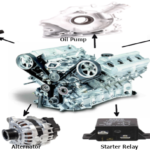 Common Engine Problems and Their Causes
Swapping random relays may occasionally identify an issue, but only when the relays are genuinely identical and the procedure is appropriate for the vehicle. Guessing can create a second problem while we are trying to solve the first one.
Immobilizer and Anti-Theft System Issues
The Nissan security system is designed to prevent unauthorized starting.
That is excellent when someone is trying to steal the vehicle.
It is considerably less charming when the vehicle refuses to recognize our own key.
Possible symptoms include:
- Security indicator behaving unusually
- "No Key Detected" message
- Engine cranks but will not run
- Start button not responding normally
- One key works while another does not
If we have a spare programmed key, trying it can be extremely informative.
If the spare works immediately, the original key becomes the obvious suspect.
Try Moving the Gear Selector
Automatic vehicles normally need to recognize that the transmission is in Park or, depending on the system, Neutral before starting.
A faulty range sensor or gear-position recognition problem can prevent startup.
Try placing the selector firmly in Park and attempting to start again.
If that fails, we may try Neutral while following normal safety precautions and keeping the brake applied.
If the Kicks starts in Neutral but repeatedly refuses in Park, the transmission-range or selector-position system should be inspected.
Could the Alternator Cause a Nissan Kicks Not to Start?
Indirectly, yes.
The alternator charges the 12-volt battery while the engine is running.
If the alternator stops charging, the vehicle may continue operating temporarily using stored battery energy. Eventually the battery becomes too depleted to restart the engine.
Common warning signs can include:
- Battery warning light
- Lights becoming dim while driving
- Electrical systems behaving strangely
- Repeated dead batteries
- Vehicle starts after a jump but dies again later
A charging-system test can determine whether the alternator is supplying appropriate output.
Battery or Alternator?
We can think of the battery as a water tank and the alternator as the pump refilling it.
If the tank is empty, we need to know whether the tank itself leaks or the pump stopped filling it.
Replacing the battery without testing the charging system can leave us right back where we started.
Parasitic Battery Drain
What if the Kicks runs perfectly once started but the battery goes flat after sitting?
We may be dealing with a parasitic electrical drain.
Some electrical consumption while the vehicle is parked is completely normal. Computers, security systems, keyless-entry modules, and memory functions use small amounts of power.
The problem begins when something draws considerably more current than it should.
Possible sources include:
- Interior or cargo light remaining on
- Faulty electronic module
- Aftermarket alarm
- Dash camera
- USB accessory
- Phone charger
- Audio equipment
- Wiring problem
- Faulty relay staying energized
Parasitic drain testing normally involves measuring current after the vehicle's electronic modules have gone to sleep.
This can require some patience and proper electrical-testing equipment.
Cold Weather and a Nissan Kicks That Won't Start
Cold temperatures are tough on batteries.
Chemical reactions inside a conventional battery slow down as temperatures drop, reducing available starting power just when the engine may require more effort to crank.
A battery that seemed acceptable during warmer weather can suddenly appear dead during the first serious cold spell.
If our Kicks becomes difficult to start mainly in winter, battery testing should be high on the list.
Hot Weather Can Damage Batteries Too
Cold gets most of the blame because it exposes battery weakness.
Heat, however, can accelerate battery deterioration internally.
That means a battery may suffer through months of high temperatures and finally reveal the damage when colder weather arrives.
In other words, winter sometimes delivers the bad news, but summer may have written the letter.
If the button itself does not behave normally, the cause may not necessarily be the physical start switch.
Push-button starting depends on information from several systems:
- Key recognition
- Brake-pedal detection
- Gear-position sensing
- Battery voltage
- Immobilizer authorization
- Body control electronics
- Starting relay
- Starter circuit
The button sits at the center of the experience, but it is only one piece of the puzzle.
A scan tool capable of reading body-control and security modules can be especially useful when the obvious checks reveal nothing.
Nissan Kicks Starts Then Dies Immediately
This symptom narrows the field differently.
If the engine starts but shuts down seconds later, possible causes can involve fuel pressure, immobilizer authorization, air intake problems, sensors, electrical power, or engine-management faults.
Pay attention to warning lights and security indicators.
If the engine repeatedly fires and then dies almost immediately, anti-theft authorization deserves consideration, especially if key-related warnings appear.
Nissan Kicks Won't Start After Sitting
A vehicle that refuses to start after several days or weeks of inactivity often points us toward battery discharge.
Modern vehicles constantly maintain small electronic systems even when switched off.
A healthy battery should normally tolerate ordinary parked periods, but an older or partially charged battery has much less reserve capacity.
If the vehicle repeatedly needs a jump after sitting, we should have both the battery and parasitic draw checked rather than simply driving longer and hoping the issue disappears.
Nissan Kicks Won't Start After Battery Replacement
This scenario can be particularly confusing.
We install a fresh battery and expect victory, but the engine still refuses to start.
You might be interested in this content. Why Does My Check Engine Light Come On?
Potential reasons include:
- Battery terminals not properly tightened
- Replacement battery not sufficiently charged
- Incorrect battery installation
- Ground connection disturbed
- Starter or relay fault unrelated to the original battery
- Key recognition problem
- Blown fuse
- Electrical module issue
A new component does not automatically mean that entire system is healthy.
We should retrace the installation carefully before assuming something major has failed.
Nissan Kicks Won't Start but Lights Work
This is one of the most common misconceptions in starting-system diagnosis.
People often say:
"The battery can't be dead. The lights still come on."
Unfortunately, lights demand far less current than a starter motor.
A weak battery can happily illuminate the dashboard while completely failing under starter load.
If the lights dim dramatically when we attempt to crank the engine, battery condition or poor electrical connections become even more suspicious.
A Practical Nissan Kicks No-Start Checklist
When the vehicle refuses to cooperate, we can work through the problem logically.
- Confirm the transmission is fully in Park.
- Press the brake firmly.
- Watch for key or security warnings.
- Try the spare key if available.
- Hold the key fob close to the start button if key recognition is questionable.
- Observe whether the dashboard lights are normal, dim, or flickering.
- Listen for clicking.
- Determine whether the engine cranks.
- Check battery terminals for looseness or corrosion.
- Attempt a proper jump-start if appropriate.
- Confirm there is fuel.
- Check relevant fuses using the correct diagram.
- Try starting in Neutral if appropriate.
- Scan the vehicle for diagnostic trouble codes.
- Arrange professional testing if the cause remains unclear.
That sequence keeps us focused on evidence rather than expensive guesses.
When Should We Stop Trying to Start the Engine?
Repeated cranking is not always helpful.
We should stop and seek assistance if we notice:
- Burning smell
- Smoke
- Severe grinding noise
- Electrical cables becoming hot
- Fuel smell
- Starter remaining engaged
- Battery swelling or leaking
- Major warning messages
- Signs of damaged wiring
Safety comes first.
A no-start condition is inconvenient. Turning a minor electrical fault into a damaged wiring harness is much worse.
How a Mechanic Diagnoses a Nissan Kicks That Won't Start
A professional technician will typically avoid throwing parts at the vehicle.
Instead, the process may include battery testing, charging-system testing, voltage-drop measurements, starter-circuit testing, scan-tool diagnosis, fuel-pressure testing, spark or ignition checks, sensor-data analysis, and immobilizer evaluation.
That sounds extensive, but systematic diagnosis often saves money.
Consider the alternative: replacing a battery, then a starter, then a fuel pump, only to discover that a $20 electrical connection was the real problem.
Good diagnosis is not just technically smarter. It is cheaper.
Can We Fix a Nissan Kicks No-Start Problem Ourselves?
Some causes are very DIY-friendly.
We can reasonably inspect or address things like:
- Key-fob battery replacement
- Battery-terminal cleaning
- Visual battery inspection
- Checking whether brake lights operate
- Checking fuel level
- Verifying Park or Neutral
- Inspecting accessible fuses
- Jump-starting with correct procedures
Other problems require more equipment or experience, particularly starter testing, fuel-pressure diagnosis, immobilizer programming, module communication faults, and complex electrical tracing.
Knowing where our skill level ends is part of good DIY maintenance.
How Much Could a Nissan Kicks Starting Problem Cost?
There is no useful single number because a no-start condition ranges from trivial to substantial.
At one end, we might only need a small key-fob battery or terminal cleaning.
At the other, we could be dealing with a starter motor, fuel pump, electrical module, damaged wiring, or advanced security-system fault.
The smartest financial move is therefore diagnosis before replacement.
A cheap part replaced unnecessarily is still wasted money.
How to Reduce Future Starting Problems
We cannot prevent every failure, but we can dramatically reduce surprises.
Test an Aging Battery Before It Leaves Us Stranded
If the battery has been showing slower cranking or inconsistent behavior, testing it before complete failure makes sense.
Keep Battery Connections Clean
Corrosion grows quietly. Keeping terminals clean and secure helps the entire starting and charging system work efficiently.
Pay Attention to Warning Lights
Battery, check-engine, security, and key-system warnings are not decorative dashboard ornaments.
When the car starts giving hints, listening early usually costs less.
Avoid Ignoring Intermittent Starting
A vehicle that starts on the third attempt today may not start at all next week.
Intermittent faults are warnings, not miracles.
Small Symptoms Often Arrive Before Big Inconveniences
Slow cranking, occasional clicking, reduced remote range, flickering lights, and unexplained battery discharge can all be early signals.
A little attention today may prevent a tow truck tomorrow.
Conclusion: Diagnose the Symptom Before Replacing Parts
When our Nissan Kicks is not starting, the most important first step is not grabbing a toolbox. It is observing what the vehicle is doing.
Does the engine crank? Do we hear clicking? Are the lights dim? Is the key recognized? Does the vehicle start with a jump? Does it crank normally but refuse to fire?
Those clues divide a huge list of possible problems into much smaller groups.
A weak battery remains one of the most common and easiest issues to investigate, but battery terminals, key-fob communication, brake switches, starters, relays, fuses, fuel delivery, sensors, immobilizer systems, and charging faults can produce similar symptoms.
The golden rule is simple: test before replacing.
Modern vehicles are rolling computer networks wrapped around engines and transmissions. Guesswork can become expensive quickly. A systematic approach, however, turns a mysterious no-start problem into a series of logical checks.
And sometimes the solution really is as simple as a tiny battery hiding inside the key fob.
Frequently Asked Questions
1. Why is my Nissan Kicks clicking but not starting?
Rapid clicking commonly indicates that the 12-volt battery does not have enough power to operate the starter properly, although loose or corroded battery connections can create similar symptoms. A single solid click may also point toward a starter or starter-solenoid issue. Battery condition and connections should normally be checked first.
2. Why does my Nissan Kicks have power but won't start?
Dashboard lights and accessories require far less current than the starter motor, so a weak battery can still power electronics while failing to crank the engine. Key recognition, the brake switch, starter circuit, gear-position sensor, relay, or immobilizer can also cause a no-start condition even when electrical accessories appear normal.
3. Can a dead key-fob battery stop a Nissan Kicks from starting?
A weak key-fob battery can interfere with Intelligent Key recognition. Depending on model year and equipment, holding the key fob very close to the start button may allow the vehicle to detect the key through its backup recognition method. If that works, replacing the fob battery is a sensible next step.
4. Why does my Nissan Kicks crank but not start?
If the engine cranks normally, the starter is doing its job. The problem may instead involve fuel delivery, ignition, crankshaft or camshaft sensors, immobilizer authorization, wiring, or engine-management electronics. Reading diagnostic trouble codes can substantially narrow down the cause.
You might be interested in this content. Mazda CX-5 Not Starting: Causes, Fixes, and Troubleshooting Guide
5. Why does my Nissan Kicks need a jump-start repeatedly?
Repeated jump-starts may indicate a weak battery, charging-system problem, loose battery connection, or parasitic electrical drain while the vehicle is parked. The battery and alternator should both be tested, and parasitic-current testing may be needed if the battery keeps going flat after sitting.
Leave a Reply