
Volkswagen Tiguan vs Ford Escape: Which Compact SUV Is Better?

Choosing between the Volkswagen Tiguan vs Ford Escape is a little like choosing between two restaurants that serve the same type of food but have completely different personalities. Both are compact SUVs. Both seat five adults. Both can handle commuting, grocery runs, road trips, and the chaos that comes with everyday family life. Yet once we get behind the wheel—or simply start comparing what they offer—the differences become surprisingly clear.
For 2026, Volkswagen has positioned the Tiguan as a more sophisticated and increasingly performance-oriented compact SUV. The current generation brings sharper styling, a more upscale cabin, modern technology, and an available 268-horsepower turbocharged engine in the SEL R-Line Turbo. Volkswagen lists the Tiguan with a starting MSRP of $30,805 in the U.S.
Ford approaches the segment differently. The 2026 Escape puts flexibility front and center. Buyers can choose among a 1.5-liter EcoBoost engine, stronger 2.0-liter EcoBoost, conventional hybrid, and plug-in hybrid powertrains. That range gives the Escape something the Tiguan cannot currently match: several fundamentally different ways to power the vehicle.
So which one should we buy?
If we care about interior atmosphere, European-inspired driving manners, available power, and a more premium overall feel, the Tiguan immediately becomes interesting. If efficiency, powertrain choice, hybrid availability, or towing flexibility matter more, the Escape makes an extremely convincing argument.
Let's break them down properly.
- Volkswagen Tiguan vs Ford Escape at a Glance
- 2026 Volkswagen Tiguan vs Ford Escape Specs
- Exterior Design: European Sophistication vs Athletic Practicality
- Interior Quality: Does the Tiguan Feel More Premium?
- Passenger Space and Everyday Comfort
- Cargo Space: Which SUV Is More Practical?
- Performance: Volkswagen Tiguan vs Ford Escape
- Which Is Faster: Tiguan or Escape?
- Driving Experience: Which One Is More Fun?
- Fuel Economy: Escape Takes a Different Approach
- AWD and Bad-Weather Confidence
- Towing Capacity: Ford Escape Has a Strong Argument
- Technology and Infotainment
- Safety and Driver-Assistance Features
- Volkswagen Tiguan vs Ford Escape Reliability
- Maintenance Costs: Tiguan vs Escape
- Tiguan vs Escape for Families
- Volkswagen Tiguan vs Ford Escape for Commuting
- Which Is Better for Long Road Trips?
- Ford Escape Hybrid vs Volkswagen Tiguan
- Ford Escape 2.0 EcoBoost vs Tiguan SEL R-Line Turbo
- Tiguan vs Escape Price and Value
- Which SUV Feels More Expensive?
- Which One Is Better for Snow?
- Which SUV Should You Buy Used?
- Volkswagen Tiguan Pros and Cons
- Ford Escape Pros and Cons
- Volkswagen Tiguan vs Ford Escape: Who Should Buy the Tiguan?
- Volkswagen Tiguan vs Ford Escape: Who Should Buy the Escape?
- Which Is Better: Volkswagen Tiguan or Ford Escape?
- Final Verdict: Tiguan for Refinement, Escape for Versatility
- Frequently Asked Questions
Volkswagen Tiguan vs Ford Escape at a Glance
Before diving into the details, here's the simplest way to understand these SUVs.
The Volkswagen Tiguan feels more like the premium choice, especially in upper trims. Its interior design, large available displays, strong turbo power, and restrained exterior styling give it the character of something knocking on the door of the luxury-SUV segment.
The Ford Escape feels more like the versatile choice. Instead of asking buyers to accept one mechanical formula, Ford offers gasoline, hybrid, and plug-in-hybrid configurations. The Escape can therefore adapt to considerably different lifestyles.
Think of the Tiguan as a carefully tailored jacket. Think of the Escape as a really good multi-tool.
Neither approach is automatically better. It depends on what we actually need.
2026 Volkswagen Tiguan vs Ford Escape Specs
Specifications vary by trim and drivetrain, but the major differences are easy to see.
| Feature | 2026 Volkswagen Tiguan | 2026 Ford Escape |
|---|---|---|
| Vehicle type | Compact SUV | Compact SUV |
| Seating | 5 | 5 |
| Base engine | 2.0L turbo four-cylinder | 1.5L EcoBoost three-cylinder |
| Available high-output engine | 2.0L turbo four-cylinder | 2.0L EcoBoost four-cylinder |
| Maximum advertised gasoline horsepower | 268 hp | 250 hp |
| Hybrid available | No | Yes |
| Plug-in hybrid available | No | Yes |
| AWD available | Yes | Yes, depending on powertrain |
| Maximum advertised towing capacity | Configuration dependent | Up to 3,500 lb when properly equipped |
| Character | Refined, upscale, sporty | Practical, efficient, versatile |
Volkswagen confirms that the range-topping 2026 Tiguan SEL R-Line Turbo produces 268 horsepower and 258 lb-ft of torque and comes with AWD. Ford advertises 250 horsepower and 280 lb-ft from its available 2.0-liter EcoBoost Escape powertrain.
Those numbers already tell us something important: these vehicles may occupy the same showroom category, but their priorities aren't identical.
Exterior Design: European Sophistication vs Athletic Practicality
Styling is subjective, naturally, but these SUVs speak very different visual languages.
Volkswagen Tiguan Design
The Tiguan looks clean, deliberate, and relatively mature. Volkswagen tends to avoid unnecessary visual noise, and the latest Tiguan continues that philosophy while becoming more expressive than earlier versions.
The bodywork feels tightly wrapped around the vehicle. The lines flow rather than collide. In sportier R-Line form, the Tiguan gains enough attitude to look special without appearing as though someone attacked the bumper with a box of plastic accessories.
It has a certain understated confidence.
That can matter if we're buying an SUV that needs to fit multiple roles. The Tiguan looks appropriate outside the office Monday morning, yet it doesn't feel overly formal when loaded with luggage on Saturday.
Ford Escape Design
The Escape takes a softer and somewhat sportier approach.
Its proportions make it feel approachable rather than imposing. Depending on trim, Ford adds distinct wheels, exterior accents, and appearance treatments that can make the Escape considerably more expressive.
Where the Tiguan whispers, the Escape tends to speak a little louder.
Neither is a rugged, square-jawed off-roader. These are urban-friendly crossovers first and foremost. Still, buyers who enjoy restrained European styling may lean toward Volkswagen, while those wanting a more conventional American crossover aesthetic may prefer Ford.
This is one of the categories where the Volkswagen makes its strongest impression.
Inside the Volkswagen Tiguan
Volkswagen has increasingly pushed the Tiguan toward the premium end of mainstream SUVs. The latest model can be equipped with an available 15-inch display, while high-end versions offer equipment such as ventilated and massaging front seats and a Harman Kardon premium audio system.
Those are features that would have sounded unusually luxurious in a Volkswagen compact crossover not long ago.
More important than individual gadgets, however, is the atmosphere.
The dashboard emphasizes width. The displays command attention without making the rest of the cabin feel completely forgotten. Upper trims use more upscale materials and decorative elements, giving the Tiguan an almost entry-luxury flavor.
It's the SUV we'd probably choose if interior presentation matters every single time we open the door.
Inside the Ford Escape
The Escape cabin focuses more heavily on straightforward usability.
Ford provides the technology most buyers expect, and higher trims can feel appropriately well-equipped. Yet the cabin generally emphasizes practicality instead of attempting to masquerade as a miniature luxury SUV.
That's not necessarily criticism.
A family vehicle gets touched, kicked, scratched, spilled on, loaded, unloaded, and generally abused in ways automotive photographers politely ignore. A cabin doesn't always need to resemble an expensive lounge.
Still, when comparing ambience alone, we'd give the edge to the Volkswagen Tiguan.
Passenger Space and Everyday Comfort
Compact SUVs survive or die by their ability to make ordinary life easier.
Nobody wants to discover that a vehicle's dramatic styling has turned the second row into an economy-class airline seat.
Fortunately, both SUVs remain genuinely practical five-passenger vehicles.
Front-Seat Comfort
Both offer supportive seating positions and the elevated road view buyers expect from this segment.
The Tiguan's seating environment feels slightly more cockpit-like, particularly in higher trims. Meanwhile, the Escape gives the driver a comfortable, familiar crossover layout that doesn't demand much adjustment.
For long journeys, the Tiguan's available premium comfort features can tip the scales.
Rear-Seat Experience
Adults can use the second row in either vehicle without feeling banished to the penalty box.
This is important because compact SUVs increasingly serve as primary family vehicles rather than secondary runabouts.
If we regularly transport children, teenagers, colleagues, or adult relatives, both vehicles make sense. Our choice is more likely to be determined by cargo requirements and overall cabin preference than by rear-seat usability alone.
Cargo Space: Which SUV Is More Practical?
Cargo capacity is one of those specifications that looks boring until we're standing in a parking lot trying to fit three suitcases, a stroller, four grocery bags, and something inexplicably enormous that somebody bought at Costco.
Both the Tiguan and Escape are designed around practical everyday cargo use.
The Escape's compact exterior dimensions and flexible interior have traditionally been among its advantages. Volkswagen likewise makes efficient use of the Tiguan's boxy-enough rear profile.
You might be interested in this content.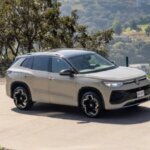 Volkswagen Tiguan vs Kia Sportage: Which SUV Is the Better Choice?
Rather than choosing solely on published cubic-foot figures—which can be measured differently and vary by configuration—we'd strongly recommend testing the cargo area using the objects we actually carry.
Bring the stroller.
Measure the dog crate.
Check whether the bicycle fits.
Try the child seat.
Real-world practicality beats brochure mathematics every time.
Performance: Volkswagen Tiguan vs Ford Escape
Here's where things become much more interesting.
Neither vehicle is fundamentally a sports SUV, but both offer configurations with enough power to make highway merging and passing pleasantly effortless.
Tiguan Standard Turbo Engine
The Tiguan uses Volkswagen's turbocharged 2.0-liter four-cylinder architecture.
In standard 2026 configurations, Volkswagen tunes the engine for everyday balance rather than outright aggression. Step up to the SEL R-Line Turbo, though, and output rises to 268 horsepower and 258 lb-ft of torque.
That's meaningful power in a compact SUV.
Press the accelerator and we aren't merely asking the Tiguan to move—we're giving it permission.
Escape 1.5L EcoBoost
The Escape's 1.5-liter EcoBoost is the sensible option.
It isn't meant to make Sunday mornings feel like qualifying laps. Instead, it targets everyday usability and efficiency.
For drivers who spend most of their time commuting, running errands, or sitting in traffic, that can be perfectly adequate.
Escape 2.0L EcoBoost
Want more punch?
Ford's available 2.0-liter EcoBoost produces 250 horsepower and 280 lb-ft of torque.
Notice that torque figure.
Although the strongest Tiguan produces more horsepower, the 2.0-liter Escape delivers slightly more peak torque on paper. That helps give the Ford confident low- and midrange response.
Both stronger configurations should satisfy buyers who dislike waiting for their SUV to wake up when the accelerator gets buried.
Which Is Faster: Tiguan or Escape?
On paper, the top-spec Tiguan holds the horsepower advantage with 268 hp versus 250 hp for the Escape's available 2.0-liter EcoBoost.
But horsepower alone doesn't determine how fast a vehicle feels.
Transmission calibration, gearing, traction, vehicle weight, tires, road conditions, and throttle response all affect real-world performance.
Our practical conclusion?
If performance is a serious priority, compare the Tiguan SEL R-Line Turbo directly with an Escape equipped with the 2.0L EcoBoost.
The Tiguan is likely to appeal more to drivers looking for a sportier European flavor. The Escape's stronger EcoBoost engine responds with muscular torque and excellent everyday flexibility.
Driving Experience: Which One Is More Fun?
Here's where numbers stop telling the whole story.
How the Tiguan Drives
Volkswagen has historically given the Tiguan a somewhat European character: composed body motions, stable highway behavior, and steering that encourages confidence without demanding constant attention.
The newest generation continues Volkswagen's attempt to make the Tiguan feel more polished.
It's not a Golf GTI wearing hiking shoes, but there's enough structure beneath the vehicle to remind us that Volkswagen knows how to tune a chassis.
The Tiguan makes the strongest case for drivers who believe getting to the destination should be part of the enjoyment.
How the Escape Drives
The Escape prioritizes accessibility.
It's easy to drive, manageable around town, and well suited to the daily commute. With the stronger EcoBoost engine, it also gains enough performance to become genuinely entertaining.
The Ford doesn't need to imitate the Volkswagen. Its biggest advantage is adaptability.
Want efficient?
Choose the hybrid.
Want stronger acceleration?
Choose the 2.0 EcoBoost.
Want electric commuting with gasoline backup?
The plug-in hybrid enters the conversation.
That variety is difficult to ignore.
Fuel Economy: Escape Takes a Different Approach
If fuel consumption is near the top of our buying priorities, Ford holds a structural advantage.
Why?
Because the Escape offers four powertrain approaches: plug-in hybrid, hybrid, 1.5-liter EcoBoost, and 2.0-liter EcoBoost.
Volkswagen currently focuses the Tiguan lineup around turbocharged gasoline power.
Ford Escape Hybrid Advantage
For commuters covering substantial annual mileage, a conventional hybrid can significantly change the ownership equation.
You might be interested in this content.Volkswagen Tiguan vs Subaru Crosstrek: Which SUV Is Better?We don't need to plug it in.
We simply drive.
Regenerative braking and electric assistance handle the energy juggling behind the scenes.
That's especially attractive in heavy urban traffic where traditional gasoline engines spend considerable time idling and accelerating from low speeds.
Ford Escape Plug-In Hybrid
The plug-in hybrid goes further.
For owners who can charge regularly and whose daily journeys fit within the vehicle's electric-use pattern, gasoline consumption can potentially be reduced substantially.
And unlike a full EV, a PHEV still has an internal-combustion engine for longer journeys.
It's a bridge between two worlds.
Volkswagen Tiguan Fuel Economy
The Tiguan fights back by improving the efficiency of its turbocharged gasoline formula. Volkswagen advertises an EPA-estimated 29 highway mpg for the 268-hp SEL R-Line Turbo, despite that version's considerable performance.
That's respectable.
But buyers specifically searching for a hybrid compact SUV will find the Escape much easier to recommend.
AWD and Bad-Weather Confidence
Both vehicles can accommodate buyers who want all-wheel drive, though availability depends on configuration.
Volkswagen's 4Motion AWD system is available across relevant Tiguan configurations, and the performance-focused SEL R-Line Turbo combines AWD with its 268-hp engine.
Ford also offers AWD within the Escape range, depending on powertrain and trim.
For snow, heavy rain, gravel roads, and slippery driveways, AWD can add useful traction.
But here's something worth remembering: AWD doesn't replace good tires.
A front-wheel-drive SUV with excellent winter tires can sometimes inspire more confidence in snow than an AWD SUV wearing inappropriate tires.
So if harsh winter weather defines our driving environment, budget for both the drivetrain and the rubber underneath it.
Towing Capacity: Ford Escape Has a Strong Argument
Some compact-SUV shoppers need to tow.
Not a massive travel trailer, obviously, but perhaps a small boat, utility trailer, lightweight camper, or recreational equipment.
Ford says the 2026 Escape can tow between 1,500 and 3,500 pounds depending on configuration and equipment, with the 3,500-pound ceiling applying to properly equipped EcoBoost models.
That maximum capacity gives the Ford real versatility.
If towing is important, don't simply buy whichever Escape has the engine you like. Towing ratings depend on powertrain, drivetrain, equipment, and trailer configuration.
Always verify the exact vehicle's rating before purchasing.
For buyers regularly hauling recreational equipment, this category can become a decisive Escape advantage.
Technology and Infotainment
Modern cars aren't just transportation anymore.
They're rolling screens with wheels attached.
And sometimes we wonder whether that's progress or a test of patience.
Tiguan Technology
Volkswagen leans heavily into the digital-cabin concept.
An available 15-inch center display dominates upper-spec interiors, creating the sort of visual impact we once associated primarily with luxury vehicles.
Digital instrumentation, smartphone integration, available upgraded audio, and numerous convenience features strengthen that premium impression.
Technology lovers may prefer the Tiguan simply because it feels newer and more theatrical.
Escape Technology
Ford's interface is designed around familiar connected-car functions and increasingly sophisticated infotainment.
Depending on trim, buyers can access larger displays, smartphone connectivity, digital information, navigation-related functionality, and driver-assistance systems.
Rather than choosing based on screen size alone, we'd spend ten minutes using both systems before buying.
Can we change the temperature without searching three menus?
Can we connect our phone quickly?
Can we find navigation while moving?
Can a passenger understand it without reading the manual?
Those questions matter more after six months than screen measurements do on delivery day.
Safety and Driver-Assistance Features
Both Volkswagen and Ford operate in a segment where advanced driver-assistance technology has become a major selling point.
The latest Tiguan brings expanded safety and driver-assistance equipment as part of its third-generation redesign, according to Volkswagen.
Ford similarly equips the Escape with modern active-safety and driver-assistance technologies, with content varying according to trim and option selection.
As always, these systems assist the driver rather than replacing one.
We'd compare the exact trims we're considering rather than relying on generic model-level claims because adaptive cruise control, parking assistance, camera systems, and other features may differ dramatically between entry and upper versions.
Volkswagen Tiguan vs Ford Escape Reliability
This is where comparisons become complicated.
You might be interested in this content.Volkswagen Tiguan and Taigun: What’s the Difference and Which SUV Makes More Sense?People understandably want one answer:
“Which one lasts longer?”
Cars don't cooperate with questions that simple.
Reliability depends heavily on model year, engine, transmission, software, maintenance history, driving conditions, production changes, and how a previous owner treated the vehicle.
A carefully maintained Tiguan can provide years of service.
So can a properly maintained Escape.
A neglected example of either vehicle can become a wallet-shaped vacuum cleaner.
Tiguan Ownership Considerations
The Tiguan uses turbocharged Volkswagen powertrains and increasingly sophisticated electronic systems.
Routine maintenance matters.
Correct fluids matter.
Service intervals matter.
Ignoring warning lights because “it still drives fine” is rarely a winning long-term financial strategy.
Escape Ownership Considerations
The Escape's challenge is powertrain diversity.
A 1.5 EcoBoost, 2.0 EcoBoost, hybrid, and plug-in hybrid shouldn't automatically be treated as though they have identical ownership characteristics.
Used buyers should research the exact engine and model year under consideration.
For either SUV, a pre-purchase inspection becomes especially valuable when buying used.
Maintenance Costs: Tiguan vs Escape
We would generally expect the Escape to benefit from Ford's enormous North American service footprint, while Volkswagen ownership may vary more depending on access to experienced VW technicians and local parts pricing.
However, maintenance cost isn't just about oil changes.
Consider:
- Tires and wheel sizes
- Brake replacement
- Battery replacement
- Transmission servicing
- AWD-system maintenance
- Turbocharger-related components
- Electronic modules
- Hybrid-system components on relevant Escape models
- Insurance premiums
- Dealer versus independent-shop labor rates
Here's the best approach: before buying, call two independent repair shops in the local area and ask what routine servicing costs for the exact model and powertrain.
Five minutes of homework can save hundreds—or thousands—later.
Tiguan vs Escape for Families
If we're buying primarily for family use, both SUVs make sense.
But they appeal to different types of family buyers.
Why Families May Prefer the Tiguan
The Tiguan feels like the better fit when we prioritize:
- A more upscale cabin
- Refined road manners
- Strong available performance
- Modern interior technology
- Premium comfort features
- Sophisticated styling
It makes ordinary family transportation feel slightly less ordinary.
There's value in that.
After all, if we're spending an hour or two inside a car every day, shouldn't we enjoy being there?
Why Families May Prefer the Escape
The Escape makes a stronger case when we value:
- Multiple engine choices
- Hybrid availability
- Plug-in-hybrid availability
- Strong towing capability when properly configured
- Straightforward practicality
- Potential fuel savings
- Broad Ford service availability
It's less about making one dramatic statement and more about giving buyers the ability to configure the vehicle around their lifestyle.
Volkswagen Tiguan vs Ford Escape for Commuting
For a normal gasoline-powered commute, either vehicle works.
But if our commute involves stop-and-go traffic every weekday, the Escape Hybrid becomes particularly tempting.
Hybrid drivetrains tend to shine in urban conditions because they can recover energy during deceleration and use electric assistance where conventional engines operate less efficiently.
If our commute involves open highways and we enjoy driving, however, the Tiguan's stable road manners and polished interior may make those miles noticeably more pleasant.
Then there is the Escape PHEV.
Someone who can charge at home and covers relatively predictable daily distances has a completely different decision to make than someone living in an apartment without charging access.
This is exactly why there is no universal winner.
Which Is Better for Long Road Trips?
We'd lean toward the Tiguan if comfort, cabin ambiance, and strong highway performance define the perfect road-trip vehicle.
The available high-output 268-hp engine gives the Volkswagen plenty of confidence for passing, while available premium seating and audio features can make six-hour journeys easier to swallow.
The Escape counters with another advantage: powertrain strategy.
A hybrid Escape can be attractive to road-trippers watching fuel expenses, and the stronger 2.0 EcoBoost provides useful performance when the vehicle is packed with passengers and luggage.
So ask a simple question:
What bothers us more on road trips—fuel stops or an uninspiring cabin?
Our answer may decide the winner.
Ford Escape Hybrid vs Volkswagen Tiguan
This comparison deserves special attention because many buyers searching “Tiguan vs Escape” aren't necessarily comparing identical powertrains.
If we're considering an Escape Hybrid, efficiency becomes one of the vehicle's central selling points.
The Tiguan doesn't currently offer an equivalent conventional hybrid powertrain in the U.S. lineup. Ford's official 2026 Escape range specifically includes hybrid and plug-in-hybrid choices alongside its EcoBoost engines.
You might be interested in this content.Volkswagen Tiguan vs Audi Q5: Which SUV Is the Better Buy?Therefore:
Choose the Escape Hybrid if reducing gasoline use is a top priority.
Choose the Tiguan if performance character, interior sophistication, and a more traditional turbocharged driving experience matter more.
That's less a battle between brands than between philosophies.
Ford Escape 2.0 EcoBoost vs Tiguan SEL R-Line Turbo
Now we're talking.
This is arguably the most entertaining version of the matchup.
The 2026 Tiguan SEL R-Line Turbo produces 268 hp and 258 lb-ft, while Ford's available 2.0 EcoBoost makes 250 hp and 280 lb-ft.
Volkswagen takes the horsepower crown.
Ford answers with more advertised torque.
Both deliver enough muscle to make the word “compact” feel slightly misleading.
We'd give the Tiguan the advantage if the goal is an upscale, sporty-feeling package. The Escape 2.0 deserves serious consideration if we want strong acceleration combined with Ford's broader practicality and towing potential.
Tiguan vs Escape Price and Value
The 2026 Tiguan starts at $30,805 MSRP in the United States, before destination and other charges.
Ford's pricing varies considerably across Escape configurations because the lineup spans regular gasoline models through hybrid and plug-in-hybrid variants.
But purchase price is only chapter one.
We should calculate value over several years.
What Should We Include in the Real Cost?
Instead of looking only at MSRP, compare:
- Purchase price
- Dealer discounts
- Financing rate
- Insurance
- Fuel consumption
- Expected annual mileage
- Scheduled maintenance
- Tire costs
- Registration and taxes
- Expected resale value
A vehicle that's $2,000 cheaper today isn't necessarily cheaper after five years.
Likewise, paying more for a hybrid may make excellent financial sense for someone driving 20,000 miles annually but very little sense for someone driving 5,000.
Our usage matters.
Which SUV Feels More Expensive?
The Tiguan.
That's probably the easiest answer in this entire comparison.
Volkswagen has deliberately added equipment associated with more expensive vehicles, including an available 15-inch display, ventilated and massaging front seats, and premium Harman Kardon audio.
Upper Tiguan trims therefore create a convincingly premium atmosphere without requiring us to jump into Audi, BMW, Mercedes-Benz, or Volvo territory.
The Escape can be very nicely equipped, but its strongest selling proposition isn't pseudo-luxury.
It's flexibility.
Which One Is Better for Snow?
With appropriate AWD configurations and suitable tires, either can be a capable winter companion.
The Tiguan's available 4Motion AWD is appealing for drivers dealing regularly with slippery conditions, while AWD is also available on relevant Escape configurations.
But we'd prioritize:
Good winter tires
Even the world's smartest AWD system cannot manufacture grip from hard, unsuitable rubber.
Ground clearance
Useful when roads haven't been plowed.
Heated features
Heated seats and steering wheels stop feeling frivolous about three minutes into a freezing February morning.
AWD availability on your exact powertrain
Don't assume every Escape configuration combines every drivetrain choice.
For genuinely severe winters, compare the exact trims rather than just the badges.
Which SUV Should You Buy Used?
Used-car shoppers need a slightly different strategy.
With either vehicle, model year matters enormously.
A comparison between a 2021 Tiguan and 2021 Escape tells us little about a 2026 comparison because both lineups evolve over time.
Before buying used:
- Obtain a vehicle-history report.
- Verify service records.
- Scan for diagnostic trouble codes.
- Inspect for leaks.
- Test every electronic function.
- Drive the vehicle from cold.
- Check transmission behavior.
- Inspect tires for uneven wear.
- Have an independent mechanic perform a pre-purchase inspection.
A beautifully polished SUV with no maintenance history can hide more drama than a soap opera.
Condition beats badge.
Volkswagen Tiguan Pros and Cons
Tiguan Advantages
The Tiguan's biggest strengths include its sophisticated styling, upscale cabin presentation, strong available turbocharged performance, impressive technology, and generally more premium personality.
The 268-hp SEL R-Line Turbo gives performance-oriented buyers an especially compelling reason to look at Volkswagen.
Tiguan Disadvantages
The absence of a U.S.-market hybrid alternative is its most obvious weakness against the Escape.
Buyers primarily concerned with fuel efficiency may therefore find Ford's powertrain menu much more attractive.
Depending on trim, the Volkswagen can also become expensive as premium equipment is added.
Ford Escape Pros and Cons
Escape Advantages
The Escape's secret weapon is choice.
Ford gives buyers access to a 1.5L EcoBoost, 2.0L EcoBoost, hybrid, and plug-in hybrid.
You might be interested in this content.Volkswagen Tiguan vs Mazda CX-5: Which SUV Is Better?That's outstanding versatility.
Properly equipped EcoBoost versions can also tow as much as 3,500 pounds, strengthening the Escape's recreational credentials.
Escape Disadvantages
Against the latest Tiguan, the Ford may not feel quite as premium inside, particularly when we compare upper trims.
Drivers seeking the strongest combination of luxury-like cabin design and European road character may therefore find the Volkswagen more emotionally appealing.
Volkswagen Tiguan vs Ford Escape: Who Should Buy the Tiguan?
Buy the Volkswagen Tiguan if we want:
- A premium-feeling compact SUV without buying a luxury badge
- Strong available turbocharged performance
- European-inspired road manners
- Sophisticated exterior styling
- An available 15-inch infotainment display
- Upscale comfort equipment
- AWD capability
- A cabin that feels special every morning
The Tiguan is less about having twenty different answers to the same question.
It's about refining one central formula.
Volkswagen Tiguan vs Ford Escape: Who Should Buy the Escape?
Buy the Ford Escape if we want:
- Hybrid efficiency
- Plug-in-hybrid capability
- Multiple gasoline-engine options
- Available AWD
- Strong 2.0 EcoBoost performance
- Up to 3,500 pounds of towing capacity when properly equipped
- Broad mechanical choice
- A practical everyday crossover
The Escape lets us choose the version that fits our lifestyle rather than forcing our lifestyle to fit the vehicle.
That's a powerful advantage.
Which Is Better: Volkswagen Tiguan or Ford Escape?
There isn't one winner for every shopper, but we can make the decision surprisingly simple.
Choose the Volkswagen Tiguan for refinement, interior quality, strong available performance, and premium character.
Choose the Ford Escape for efficiency, hybrid availability, powertrain variety, and towing flexibility.
If both were sitting in our driveway and we were told to keep only one, we'd base the choice on how we actually drive.
City commuter covering thousands of stop-and-go miles?
Escape Hybrid.
Frequent charger access and relatively short daily trips?
Escape Plug-In Hybrid.
Need to tow a small trailer?
Properly equipped Escape EcoBoost.
Want the compact SUV that feels more upscale when we climb inside?
Tiguan.
Want the strongest Tiguan and a bit of fun?
Tiguan SEL R-Line Turbo.
The smartest purchase isn't the SUV that wins the most categories.
It's the SUV that wins our categories.
Final Verdict: Tiguan for Refinement, Escape for Versatility
The Volkswagen Tiguan vs Ford Escape comparison ultimately comes down to two different interpretations of what a compact SUV should be.
Volkswagen builds the Tiguan around refinement. The latest model feels mature, polished, technologically ambitious, and increasingly premium. Its available 268-hp turbo engine adds genuine punch, while features such as the available 15-inch display and massaging front seats push upper trims into territory once reserved for considerably more expensive SUVs.
Ford builds the Escape around flexibility.
Gasoline?
Take your pick.
More power?
There's a 2.0 EcoBoost.
Hybrid?
Available.
Plug-in hybrid?
Available too.
Need meaningful compact-SUV towing capability?
Properly equipped versions can reach 3,500 pounds.
That's why we'd give neither vehicle an unconditional victory.
The Tiguan is our pick for buyers prioritizing refinement and premium appeal.
The Escape is our pick for buyers prioritizing efficiency and versatility.
And perhaps that's exactly why this matchup is so interesting. These SUVs don't merely compete for the same customers—they offer those customers two genuinely different ways to solve the same everyday problem.
Frequently Asked Questions
Is the Volkswagen Tiguan better than the Ford Escape?
The Tiguan can be the better choice if we prioritize interior refinement, upscale technology, European-inspired driving manners, and strong available performance. The Ford Escape makes more sense if hybrid efficiency, plug-in-hybrid availability, towing flexibility, or having several powertrain choices matters more.
Which is more powerful, the Ford Escape or Volkswagen Tiguan?
In their strongest current U.S. configurations, the 2026 Volkswagen Tiguan SEL R-Line Turbo produces 268 horsepower and 258 lb-ft of torque, while the Ford Escape's available 2.0L EcoBoost produces 250 horsepower and 280 lb-ft. The Volkswagen therefore has more advertised horsepower, while the Ford has more advertised peak torque.
Does the Volkswagen Tiguan come as a hybrid?
The current 2026 U.S.-market Tiguan lineup is centered around turbocharged gasoline power and does not provide the conventional-hybrid and plug-in-hybrid alternatives offered by the Escape. Ford officially lists hybrid and plug-in-hybrid powertrains alongside its 1.5L and 2.0L EcoBoost engines.
You might be interested in this content.Volkswagen Tiguan vs Subaru Forester: Which Compact SUV Is Better?Can a Ford Escape tow more than a Volkswagen Tiguan?
Ford states that properly equipped 2026 Escape EcoBoost models can tow as much as 3,500 pounds, depending on configuration. Buyers intending to tow with either SUV should verify the rating of the exact engine, drivetrain, trim, and equipment package before purchasing.
Which is better for families, Tiguan or Escape?
Both work well as five-passenger family crossovers. We'd favor the Tiguan for families wanting a more sophisticated cabin and premium comfort, while the Escape is particularly appealing to families prioritizing fuel efficiency, hybrid availability, towing capability, and powertrain flexibility.
Leave a Reply