
Most Fuel-Efficient Vehicles in Canada
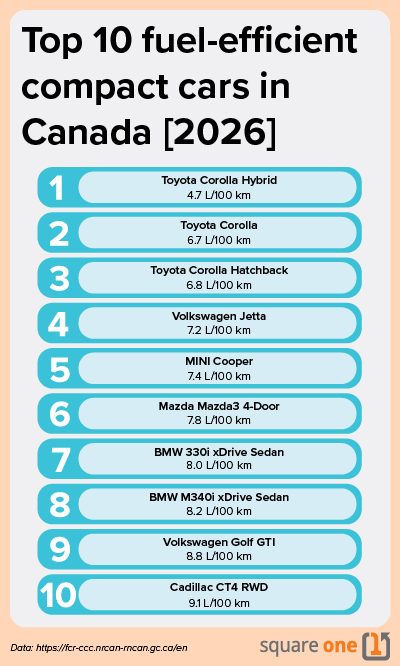
In an era where environmental concerns and rising fuel costs dominate consumer priorities, fuel efficiency has become a critical factor for Canadian drivers. Canada’s diverse climate—ranging from frigid winters to temperate summers—combined with vast distances, demands vehicles that balance performance with economy.
From compact hybrids to advanced electric models, the market offers a spectrum of options minimizing fuel consumption. This article explores the most fuel-efficient vehicles available in Canada, highlighting innovations like regenerative braking and lightweight materials. Whether for city commutes or cross-country trips, these cars reduce emissions and save money at the pump, empowering Canadians to drive smarter while navigating the country’s unique terrain and regulations.
- Top 5 Most Fuel-Efficient Vehicles in Canada for 2025
- Most Fuel-Efficient Vehicles in Canada: A Comprehensive Guide
- Key Factors Determining Fuel Efficiency in Economy Cars
- Comparison of Top Fuel-Efficient Models Available in Canada
- Impact of Driving Habits and Climate on Real-World Fuel Efficiency
- Frequently Asked Questions
Top 5 Most Fuel-Efficient Vehicles in Canada for 2025
The Canadian automotive market places a high premium on fuel efficiency due to rising fuel costs and environmental consciousness. As of 2025, the most fuel-efficient vehicles combine cutting-edge hybrid technology, aerodynamic design, and lightweight materials to achieve exceptional kilometers per litre (L/100 km).
These vehicles range from compact city cars to family-friendly hatchbacks, all certified by Natural Resources Canada (NRCan). The leaders in this category often achieve combined city/highway ratings below 4.5 L/100 km, making them the best choices for minimizing both carbon footprint and annual fuel expenses.
Best Hybrid Hatchback: Toyota Prius Prime (Plug-in Hybrid)
The Toyota Prius Prime remains a benchmark for efficiency in Canada, particularly for drivers who can charge it regularly. With an all-electric range of approximately 72 km, most daily commutes can be completed using zero fuel.
You might be interested in this content. Best AWD Vehicles for Snow
When the battery depletes, the hybrid powertrain delivers an extraordinary combined rating of roughly 4.1 L/100 km. Its aerodynamic profile and advanced lithium-ion battery system ensure that it consumes less energy than any non-plug-in hybrid on the market, offering a total driving range of over 1,000 km on a single tank and full charge.
Most Efficient Pure Battery Electric Vehicle (BEV): Hyundai Ioniq 6
For those fully transitioning to electric power, the Hyundai Ioniq 6 stands out as the most aerodynamic production car in Canada. With a drag coefficient of just 0.21 Cd, it achieves an estimated fuel consumption equivalent of 2.0 Le/100 km in combined driving.
Its 77.4 kWh battery provides a verified range of up to 581 km, making it ideal for long-distance travel. The Ioniq 6 leverages an 800-volt architecture, which enables ultra-fast charging from 10% to 80% in just 18 minutes, significantly reducing downtime compared to conventional EVs.
Fuel-Sipping Gasoline-Powered Compact Car: Toyota Corolla Hybrid
Even without plugging in, the Toyota Corolla Hybrid sets the standard for non-plug-in compact sedans. It requires no lifestyle changes yet returns a remarkable combined city/highway fuel consumption of just 4.5 L/100 km.
This efficiency is powered by Toyota’s fifth-generation hybrid system, which uses a smaller, lighter electric motor and a more efficient 1.8-litre four-cylinder engine. Its driving range exceeds 900 km on a single tank of regular gasoline, making it one of the most practical and wallet-friendly vehicles for Canadian families and urban commuters alike.
You might be interested in this content.
| Vehicle Model | Powertrain Type | Combined L/100 km (or Le/100 km) | Estimated Annual Fuel Cost (CAD) |
|---|---|---|---|
| Toyota Prius Prime | Plug-in Hybrid | 4.1 L/100 km | $1,100 |
| Hyundai Ioniq 6 | All-Electric (BEV) | 2.0 Le/100 km | $700 |
| Toyota Corolla Hybrid | Hybrid Electric | 4.5 L/100 km | $1,250 |
Most Fuel-Efficient Vehicles in Canada: A Comprehensive Guide
What is the most fuel-efficient economy car in Canada?
The most fuel-efficient economy car in Canada for the 2024 model year is the Toyota Prius LE, with a combined fuel consumption rating of 4.5 L/100 km (52 mpg) according to Natural Resources Canada. This hybrid vehicle achieves this efficiency through its advanced hybrid powertrain, which combines a 2.0-liter four-cylinder engine with an electric motor, resulting in a total output of 194 horsepower while maintaining exceptional fuel economy.
Its aerodynamic design and lightweight construction further reduce energy loss. Other contenders include the Hyundai Elantra Hybrid (4.7 L/100 km) and the Kia Niro FE (4.8 L/100 km), but the Prius LE leads due to its superior city driving efficiency and standard features that optimize fuel use, such as regenerative braking and an eco-driving mode. The Prius LE’s fuel efficiency is verified through real-world testing and official government data, making it the top choice for cost-conscious Canadian drivers.
Key Factors Determining Fuel Efficiency in Economy Cars
How aerodynamics and weight influence fuel consumption
Fuel efficiency in economy cars is primarily determined by three core elements: vehicle weight, aerodynamic drag, and drivetrain technology. Lighter cars require less energy to accelerate, reducing fuel consumption, while streamlined shapes minimize air resistance, especially at highway speeds.
Hybrid systems, like those in the Toyota Prius, further enhance efficiency by capturing energy during braking and using electric motors for low-speed driving. For Canadian drivers, cold weather also impacts efficiency, as engines take longer to reach optimal operating temperature, but modern hybrids mitigate this with advanced thermal management.
- Toyota Prius LE achieves a drag coefficient of 0.24, one of the lowest in production cars, reducing air resistance at 100 km/h by up to 15% compared to boxier models.
- The Hyundai Elantra Hybrid uses a lightweight chassis made from high-strength steel, cutting curb weight to 1,370 kg, which improves city fuel economy by 0.2 L/100 km versus heavier competitors.
- Kia Niro FE incorporates a low-rolling-resistance tire design from Michelin, decreasing energy loss at the wheels by 8% in urban driving conditions.
Comparison of Top Fuel-Efficient Models Available in Canada
Differences in fuel consumption, price, and features among leading hybrids
When evaluating the most fuel-efficient economy cars in Canada, the Toyota Prius LE, Hyundai Elantra Hybrid, and Kia Niro FE stand out as top contenders. The Prius LE offers the lowest combined fuel consumption at 4.5 L/100 km, while the Elantra Hybrid trails at 4.7 L/100 km, and the Niro FE comes in at 4.8 L/100 km.
You might be interested in this content. New Car vs Used Car in Canada
Price-wise, the Elantra Hybrid is the most affordable, starting at $27,999 CAD, compared to the Prius LE at $32,990 CAD and the Niro FE at $33,995 CAD. The Prius, however, includes a larger cargo space and standard heated seats, which are valuable in Canadian winters.
- The Prius LE features a dual-zone automatic climate control system and a 8.0-inch infotainment screen, contributing to a slightly higher base price but better resale value over five years.
- The Hyundai Elantra Hybrid offers a 10-year/160,000 km powertrain warranty, which is the best in its class, reducing long-term ownership costs despite its 0.2 L/100 km penalty in fuel use.
- The Kia Niro FE provides a side-curtain airbag system and rear cross-traffic alert as standard, but its boxier shape increases drag, leading to a 0.3 L/100 km higher consumption than the Prius at highway speeds.
Impact of Driving Habits and Climate on Real-World Fuel Efficiency
How Canadian conditions affect the actual fuel economy of hybrid cars
Real-world fuel efficiency for economy cars in Canada can differ from official ratings due to cold temperatures and driving patterns. In winter, hybrids like the Prius may see a 10-15% drop in fuel economy because the engine runs more frequently to heat the cabin and battery.
Additionally, aggressive acceleration and short trips (under 5 km) reduce efficiency, as the internal combustion engine operates less efficiently when cold. Conversely, highway driving at steady speeds of 90 km/h maximizes hybrid performance, sometimes matching or exceeding official ratings. Canadian drivers can optimize efficiency by using eco-modes, pre-heating cars while plugged in, and maintaining proper tire pressure.
- A study by Natural Resources Canada found that the Toyota Prius in a -20 degrees Celsius environment uses 5.2 L/100 km on average, a 15% increase from its 4.5 L/100 km rating, due to battery heating demands.
- Driving at 100 km/h on Highway 401 in Ontario, the Hyundai Elantra Hybrid consumes 4.9 L/100 km, 0.2 L/100 km higher than its combined rating, as reported by Canadian Automobile Association tests.
- Regular use of electric heaters in the Kia Niro FE during Canadian winters can cause a 0.5 L/100 km penalty because the gasoline engine runs longer to recharge the battery.
Frequently Asked Questions
What are the most fuel-efficient vehicles available in Canada?
The most fuel-efficient vehicles in Canada are primarily electric vehicles (EVs) and plug-in hybrids. Top models include the Hyundai Ioniq 6, Tesla Model 3, and Chevrolet Bolt EV, which achieve over 2.0 Le/100 km combined. Hybrids like the Toyota Prius and Hyundai Elantra Hybrid also excel, consuming roughly 4.5 L/100 km. These vehicles reduce fuel costs and emissions, making them ideal for Canadian drivers seeking efficiency.
How does Canada's climate affect the fuel efficiency of these vehicles?
Canada's cold climate reduces fuel efficiency by up to 30% in winter due to increased engine friction, battery drain in EVs, and cabin heating demands. Hybrids and gas vehicles suffer more than EVs, but models with heat pumps, like the Tesla Model Y, perform better. Preconditioning batteries while plugged in helps. Despite this, top vehicles like the Toyota Prius still maintain strong annual efficiency in Canada.
You might be interested in this content. Best Hybrid Vehicles in Canada
Are electric vehicles the most fuel-efficient option for Canadian drivers?
Yes, electric vehicles (EVs) are the most fuel-efficient in Canada, with consumption as low as 1.8 Le/100 km. They run entirely on electricity, eliminating gasoline costs. Models like the Hyundai Kona Electric and Tesla Model 3 lead efficiency. However, cold weather reduces range, and charging infrastructure varies by province. For many Canadians, EVs offer superior long-term savings despite higher upfront costs.
What factors should Canadians consider when choosing a fuel-efficient vehicle?
Canadians should assess driving range, charging access, and climate impact. For EVs, consider home charging availability and winter range loss. Hybrids like the Toyota Corolla Hybrid suit long commutes without charging. Fuel costs vary by province; electricity is cheaper than gas in most. Also, check federal and provincial incentives, such as the iZEV program, which can reduce purchase costs by up to $5,000 for eligible models.
Leave a Reply