
Hyundai Tucson Engine Size Canada: Complete Engine Guide

The Hyundai Tucson is one of the most popular compact SUVs in Canada, offering a comfortable interior, modern technology, practical dimensions and several engine options. However, understanding the different engine sizes is essential when comparing performance, fuel economy, reliability and ownership costs.
Recent Hyundai Tucson models in Canada feature a 2.5-litre four-cylinder gasoline engine or a 1.6-litre turbocharged four-cylinder engine combined with a hybrid or plug-in hybrid system.
Older generations also offered 2.0-litre, 2.4-litre and even 2.7-litre V6 engines.
But which Hyundai Tucson engine is best? Is the 2.5L engine reliable? Does the smaller hybrid engine offer better performance?
In this comprehensive guide, we'll explain everything you need to know about Hyundai Tucson engine sizes in Canada.
- What Engine Size Is the Hyundai Tucson in Canada?
- Hyundai Tucson 2.5L Gasoline Engine
- Hyundai Tucson 1.6L Turbo Hybrid Engine
- Hyundai Tucson 1.6L Plug-In Hybrid Engine
- Hyundai Tucson Engine Size by Year in Canada
- First-Generation Hyundai Tucson Engines: 2005–2009
- Second-Generation Hyundai Tucson Engines: 2010–2015
- Third-Generation Hyundai Tucson Engines: 2016–2021
- Fourth-Generation Hyundai Tucson Engines: 2022–2026
- Hyundai Tucson 2.5L vs 1.6L Turbo Hybrid
- Hyundai Tucson Engine Size and Fuel Economy
- Which Hyundai Tucson Engine Is Best for Canadian Winters?
- Hyundai Tucson Engine Size and Towing Capacity
- Is the Hyundai Tucson Engine Reliable?
- How Long Can a Hyundai Tucson Engine Last?
- Does the Hyundai Tucson Have a Turbocharged Engine?
- Does the Hyundai Tucson Require Premium Gasoline?
- How to Find Your Hyundai Tucson Engine Size
- Which Hyundai Tucson Engine Should You Choose?
- Conclusion
- Frequently Asked Questions
- 1. What engine size does the Hyundai Tucson have in Canada?
- 2. Is the Hyundai Tucson a four-cylinder or six-cylinder SUV?
- 3. Is the Hyundai Tucson 2.5L engine turbocharged?
- 4. Is the Hyundai Tucson Hybrid more powerful than the 2.5L gasoline model?
- 5. Which Hyundai Tucson engine has the best fuel economy?
What Engine Size Is the Hyundai Tucson in Canada?
The 2026 Hyundai Tucson offers three powertrain configurations covering two different engine displacements.
| Engine | Horsepower | Torque | Transmission |
|---|---|---|---|
| 2.5L gasoline | 187 hp | 178 lb-ft | 8-speed automatic |
| 1.6L turbo hybrid | 231 hp | 271 lb-ft | 6-speed automatic |
| 1.6L turbo plug-in hybrid | 268 hp | 271 lb-ft | 6-speed automatic |
Hybrid and plug-in hybrid figures represent combined powertrain output.
Although the conventional 2.5-litre engine has a larger displacement, the smaller turbocharged hybrid engines produce more combined horsepower and torque.
This demonstrates how modern engine technology can deliver stronger performance without increasing engine capacity.
Hyundai Tucson 2.5L Gasoline Engine
The 2.5-litre gasoline engine is the conventional powertrain available in the fourth-generation Hyundai Tucson.
It is designed to provide smooth acceleration, predictable performance and everyday practicality without the additional complexity of a turbocharger or hybrid system.
Hyundai Tucson 2.5L Engine Specifications
| Specification | Details |
|---|---|
| Engine displacement | 2,497 cc |
| Engine configuration | Inline four-cylinder |
| Aspiration | Naturally aspirated |
| Maximum horsepower | 187 hp |
| Maximum torque | 178 lb-ft |
| Fuel type | Regular unleaded gasoline |
| Transmission | 8-speed automatic |
| Turbocharger | No |
The engine uses direct and multi-port fuel injection technology to balance performance and efficiency.
Unlike turbocharged engines, it generates power without forced induction.
Is the Hyundai Tucson 2.5L Engine Powerful Enough?
The 2.5L engine provides adequate performance for most Canadian drivers.
It is particularly suitable for:
- Daily commuting.
- Highway driving.
- Family transportation.
- Weekend road trips.
- Long-distance travel.
- Occasional towing.
- Everyday suburban driving.
However, acceleration can feel less responsive when the vehicle is fully loaded with passengers and luggage.
Drivers who regularly travel through mountainous areas or prefer stronger acceleration may appreciate the additional torque of the hybrid powertrain.
Advantages of the Hyundai Tucson 2.5L Engine
The conventional gasoline engine offers several advantages:
- Relatively straightforward mechanical design.
- No turbocharger.
- No high-voltage hybrid battery.
- Conventional automatic transmission.
- Regular gasoline compatibility.
- Generally lower purchase price.
- Predictable power delivery.
- Suitable for long-distance highway driving.
For buyers who prefer a traditional gasoline-powered SUV, the 2.5L Tucson remains an attractive option.
Disadvantages of the 2.5L Engine
Despite its practical design, there are several disadvantages worth considering:
- Higher fuel consumption than the hybrid.
- Less responsive acceleration.
- Lower torque output.
- No electric motor assistance.
- Higher gasoline expenses in heavy urban traffic.
The 2.5L engine prioritizes practicality rather than sporty performance.
Hyundai Tucson 1.6L Turbo Hybrid Engine
The Hyundai Tucson Hybrid combines a 1.6-litre turbocharged gasoline engine with an electric motor and a hybrid battery.
Despite having a smaller engine displacement, it produces considerably more combined horsepower and torque than the conventional 2.5L gasoline engine.
Hyundai Tucson Hybrid Engine Specifications
| Specification | Details |
|---|---|
| Engine displacement | 1,598 cc |
| Engine configuration | Inline four-cylinder |
| Aspiration | Turbocharged |
| Combined horsepower | 231 hp |
| Combined torque | 271 lb-ft |
| Transmission | 6-speed automatic |
| Drivetrain | AWD |
| External charging required | No |
The electric motor assists the gasoline engine during acceleration, improving responsiveness and reducing fuel consumption.
How Does the Hyundai Tucson Hybrid Engine Work?
The Tucson Hybrid automatically manages power delivery between its gasoline engine and electric motor.
During low-speed driving, the electric motor can propel the vehicle independently when operating conditions permit.
When additional power is required, the gasoline engine and electric motor can work together.
The vehicle also features regenerative braking, which recovers some of the energy normally lost during deceleration.
This energy is stored in the hybrid battery and used to support future acceleration.
Unlike a plug-in hybrid, the conventional Tucson Hybrid does not require an external charging station.
Advantages of the Hyundai Tucson Hybrid Engine
The hybrid powertrain offers several benefits:
- Lower gasoline consumption.
- Stronger acceleration.
- Excellent low-speed torque.
- Quiet operation.
- Improved urban fuel economy.
- Regenerative braking.
- No requirement for home charging.
- Standard AWD on recent Canadian hybrid models.
We consider the Tucson Hybrid particularly suitable for drivers who frequently encounter traffic in cities such as Toronto, Vancouver, Montreal, Calgary and Ottawa.
Disadvantages of the Tucson Hybrid Engine
The hybrid also has some potential disadvantages:
- Higher initial purchase price.
- More complex powertrain.
- Additional electrical components.
- Turbocharger maintenance considerations.
- Potentially expensive high-voltage battery repairs outside warranty.
- Reduced fuel economy advantages during extremely cold weather.
Nevertheless, its combination of performance and efficiency makes it an appealing alternative to the conventional gasoline engine.
Hyundai Tucson 1.6L Plug-In Hybrid Engine
The Hyundai Tucson Plug-In Hybrid, commonly known as the Tucson PHEV, also features a 1.6-litre turbocharged gasoline engine.
However, it includes a larger battery and a more powerful electric motor than the conventional hybrid.
Hyundai Tucson PHEV Engine Specifications
| Specification | Details |
|---|---|
| Engine displacement | 1,598 cc |
| Engine configuration | Four-cylinder |
| Aspiration | Turbocharged |
| Combined horsepower | 268 hp |
| Combined torque | 271 lb-ft |
| Battery capacity | 13.8 kWh |
| Transmission | 6-speed automatic |
| Drivetrain | AWD |
| External charging | Supported |
The plug-in hybrid is the most powerful Tucson powertrain available for the 2026 model year.
How Does the Tucson Plug-In Hybrid Work?
The Tucson PHEV can travel using electric power alone under suitable driving conditions.
Once the battery's usable electric driving charge is depleted, the vehicle continues operating as a hybrid.
This means drivers can enjoy electric driving for shorter journeys while retaining the flexibility of a gasoline engine for longer trips.
Is the Hyundai Tucson Plug-In Hybrid Worth It?
The plug-in hybrid makes the most sense for drivers who can charge regularly at home or work.
If your daily commute is relatively short, you may complete many journeys using primarily electric power.
However, if you rarely charge the battery, the conventional hybrid may represent better overall value due to its lower purchase price and reduced weight.
Hyundai Tucson Engine Size by Year in Canada
Hyundai has introduced numerous engines since the Tucson entered the Canadian market.
You might be interested in this content. Hyundai Kona Key Fob Not Working: Causes, Fixes, and Troubleshooting Guide
The following table summarizes the principal engine options available across different model years.
| Model year | Engine sizes |
|---|---|
| 2005–2009 | 2.0L, 2.7L V6 |
| 2010–2015 | 2.0L, 2.4L |
| 2016–2017 | 2.0L, 1.6L turbo |
| 2018 | 2.0L, 1.6L turbo, 2.4L |
| 2019–2021 | 2.0L, 2.4L |
| 2022–2024 | 2.5L, 1.6L turbo hybrid, 1.6L turbo PHEV |
| 2025–2026 | 2.5L, 1.6L turbo hybrid, 1.6L turbo PHEV |
Engine availability depends on the exact model year, production date and trim level.
First-Generation Hyundai Tucson Engines: 2005–2009
The original Hyundai Tucson was offered with two gasoline engine configurations.
Hyundai Tucson 2.0L Four-Cylinder Engine
The entry-level 2.0-litre engine produced approximately 140 horsepower.
It was primarily designed for buyers seeking an affordable compact SUV with reasonable fuel consumption.
Although performance was modest, the engine was suitable for everyday driving.
Hyundai Tucson 2.7L V6 Engine
The larger 2.7-litre V6 engine produced approximately 173 horsepower.
It offered stronger acceleration and smoother operation than the four-cylinder alternative.
However, fuel consumption was considerably higher than that of modern Tucson engines.
The first-generation Tucson remains the only generation to feature a V6 engine.
Second-Generation Hyundai Tucson Engines: 2010–2015
The second-generation Tucson moved away from the V6 configuration and focused on four-cylinder gasoline engines.
Hyundai Tucson 2.0L Engine
The 2.0-litre engine was available in different configurations throughout this generation.
Later direct-injection versions produced approximately 164 horsepower.
It offered adequate performance for everyday driving, although highway acceleration could feel limited.
Hyundai Tucson 2.4L Engine
The larger 2.4-litre engine delivered additional horsepower and torque.
It was particularly suitable for drivers who wanted better acceleration and regularly transported passengers or luggage.
When purchasing a used Tucson from this generation, checking maintenance records and engine condition is essential.
Some older Hyundai engines have been associated with oil consumption and premature engine wear concerns.
Third-Generation Hyundai Tucson Engines: 2016–2021
The third-generation Hyundai Tucson introduced a turbocharged gasoline engine alongside naturally aspirated alternatives.
| Engine | Horsepower | Torque |
|---|---|---|
| 2.0L GDI | 161–164 hp | 150–151 lb-ft |
| 1.6L turbo | 175 hp | 195 lb-ft |
| 2.4L GDI | 181 hp | 175 lb-ft |
Engine specifications may vary slightly depending on the model year.
Hyundai Tucson 1.6L Turbo Engine
The 1.6-litre turbocharged engine delivered stronger low-speed torque than the conventional 2.0L engine.
It was paired with a seven-speed dual-clutch transmission.
Although this configuration offered good performance and efficiency, some owners experienced hesitation or inconsistent behaviour during low-speed manoeuvres.
Hyundai Tucson 2.0L Engine
The naturally aspirated 2.0L engine offered a more conventional driving experience.
It was generally paired with a six-speed automatic transmission.
Its main disadvantage was relatively modest acceleration, particularly when carrying several passengers.
Hyundai Tucson 2.4L Engine
The 2.4L engine became a prominent option following the 2019 model-year update.
It offered stronger acceleration than the 2.0L engine without requiring a turbocharger.
However, buyers should investigate oil consumption, maintenance history and outstanding recalls before purchasing a used model.
Fourth-Generation Hyundai Tucson Engines: 2022–2026
The fourth-generation Tucson introduced significant improvements, including new gasoline, hybrid and plug-in hybrid powertrains.
| Engine | 2022–2024 horsepower | 2025–2026 horsepower |
|---|---|---|
| 2.5L gasoline | 187 hp | 187 hp |
| 1.6L turbo hybrid | 227 hp | 231 hp |
| 1.6L turbo plug-in hybrid | 261 hp | 268 hp |
The 2025 update increased the combined horsepower of the electrified models while retaining the same engine displacements.
These improvements make the newer hybrid versions particularly attractive for buyers who prioritize performance and fuel efficiency.
Hyundai Tucson 2.5L vs 1.6L Turbo Hybrid
Choosing between these two engines depends on your budget, driving habits and expectations.
| Feature | 2.5L gasoline | 1.6L turbo hybrid |
|---|---|---|
| Engine displacement | 2,497 cc | 1,598 cc |
| Horsepower | 187 hp | 231 hp |
| Torque | 178 lb-ft | 271 lb-ft |
| Turbocharger | No | Yes |
| Electric motor | No | Yes |
| City fuel economy | Moderate | Better |
| Acceleration | Adequate | Stronger |
| Mechanical complexity | Lower | Higher |
| Purchase price | Generally lower | Generally higher |
| External charging | No | No |
The conventional 2.5L engine makes sense for buyers who prioritize affordability and mechanical simplicity.
Meanwhile, the 1.6L hybrid offers a stronger combination of performance and fuel economy.
Hyundai Tucson Engine Size and Fuel Economy
Engine size does not always determine how much gasoline a vehicle consumes.
Modern turbocharged engines and hybrid systems can deliver more power while using less fuel than larger naturally aspirated engines.
Hyundai Tucson Fuel Economy Comparison
| Powertrain | Approximate combined fuel consumption |
|---|---|
| 2.5L gasoline AWD | 8.8 L/100 km |
| 1.6L turbo hybrid AWD | 6.7 L/100 km |
Actual fuel consumption varies depending on temperature, road conditions, driving habits and vehicle configuration.
Annual Fuel Consumption Comparison
Assuming you drive 20,000 kilometres annually:
| Specification | 2.5L gasoline | 1.6L hybrid |
|---|---|---|
| Annual distance | 20,000 km | 20,000 km |
| Combined consumption | 8.8 L/100 km | 6.7 L/100 km |
| Annual gasoline consumption | 1,760 litres | 1,340 litres |
| Annual fuel cost at $1.50/L | $2,640 CAD | $2,010 CAD |
Under these assumptions, the Tucson Hybrid could save approximately $630 CAD annually in gasoline expenses.
Over five years, potential fuel savings could reach $3,150 CAD, assuming consistent mileage, consumption and gasoline prices.
Which Hyundai Tucson Engine Is Best for Canadian Winters?
Both gasoline and hybrid Tucson engines are suitable for Canadian winter conditions.
The conventional 2.5L engine provides predictable performance, while the hybrid delivers additional torque and electric motor assistance.
However, extremely cold temperatures can affect hybrid efficiency because the gasoline engine may operate more frequently to provide cabin heating.
You might be interested in this content. Nissan Rogue vs Volkswagen Tiguan Canada: Which Compact SUV Should You Buy?
Winter conditions can also increase fuel consumption due to:
- Longer engine warm-up periods.
- Increased rolling resistance.
- Winter tire usage.
- Snow-covered roads.
- Reduced battery efficiency.
- Frequent short journeys.
- Greater use of cabin heating.
Regardless of engine choice, quality winter tires and regular maintenance are essential for reliable winter driving.
Hyundai Tucson Engine Size and Towing Capacity
Engine selection can influence the maximum towing capacity of the Hyundai Tucson.
Properly equipped 2026 Canadian Tucson models with the 2.5L gasoline engine can tow up to 3,500 pounds under specified conditions.
Hybrid and plug-in hybrid versions generally have lower maximum towing ratings.
This may surprise some buyers because the hybrid produces more combined horsepower.
However, towing capacity also depends on transmission design, cooling systems, chassis components and manufacturer specifications.
Always confirm the towing capacity for your exact model year and configuration before connecting a trailer.
Is the Hyundai Tucson Engine Reliable?
Hyundai Tucson engine reliability varies depending on the model year, engine configuration and maintenance history.
The newer 2.5L gasoline engine features a different design from older 2.0L and 2.4L engines associated with certain reliability concerns.
The modern 1.6L turbo hybrid also offers impressive performance and efficiency, although it incorporates more mechanical and electrical components.
Common Hyundai Tucson Engine Problems
Potential engine-related issues across different generations include:
- Excessive oil consumption.
- Engine knocking.
- Rough idling.
- Ignition coil failures.
- Carbon accumulation.
- Engine oil leaks.
- Turbocharger problems.
- Overheating.
- Check engine warning lights.
- Reduced engine performance.
These problems do not affect every Hyundai Tucson.
Their frequency and severity vary considerably depending on the engine family, model year and maintenance history.
How to Extend Hyundai Tucson Engine Life
We recommend following several basic maintenance practices:
- Change the engine oil at the recommended intervals.
- Use the correct oil viscosity.
- Replace the engine air filter when necessary.
- Monitor coolant levels.
- Avoid aggressive acceleration immediately after a cold start.
- Replace spark plugs according to the maintenance schedule.
- Investigate unusual engine noises.
- Address dashboard warning lights promptly.
- Check for outstanding manufacturer recalls.
Regular maintenance can significantly reduce the likelihood of expensive engine repairs.
How Long Can a Hyundai Tucson Engine Last?
A properly maintained Hyundai Tucson engine may reach between 200,000 and 300,000 kilometres or more.
However, engine longevity is influenced by several factors, including maintenance quality, driving conditions and the specific engine design.
A vehicle that regularly receives oil changes and travels primarily on highways may experience less engine wear than one frequently used for short urban journeys.
There is no guaranteed engine lifespan, particularly for older models with incomplete maintenance histories.
Does the Hyundai Tucson Have a Turbocharged Engine?
Yes, but not every Hyundai Tucson features a turbocharger.
The conventional fourth-generation 2.5L gasoline engine is naturally aspirated.
The hybrid and plug-in hybrid versions use a 1.6L turbocharged gasoline engine.
Certain older Hyundai Tucson models were also equipped with a non-hybrid 1.6L turbo engine.
Turbocharging allows a smaller engine to produce additional horsepower and torque by increasing the amount of air entering the combustion chambers.
Recent Canadian Hyundai Tucson gasoline, hybrid and plug-in hybrid models are designed to operate on regular unleaded gasoline with a minimum octane rating of 87 AKI.
Premium gasoline is generally unnecessary unless specifically required by the manufacturer for a particular engine configuration.
Using higher-octane gasoline does not automatically improve fuel economy or performance.
Always follow the fuel recommendations provided in your vehicle's owner's manual.
How to Find Your Hyundai Tucson Engine Size
If you are unsure which engine your Tucson has, there are several ways to identify it.
You can:
- Check the vehicle owner's manual.
- Inspect the emissions information label under the hood.
- Review the original dealership specifications.
- Decode the vehicle identification number.
- Contact a Hyundai dealership.
- Review previous maintenance invoices.
Knowing your exact engine size is particularly important when purchasing replacement components such as spark plugs, oil filters and air filters.
Which Hyundai Tucson Engine Should You Choose?
The best Hyundai Tucson engine depends on your individual driving requirements.
| Driving requirement | Recommended engine |
|---|---|
| Affordable new SUV | 2.5L gasoline |
| Daily city commuting | 1.6L hybrid |
| Heavy urban traffic | 1.6L hybrid |
| Regular highway driving | 2.5L gasoline or hybrid |
| Maximum fuel efficiency with regular charging | 1.6L plug-in hybrid |
| Home charging available | 1.6L plug-in hybrid |
| Maximum combined horsepower | 1.6L plug-in hybrid |
| Conventional powertrain | 2.5L gasoline |
| Frequent towing | Properly equipped 2.5L gasoline |
For most Canadian drivers who regularly encounter urban traffic, we would choose the 1.6L hybrid because it offers an excellent balance of performance, comfort and fuel economy.
However, the 2.5L gasoline engine remains a sensible alternative for buyers who want a lower initial purchase price and a less complex powertrain.
Conclusion
The Hyundai Tucson engine size in Canada varies depending on the model year and powertrain configuration.
The 2026 Hyundai Tucson offers three principal powertrain options:
- 2.5L naturally aspirated gasoline engine: 187 horsepower.
- 1.6L turbocharged hybrid engine: 231 combined horsepower.
- 1.6L turbocharged plug-in hybrid engine: 268 combined horsepower.
Older generations offered 2.0L, 2.4L, 1.6L turbocharged and even 2.7L V6 engines.
Although the conventional 2.5L engine has a larger displacement, the electrified 1.6L engines produce more combined horsepower and deliver better fuel efficiency.
Ultimately, the best Hyundai Tucson engine depends on your annual mileage, driving environment, purchase budget, towing requirements and access to charging facilities.
Frequently Asked Questions
1. What engine size does the Hyundai Tucson have in Canada?
The 2026 Hyundai Tucson is available with a 2.5-litre naturally aspirated gasoline engine or a 1.6-litre turbocharged gasoline engine paired with a hybrid or plug-in hybrid system.
2. Is the Hyundai Tucson a four-cylinder or six-cylinder SUV?
All recent Hyundai Tucson models feature four-cylinder engines. However, first-generation Tucson models sold between 2005 and 2009 were also available with a 2.7-litre V6 engine.
3. Is the Hyundai Tucson 2.5L engine turbocharged?
No. The 2.5L Hyundai Tucson engine is naturally aspirated and produces 187 horsepower and 178 lb-ft of torque.
4. Is the Hyundai Tucson Hybrid more powerful than the 2.5L gasoline model?
Yes. The 2026 Hyundai Tucson Hybrid produces 231 combined horsepower and 271 lb-ft of torque, compared with 187 horsepower and 178 lb-ft from the conventional 2.5L gasoline engine.
You might be interested in this content.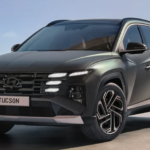 Hyundai Tucson Fuel Economy Canada: Complete Gas, Hybrid and PHEV Guide
5. Which Hyundai Tucson engine has the best fuel economy?
The 1.6L turbo hybrid generally offers better gasoline fuel economy than the conventional 2.5L engine. The plug-in hybrid can reduce gasoline consumption even further when its battery is charged regularly.
Leave a Reply