
Nissan Rogue vs Ford Escape Size in Canada: Which SUV Is Bigger?

When shopping for a compact SUV in Canada, size can make a bigger difference than we might initially expect. Whether we're navigating busy Toronto streets, parking in a Vancouver condo garage, or packing for a family road trip through the Canadian Rockies, interior space and exterior dimensions directly affect everyday convenience.
Two familiar choices in this category are the Nissan Rogue and Ford Escape. Both offer five-passenger seating, practical cargo areas, and dimensions that make them appealing alternatives to larger SUVs.
But which one is actually bigger?
The Nissan Rogue is longer and slightly taller than the Ford Escape, while the Escape is wider and offers more maximum rear-seat legroom. The Rogue also provides greater maximum cargo capacity with its rear seats folded, although the Escape has an advantage in some configurations when the rear seats remain upright.
In this comparison, we'll examine the Nissan Rogue vs Ford Escape size in Canada, focusing primarily on the 2026 model year. We'll explore exterior measurements, passenger comfort, luggage capacity, parking convenience, and family practicality to determine which SUV makes better use of its dimensions.
- Nissan Rogue vs Ford Escape Size: Quick Comparison
- Nissan Rogue vs Ford Escape Exterior Dimensions
- Nissan Rogue vs Ford Escape Interior Space
- Nissan Rogue vs Ford Escape Cargo Space
- Nissan Rogue vs Ford Escape Size for Families
- Nissan Rogue vs Ford Escape for Canadian City Driving
- Nissan Rogue vs Ford Escape Ground Clearance
- Nissan Rogue vs Ford Escape: Which Feels Bigger Inside?
- Nissan Rogue vs Ford Escape Size: Gasoline vs Hybrid Models
- Which SUV Is Better for Tall Drivers?
- Is the Nissan Rogue Bigger Than the Ford Escape?
- Nissan Rogue vs Ford Escape: Which Should You Choose in Canada?
- Nissan Rogue vs Ford Escape Size: Final Verdict
- Frequently Asked Questions
- 1. Is the Nissan Rogue bigger than the Ford Escape in Canada?
- 2. Which has more cargo space, the Nissan Rogue or Ford Escape?
- 3. Does the Ford Escape have more rear legroom than the Nissan Rogue?
- 4. Which SUV is easier to park in Canada, the Nissan Rogue or Ford Escape?
- 5. Which is better for Canadian families, the Nissan Rogue or Ford Escape?
Nissan Rogue vs Ford Escape Size: Quick Comparison
Before looking at individual measurements, here's how these compact SUVs compare.
| Dimension | Nissan Rogue 2026 | Ford Escape 2026 |
|---|---|---|
| Overall length | 4,648 mm | Approx. 4,574–4,585 mm |
| Overall width without mirrors | 1,840 mm | 1,882 mm |
| Overall height | 1,689 mm | Approx. 1,676–1,679 mm |
| Wheelbase | 2,706 mm | 2,710 mm |
| Front legroom | 1,054 mm | 1,077 mm |
| Rear legroom | 978 mm | Up to 1,035 mm |
| Front shoulder room | 1,450 mm | 1,463 mm |
| Rear shoulder room | 1,420 mm | 1,422 mm |
| Maximum cargo space, rear seats folded | Up to 2,098 L | Approx. 1,851 L (gas) |
| Seating capacity | 5 | 5 |
Measurements refer to Canadian-market specifications. Ford Escape dimensions can vary slightly between published specifications, and cargo volumes depend on powertrain, trim, equipment, and seat configuration. The Nissan Rogue figures refer to the conventional gasoline model, not the Rogue Plug-in Hybrid.
The differences reveal something interesting: a longer SUV isn't necessarily wider or more spacious for every passenger.
The Rogue has the longer body, but the Escape makes particularly effective use of its cabin length.
Nissan Rogue vs Ford Escape Exterior Dimensions
Exterior size matters for several reasons. It affects parking, garage clearance, manoeuvrability, and how a vehicle feels in crowded urban environments.
Both SUVs belong to the compact crossover category, although their proportions are noticeably different.
Length: Is the Nissan Rogue Longer Than the Ford Escape?
Yes. The 2026 Nissan Rogue measures approximately 4,648 mm long, compared with roughly 4,574–4,585 mm for the 2026 Ford Escape.
That makes the Rogue approximately 63–74 mm longer, depending on which published Escape specification is used.
This difference might not sound substantial, but it contributes to the Rogue's slightly larger exterior footprint.
The additional length can be useful for cargo packaging and vehicle proportions. However, it doesn't automatically translate into more second-row legroom.
For Canadian drivers who regularly use tight parking spaces, the Escape's shorter body might make it slightly easier to position.
Neither vehicle is unusually large for its category, though, and the length difference is unlikely to determine the buying decision on its own.
Width: Which SUV Is Wider?
The Ford Escape is the wider vehicle.
- Nissan Rogue: 1,840 mm
- Ford Escape: 1,882 mm
The Escape has a width advantage of approximately 42 mm, excluding exterior mirrors.
A wider body may provide additional room for passengers, seat positioning, and interior packaging.
However, exterior width doesn't translate directly into shoulder room.
The Escape offers only a small advantage in measured shoulder space, especially in the second row.
From a practical perspective, the Escape's additional width may also require slightly more attention when parking in narrow garages.
Canadian buyers living in apartment buildings or older homes should always measure their available parking space, including mirror clearance.
Height: Is the Nissan Rogue Taller?
The Nissan Rogue is slightly taller.
The Rogue measures approximately 1,689 mm, while the Escape measures around 1,676–1,679 mm.
We're talking about a difference of roughly 10–13 mm.
This is relatively minor and shouldn't significantly affect garage compatibility or driving comfort.
Nevertheless, the Rogue's overall proportions create a somewhat taller SUV appearance.
The Rogue also offers generous front headroom in configurations without a moonroof, which can benefit taller drivers.
Wheelbase: Which Has a Longer Wheelbase?
Wheelbase refers to the distance between the front and rear axles.
The measurements are extremely close:
- Nissan Rogue: 2,706 mm
- Ford Escape: 2,710 mm
The Escape has a wheelbase advantage of only 4 mm.
This difference is practically negligible.
What matters more is how manufacturers arrange the seats, dashboard, floor, and cargo compartment within the available space.
In that respect, both Nissan and Ford have made different decisions.
Nissan Rogue vs Ford Escape Interior Space
While exterior measurements are useful, interior space is often more important for Canadian families.
You might be interested in this content. Hyundai Kona Key Fob Not Working: Causes, Fixes, and Troubleshooting Guide
After all, most of us care less about how long an SUV looks from the outside and more about whether passengers have enough room during everyday journeys.
Both the Rogue and Escape provide seating for five people, but they prioritize interior space differently.
Front Seat Legroom
The Ford Escape offers slightly more maximum front legroom.
| Measurement | Nissan Rogue | Ford Escape |
|---|---|---|
| Front legroom | 1,054 mm | 1,077 mm |
| Front shoulder room | 1,450 mm | 1,463 mm |
| Front headroom without moonroof | 1,044 mm | Approx. 1,016 mm |
The Escape provides around 23 mm more maximum front legroom.
This may benefit taller drivers who prefer sitting farther back from the steering wheel.
However, the Rogue has an advantage in front headroom, particularly without a panoramic roof.
Both SUVs should accommodate most adults comfortably, although seating position, seat adjustment range, and individual body proportions influence how spacious a vehicle feels.
Our assessment: The Escape has a modest legroom advantage, while the Rogue is attractive for drivers who prioritize head clearance.
Rear Seat Legroom
Rear passenger accommodation is one of the most important differences between these SUVs.
The Nissan Rogue offers approximately 978 mm of rear legroom.
The Ford Escape provides up to 1,035 mm, depending on rear-seat positioning.
That's a potential advantage of around 57 mm for the Escape.
The Ford's sliding second-row seating is an important feature because it allows owners to adjust the balance between passenger legroom and cargo space.
When the rear seats are positioned farther back, passengers can enjoy additional stretching room.
Moving those seats forward can free up more luggage space.
The Rogue doesn't achieve the same maximum published rear legroom figure, but its second row remains comfortably sized for a compact SUV.
For families with teenagers or adults who frequently sit in the rear, the Escape's adjustable seating arrangement is a meaningful advantage.
Rear Seat Shoulder Room
Shoulder room is another useful measurement, especially when carrying three passengers.
The Rogue provides approximately 1,420 mm of rear shoulder room.
The Escape provides approximately 1,422 mm.
That's a difference of only 2 mm.
In practical terms, neither SUV offers a decisive advantage here.
Both are suitable for five passengers, but transporting three adults across the rear bench for extended journeys may feel cramped.
Families regularly carrying three children should also evaluate child-seat dimensions rather than relying exclusively on shoulder-room figures.
Nissan Rogue vs Ford Escape Cargo Space
Cargo capacity is arguably the most interesting part of this comparison.
The Nissan Rogue has a significant advantage in maximum cargo volume with the rear seats folded.
However, the Escape can provide more reported luggage space behind its upright second row in certain configurations.
Cargo Space With Rear Seats Upright
Published cargo measurements vary depending on configuration.
| Cargo configuration | Nissan Rogue | Ford Escape |
|---|---|---|
| Rear seats upright | Approx. 895–1,033 L | Up to approximately 1,062 L (gas models) |
| Rear seats folded | Approx. 2,064–2,098 L | Approx. 1,851 L (gas models) |
| Rear seats folded, hybrid models | Not applicable to conventional Rogue | Approx. 1,722 L |
The Rogue's higher upright-seat figure is associated with its available adjustable cargo-floor arrangement, while other versions are rated at approximately 895 litres.
The Escape's published maximum behind the second row is approximately 1,062 litres for gasoline models.
Because rear-seat positioning, cargo-floor height, and measurement conventions differ, these figures shouldn't be interpreted as identical real-world loading conditions.
Nevertheless, the Escape offers a competitive luggage compartment despite its shorter exterior body.
For grocery shopping, school bags, and everyday luggage, either SUV should provide enough space for most families.
Cargo Space With Rear Seats Folded
The Rogue pulls ahead when maximum cargo capacity becomes the priority.
Depending on trim, the conventional 2026 Rogue offers approximately 2,064–2,098 litres with the second row folded.
The gasoline-powered Ford Escape offers approximately 1,851 litres.
That gives the Rogue a maximum published advantage of roughly 213–247 litres.
You might be interested in this content.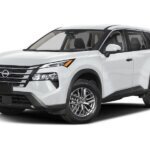 Nissan Rogue vs Volkswagen Tiguan Canada: Which Compact SUV Should You Buy?
This additional volume can become useful when transporting:
- Large suitcases for family holidays
- Camping supplies and outdoor equipment
- Boxes during a move
- Sports gear and hockey equipment
- Flat-packed furniture
- Bulky household purchases
While the Rogue provides more maximum cargo volume, fitting a particular item also depends on the cargo opening, floor width, height, and seat-folding arrangement.
For example, a long piece of furniture might fit differently from several large suitcases even when the total volume is similar.
We recommend measuring any unusually large items before purchasing either SUV.
Does the Ford Escape Hybrid Have Less Cargo Space?
Yes, the hybrid and plug-in hybrid Escape configurations have lower published maximum cargo capacities than gasoline versions.
Their maximum volume with the rear seats folded is approximately 1,722 litres.
This reduction reflects differences in powertrain packaging and vehicle configuration.
For Canadian drivers who want a hybrid SUV but frequently transport bulky equipment, it's worth comparing the Escape Hybrid's luggage area directly with the gasoline Rogue.
The hybrid Escape remains practical, but it doesn't offer the same maximum cargo volume as the conventional Rogue.
Nissan Rogue vs Ford Escape Size for Families
For families, the best SUV isn't necessarily the one with the largest total dimensions.
We also need to consider child seats, passenger access, storage flexibility, and day-to-day convenience.
Which SUV Is Better for Child Car Seats?
Both SUVs provide rear seating positions suitable for installing compatible child restraints.
However, several factors matter more than exterior size.
These include the position of child-seat anchors, front-seat clearance, rear-door opening, and the width of the child restraints themselves.
The Nissan Rogue has wide-opening rear doors that can make passenger access and child-seat installation convenient.
The Ford Escape's sliding rear bench offers another type of flexibility, although its seating position must comply with the vehicle and child-seat instructions.
For families with two children, either model can be a practical choice.
With three child seats, we strongly recommend testing the exact seats before purchasing. Published shoulder-room measurements alone cannot confirm whether three restraints will fit safely.
Which SUV Has More Room for Teenagers?
The Ford Escape has an advantage when maximum rear legroom is the main priority.
Its adjustable second row gives taller passengers additional space for their knees.
That can be especially useful on longer journeys between Canadian cities.
The Nissan Rogue still provides a comfortable second row, and its cabin layout makes it a sensible option for family use.
For regularly carrying tall teenagers, however, we'd give the Escape a slight advantage.
Which SUV Is Better for Family Road Trips?
This depends on how your family travels.
If all five seats are occupied and you need maximum passenger flexibility, the Escape deserves serious consideration.
If you often travel with fewer passengers but carry substantial equipment, the Rogue's larger maximum cargo capacity becomes more appealing.
For example, a family of four travelling from Calgary to Banff with ordinary suitcases could find either SUV suitable.
A couple carrying bulky camping equipment with the second row folded may appreciate the Rogue's extra cargo volume.
Neither vehicle is universally better. Their strengths simply serve different priorities.
Nissan Rogue vs Ford Escape for Canadian City Driving
Parking and manoeuvrability are particularly relevant in cities such as Toronto, Montréal, Vancouver, and Ottawa.
Both SUVs are manageable in urban environments, but their dimensions produce slightly different compromises.
Parking in Tight Spaces
The Escape's shorter overall length can be useful when parallel parking.
However, it is wider than the Rogue, which may matter when parking between vehicles or entering narrow garages.
The Rogue's narrower body can make side clearance easier to manage, while its longer length requires slightly more longitudinal space.
These differences are fairly small.
Available parking sensors, cameras, visibility, and driver-assistance technology will often make a greater difference than a few centimetres in vehicle dimensions.
Underground Parking Garages
For underground garages, three measurements are especially important:
You might be interested in this content. Chevrolet Trax vs Ford Escape Canada: Which SUV Is the Better Choice?
- Vehicle height, including accessories
- Vehicle width with mirrors
- Overall length and turning clearance
Both models are comfortably below the height of many standard parking garages in their basic configurations.
However, roof racks, cargo carriers, and garage-specific restrictions can change the situation.
If you use a particularly narrow parking space, check the exact mirror-to-mirror width rather than relying only on body-width specifications.
Highway Driving
On Canadian highways, both SUVs offer dimensions appropriate for daily commuting and long-distance travel.
The Rogue's slightly longer body doesn't automatically guarantee a smoother ride, just as the Escape's marginally longer wheelbase doesn't establish a handling advantage.
Suspension tuning, tires, vehicle weight, and road conditions contribute much more to ride comfort.
We would base a highway-driving decision on a test drive rather than exterior dimensions alone.
Nissan Rogue vs Ford Escape Ground Clearance
Ground clearance can matter in Canada, particularly during snowy winters.
The conventional 2026 Nissan Rogue has a published minimum ground clearance of approximately 209.5 mm.
Ford Escape ground-clearance figures vary with configuration, with some gasoline versions listed around 191 mm.
The Rogue can therefore offer a modest advantage in clearance.
This may be helpful when encountering uneven driveways, snow accumulation, or rough cottage access roads.
However, ground clearance alone doesn't determine winter capability.
Other important considerations include:
- Appropriate winter tires
- All-wheel-drive availability
- Stability and traction-control systems
- Vehicle weight and tire grip
- Driver experience and road conditions
Neither model should be confused with a dedicated off-road vehicle.
For ordinary Canadian winters, properly fitted winter tires are far more important than a small difference in ground clearance.
Nissan Rogue vs Ford Escape: Which Feels Bigger Inside?
This is where exterior measurements can be misleading.
From the outside, the Nissan Rogue looks and measures like the longer vehicle.
Inside, however, the Ford Escape offers particularly generous maximum legroom.
The Escape's sliding rear seating helps create a flexible cabin layout.
The Rogue counters with generous headroom and substantial cargo capacity when the second row is folded.
We can summarize their interior strengths this way:
The Ford Escape is particularly appealing for:
- Taller passengers who prioritize legroom
- Families carrying adults in the second row
- Drivers who value sliding rear-seat flexibility
- Buyers wanting a slightly shorter SUV
The Nissan Rogue is particularly appealing for:
- Drivers wanting more maximum cargo capacity
- People who prioritize front headroom
- Families carrying bulky luggage or equipment
- Buyers who prefer a slightly narrower SUV body
Ultimately, spaciousness is about more than numbers. Seat shape, visibility, driving position, and interior design can influence how roomy a vehicle feels.
Nissan Rogue vs Ford Escape Size: Gasoline vs Hybrid Models
Canadian buyers should also pay attention to powertrain differences.
The conventional Nissan Rogue uses a gasoline engine, while the Escape was offered in gasoline, hybrid, and plug-in hybrid configurations.
The exterior dimensions of the Escape remain broadly similar across its powertrains.
However, cargo capacity changes.
The gasoline Escape offers the greatest published maximum cargo space within its lineup, at approximately 1,851 litres.
Hybrid configurations offer approximately 1,722 litres.
That difference could matter if we regularly carry large objects or need maximum storage.
It's also important to distinguish the conventional Rogue from the 2026 Rogue Plug-in Hybrid, which is a different vehicle configuration with different dimensions and cargo specifications.
A fair comparison should always identify the exact model and powertrain.
Which SUV Is Better for Tall Drivers?
If you're a taller Canadian driver, both models deserve consideration.
The Escape has more published front legroom, which may help drivers who prefer extending their legs.
The Rogue provides more front headroom in versions without a moonroof.
You might be interested in this content.Hyundai Kona Size Comparison: Dimensions, Space, and How It Measures UpFor someone with long legs but a relatively shorter torso, the Escape's seating arrangement could be preferable.
For someone with a taller upper body, the Rogue's headroom advantage might be more important.
But measurements cannot tell us everything about seating comfort.
Steering-wheel adjustment, seat height, cushion length, and pedal positioning all make a difference.
Our recommendation is to sit in each vehicle for at least several minutes and confirm that the ideal driving position feels natural.
Is the Nissan Rogue Bigger Than the Ford Escape?
The answer depends on how we define bigger.
In terms of overall exterior length, the Nissan Rogue is bigger.
It is also slightly taller.
The Escape is wider and has a marginally longer wheelbase.
Inside, the Escape offers more maximum front and rear legroom, while the Rogue provides greater front headroom and maximum folded-seat cargo capacity.
Neither SUV dominates every category.
If we're comparing them purely by exterior size, the Rogue has the larger length measurement.
If we're comparing rear passenger legroom, the Escape comes out ahead.
If we're comparing the maximum amount of cargo that can fit with the second row folded, the Rogue has a clear advantage.
Nissan Rogue vs Ford Escape: Which Should You Choose in Canada?
Choosing between these SUVs requires balancing their dimensions against how you actually use a vehicle.
Choose the Nissan Rogue If You Want More Cargo Flexibility
The Rogue makes sense if your priorities include carrying bulky cargo and maximizing storage when the second row isn't needed.
Its longer body and greater published maximum cargo volume can be useful for outdoor activities, road trips, and transporting household items.
Its narrower body may also appeal to drivers who regularly deal with tight side clearance.
Choose the Ford Escape If You Prioritize Rear Passenger Legroom
The Escape makes a strong case for families who regularly carry taller passengers.
Its maximum rear legroom is notably generous for the category.
The sliding rear seats add practicality, allowing owners to adjust the balance between cabin and luggage space.
Its slightly shorter overall length can also make it appealing for urban use.
What About Ford Escape Availability in Canada?
One additional consideration for Canadian buyers is the Escape's production status.
The 2026 model year is the final model year for the Ford Escape, and the vehicle has been discontinued.
As a result, shoppers looking for a new Escape may need to rely on remaining dealer inventory, while used examples remain another possibility.
The Nissan Rogue continues to be a relevant option for buyers shopping for a new compact SUV.
This availability difference doesn't change the size comparison, but it may influence the overall purchase decision.
Nissan Rogue vs Ford Escape Size: Final Verdict
After comparing the Nissan Rogue vs Ford Escape size in Canada, we can see that both vehicles deliver a practical balance of passenger accommodation, luggage space, and compact SUV dimensions.
The Nissan Rogue is approximately 6–7 centimetres longer than the Escape and offers significantly more maximum cargo capacity with the rear seats folded.
The Ford Escape is wider and provides more maximum front and rear legroom, making it a compelling choice for passengers who prioritize stretching space.
For families carrying adults or teenagers in the rear seats, the Ford Escape has a meaningful legroom advantage.
For drivers who frequently fold the rear seats to transport larger items, the Nissan Rogue is the stronger choice for maximum cargo volume.
If we had to pick one based on overall cargo versatility, we'd lean toward the Nissan Rogue.
However, the Escape remains impressive for the amount of passenger room it provides within a slightly shorter exterior footprint.
The best decision is to compare the exact trims in person, especially if child seats, tall passengers, or garage dimensions are important.
Frequently Asked Questions
1. Is the Nissan Rogue bigger than the Ford Escape in Canada?
The Nissan Rogue is longer and slightly taller than the Ford Escape. The 2026 Rogue measures approximately 4,648 mm in length, while the Escape measures around 4,574–4,585 mm, depending on the published specification. However, the Escape is wider and offers more maximum legroom.
2. Which has more cargo space, the Nissan Rogue or Ford Escape?
The Nissan Rogue offers more maximum cargo space with the rear seats folded, reaching approximately 2,098 litres in certain configurations. The gasoline Ford Escape offers around 1,851 litres. With the rear seats upright, the comparison varies according to seating position, cargo-floor arrangement, and trim.
You might be interested in this content. How Long Is Volkswagen Tiguan? Full Size and Dimensions Guide
3. Does the Ford Escape have more rear legroom than the Nissan Rogue?
Yes. The Ford Escape offers up to approximately 1,035 mm of rear legroom, compared with 978 mm in the conventional Nissan Rogue. This makes the Escape particularly attractive for families carrying taller rear passengers.
4. Which SUV is easier to park in Canada, the Nissan Rogue or Ford Escape?
The Ford Escape's slightly shorter body may help with parallel parking, while the Rogue's narrower exterior may be advantageous in tight spaces. The actual difference is relatively modest, and parking cameras, sensors, and visibility are also important factors.
5. Which is better for Canadian families, the Nissan Rogue or Ford Escape?
Both SUVs can work well for Canadian families. The Escape is particularly attractive for rear passenger legroom and adjustable seating, while the Rogue offers more maximum cargo capacity when the second row is folded. Families should consider child-seat compatibility, luggage requirements, winter driving needs, and the availability of their preferred trim before deciding.
Leave a Reply