
Hyundai Kona Pros and Cons Canada: Is It a Smart Buy?

The Hyundai Kona has carved out an interesting spot in the Canadian SUV market. It is small enough to squeeze through downtown Toronto traffic, easy enough to park in a tight Vancouver condo garage, and practical enough to deal with grocery runs, winter commutes, and weekend escapes. Yet calling it simply a “small SUV” misses half the story.
The Kona feels more like a compact hatchback wearing hiking boots. We get SUV-like seating, available all-wheel drive, useful cargo space, and a surprisingly generous technology package without moving into the bulkier dimensions of a traditional crossover.
For Canadian shoppers, however, the question is not whether the Kona looks attractive in a showroom. The real question is whether its strengths outweigh its weaknesses once snow, potholes, insurance, fuel bills, passengers, and everyday ownership enter the picture.
In this detailed look at the Hyundai Kona pros and cons Canada, we will examine where the Kona shines, where compromises appear, which type of Canadian driver it suits best, and whether we would put it on our own shortlist.
- Hyundai Kona Pros and Cons Canada at a Glance
- What Makes the Hyundai Kona Appealing in Canada?
- Pro #1: The Kona Is Excellent for Canadian Cities
- Pro #2: Available AWD Makes Sense for Canadian Winters
- Pro #3: The Cabin Technology Feels Modern
- Pro #4: Hyundai Gives Canadians Strong Warranty Coverage
- Pro #5: The Kona Gives Buyers Powertrain Choice
- Pro #6: Heated Features Suit Canadian Reality
- Pro #7: The Styling Has Personality
- Pro #8: The Kona Can Be a Good First SUV
- Con #1: Rear Passenger Space Still Has Limits
- Con #2: Cargo Space Cannot Defeat Physics
- Con #3: Some Cabin Materials Reveal Its Price Point
- Con #4: Pricing Can Climb Quickly
- Con #5: Ride Comfort Is Good, Not Luxury-Car Soft
- Con #6: Performance Depends Heavily on Configuration
- Con #7: Winter Hurts EV Range
- Con #8: AWD Does Not Turn the Kona Into an Off-Roader
- How Does the Hyundai Kona Handle Canadian Winter Driving?
- Is the Hyundai Kona Comfortable for Long Canadian Road Trips?
- Is the Hyundai Kona Good for a Canadian Family?
- What About Hyundai Kona Reliability in Canada?
- Gasoline Hyundai Kona vs Kona Electric in Canada
- Who Should Buy a Hyundai Kona in Canada?
- Who Should Probably Skip the Kona?
- Hyundai Kona Versus Larger Compact SUVs
- Is a Used Hyundai Kona Worth Considering in Canada?
- The Biggest Hyundai Kona Advantage
- The Biggest Hyundai Kona Disadvantage
- Hyundai Kona Pros and Cons Canada: Our Verdict
- Frequently Asked Questions About the Hyundai Kona in Canada
- Closing Thoughts
Hyundai Kona Pros and Cons Canada at a Glance
Before digging deeper, here is the short version.
- Pros: compact dimensions, available AWD, easy manoeuvrability, modern interior technology, heated-seat availability, useful safety equipment, good warranty coverage, distinctive styling, reasonable practicality, and a choice between gasoline and electric versions.
- Cons: rear-seat space remains more limited than in larger compact SUVs, some interior materials feel ordinary, stronger versions can become expensive, road and engine noise may be noticeable, cargo capacity cannot match bigger crossovers, and Canadian winter conditions can increase fuel consumption or reduce EV range.
The interesting part is that many of these disadvantages are simply the other side of the Kona's greatest advantage: its size.
What Makes the Hyundai Kona Appealing in Canada?
Canada presents vehicles with a strange collection of demands. We want something compact enough for cities yet capable enough for harsh weather. We want respectable fuel economy but also enough ground clearance for snowy streets. We appreciate heated equipment in February but do not necessarily want to pay midsize-SUV money.
That is exactly where the Kona begins to make sense.
Hyundai Canada's current Kona range emphasizes a substantial touchscreen interface, driver-assistance technology, heated front seats on the Essential trim, LED lighting and available AWD. The 2026 Essential, for example, is advertised with a 12.3-inch touchscreen, heated front seats and available all-wheel drive.
Those are not glamorous details on paper, but they matter enormously during ordinary Canadian ownership.
A heated seat at 6:45 on a January morning may be more valuable than an extra twenty horsepower.
Compact Outside, Surprisingly Useful Inside
The current Canadian-market Kona measures roughly 4,350 to 4,385 mm long depending on configuration.
That compact footprint is one of its biggest advantages.
We can navigate narrow parking garages without feeling as though we are steering a cargo ship. Parallel parking becomes less intimidating. Downtown streets feel manageable, and suburban garages still have space left for bicycles, storage bins, or winter tires.
Yet the second-generation Kona grew enough to feel more mature inside than earlier examples.
It does not magically turn into a Hyundai Tucson, of course. Physics eventually wins. But for one person, a couple, or a small family, its packaging can work remarkably well.
Pro #1: The Kona Is Excellent for Canadian Cities
Urban Canadians may appreciate the Kona more than almost anyone else.
Picture Montreal. Snowbanks steal half the curb. Cars are packed nose-to-tail. Parking spots apparently have been designed for shopping carts.
A giant SUV becomes a burden.
The Kona, by contrast, threads through congestion with very little drama. Its elevated seating position provides some of the visibility people enjoy about crossovers without forcing us to manage the dimensions of a three-row vehicle.
Easy Parking Is an Underrated Luxury
We often obsess over horsepower, acceleration and wheel sizes when shopping for a vehicle. Then we spend the next five years trying to park it.
A relatively short crossover simply creates fewer headaches.
If much of our driving involves Toronto, Ottawa, Montreal, Vancouver or another dense Canadian city, this could be one of the Kona's strongest arguments.
Why Size Matters Every Single Day
Vehicle size is not something we notice only during a test drive.
We notice it every time we reverse into the garage.
Every time somebody parks too close at Costco.
Every time a downtown parking space looks barely large enough.
The Kona's modest footprint turns those moments from small battles into routine chores.
Pro #2: Available AWD Makes Sense for Canadian Winters
Front-wheel drive will be perfectly acceptable for many Canadians, especially when paired with quality winter tires.
Still, having AWD available is reassuring for drivers living in areas with frequent snow or slippery roads. Hyundai offers AWD on gasoline Kona configurations in Canada.
AWD will not bend the laws of physics. It does not replace winter tires, and it cannot magically shorten stopping distances on ice.
What it can do is help distribute power more effectively when accelerating on low-traction surfaces.
That difference becomes noticeable when climbing a snowy residential street or pulling away from an unplowed intersection.
Winter Tires Still Matter More Than the Badge
We would not buy the AWD model and then assume the winter problem has been solved.
Good winter tires remain enormously important.
Think of AWD as having two people pushing a stuck shopping cart instead of one. Helpful? Absolutely.
But if the wheels themselves cannot grip the surface, adding more pushing power only accomplishes so much.
Pro #3: The Cabin Technology Feels Modern
One area where Hyundai has become particularly competitive is cabin technology.
The latest Kona adopts a much more screen-focused dashboard than older versions, and Canadian specifications include a 12.3-inch touchscreen on the Essential trim.
That gives the cabin a noticeably contemporary appearance.
Even shoppers coming from vehicles only five or six years old may find the difference dramatic.
It Does Not Feel Like a Budget Crossover
Entry-level small SUVs occasionally remind us of airport rental cars: functional, grey and slightly joyless.
The Kona generally avoids that impression.
Its dashboard design is clean, its screens dominate the cabin visually, and higher trims add equipment that makes the vehicle feel more expensive than its dimensions suggest.
That matters because most of our interaction with a vehicle happens from the driver's seat, not while staring at the exterior in a driveway.
Pro #4: Hyundai Gives Canadians Strong Warranty Coverage
Warranty coverage is another genuine Kona advantage.
Hyundai Canada currently provides a 5-year/100,000-km New Vehicle Limited Warranty, along with five years of roadside assistance.
For buyers planning to keep the vehicle several years, that can provide valuable peace of mind.
Longer comprehensive warranty coverage does not guarantee that nothing will break. What it does is reduce some of the financial uncertainty associated with defects covered by the manufacturer's warranty during those early ownership years.
Why Warranty Length Matters More on a Tech-Heavy Vehicle
Modern vehicles are rolling computers.
Touchscreens, cameras, sensors, radar systems and electronic modules are woven into practically everything.
When a vehicle contains more technology, decent warranty coverage starts to feel increasingly valuable.
The Kona's warranty therefore complements its tech-heavy character rather nicely.
You might be interested in this content.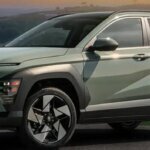 Can Hyundai Kona Charge at Tesla? Complete Charging Guide
Pro #5: The Kona Gives Buyers Powertrain Choice
Canadian consumers do not all use vehicles the same way.
Some drive hundreds of highway kilometres every week.
Others rarely leave the city.
Some live in houses with home charging.
Others park twelve floors beneath a condominium without access to an outlet.
Hyundai addresses those differences by offering both gasoline Kona models and the Kona Electric in Canada.
The current Kona Electric can provide up to 420 km of advertised electric driving range under the cited Natural Resources Canada methodology, although real-world range varies with weather, driving style and conditions.
Gasoline Kona for Flexibility
For Canadians who routinely drive long distances or cannot conveniently charge at home, gasoline remains the simpler solution.
Fuel stations are everywhere, refuelling takes minutes, and winter range anxiety simply is not part of the equation.
Kona Electric for the Right Lifestyle
The Electric becomes considerably more attractive when home charging is available and most trips fit comfortably within its range.
Quiet acceleration changes the character of the Kona entirely.
Instead of hearing a gasoline engine working through traffic, we get smooth electric torque and near-silent urban driving.
But the EV and gasoline models should almost be considered separate buying decisions rather than two trims of exactly the same vehicle.
Pro #6: Heated Features Suit Canadian Reality
Canadians know that certain options stop feeling optional once temperatures plunge.
Hyundai lists heated front seats even among key features of the 2026 Kona Essential.
Meanwhile, the Kona Electric Preferred includes a heated steering wheel according to Hyundai Canada's current specifications.
These details sound small until we touch an ice-cold steering wheel at -20°C.
Then suddenly they seem brilliant.
Small Comfort Features Create Big Ownership Satisfaction
A panoramic roof might impress friends.
A heated steering wheel impresses us every morning for four months.
Canadian buyers should judge equipment through that practical lens.
Pro #7: The Styling Has Personality
The Kona does not look anonymous.
Its narrow lighting elements, sculpted bodywork and futuristic front-end design help distinguish it from the rows of similarly shaped crossovers filling Canadian parking lots.
Hyundai highlights its seamless-horizon LED daytime running light design as one of the Kona's signature exterior elements.
Whether we love the appearance is subjective.
But being distinctive is itself a positive in a segment where many competitors look like scaled-down copies of larger SUVs.
It Looks More Expensive Than a Basic Economy Car
There is another subtle advantage here.
Someone wanting a relatively affordable daily driver may prefer the visual presence of a Kona over a conventional compact hatchback or sedan.
It gives off a little more adventure, a little more attitude.
Sometimes purchasing a vehicle is not purely mathematical.
We also have to enjoy walking toward it in the parking lot.
Pro #8: The Kona Can Be a Good First SUV
Drivers moving from a compact sedan into their first crossover may find the Kona especially friendly.
It provides a more upright driving position and crossover versatility without requiring a major adjustment in vehicle dimensions.
That makes it approachable.
A Tucson, RAV4, CR-V or similar compact SUV offers more room, but the Kona often feels less intimidating for someone accustomed to smaller cars.
Con #1: Rear Passenger Space Still Has Limits
Now we reach the trade-offs.
Despite its improved packaging, the Kona remains a subcompact crossover.
If tall adults regularly occupy the rear seats, we would absolutely test the seating position before buying.
A small family may be perfectly comfortable.
Four tall adults travelling several hours together may have different opinions.
Children Fit More Easily Than Grown Adults
For school runs and occasional passengers, the rear cabin should be entirely workable.
For frequent adult road trips, a larger compact SUV makes more sense.
This distinction is important because shoppers sometimes see the “SUV” label and unconsciously expect SUV-sized passenger accommodation.
The Kona is still a small vehicle.
Con #2: Cargo Space Cannot Defeat Physics
The Kona offers useful cargo versatility, but anyone regularly carrying hockey equipment, camping supplies, a large stroller, pets and several suitcases should examine the cargo area carefully.
This is where compact SUVs such as the Hyundai Tucson begin earning their larger dimensions.
A Weekend Trip Can Become Tetris
Two people travelling?
No major issue.
Add two children, luggage, coats, boots and recreational gear?
Now packing can begin to resemble a competitive puzzle.
The Kona works best when we genuinely want a small crossover rather than when we hope a small crossover will behave like a midsize SUV.
Con #3: Some Cabin Materials Reveal Its Price Point
The Kona's screens and dashboard design create an impressive first impression.
Look closer, however, and we can still encounter harder plastics and relatively ordinary trim pieces.
You might be interested in this content.How Long Does a Hyundai Kona Last in Canada? A Complete Longevity GuideThis is not unusual for the class.
The challenge is that the modern design raises our expectations. When the dashboard looks futuristic, we start expecting premium materials everywhere.
That is probably the simplest description of the Kona cabin.
Visually, it punches above its class.
Tactilely, certain areas remind us that we are still in an attainable mainstream crossover.
Whether that matters depends heavily on personal priorities.
Con #4: Pricing Can Climb Quickly
The Kona's affordability becomes less obvious when we start selecting higher trims, AWD and premium packages.
Hyundai Canada's 2026 pricing shows the Kona spanning a meaningful range depending on configuration, while the Kona Electric occupies a considerably higher initial price category than the basic gasoline model.
At that point, comparisons become more complicated.
Higher Trims Enter Dangerous Territory
A well-equipped Kona can start brushing shoulders with larger crossovers.
That forces us to ask a difficult question:
Would we rather have a heavily equipped small SUV or a more basic larger SUV?
There is no universal answer.
Drivers prioritizing technology and easy city manoeuvrability may prefer the Kona.
Families prioritizing rear-seat and cargo space could prefer moving up one segment.
Con #5: Ride Comfort Is Good, Not Luxury-Car Soft
The Kona's compact dimensions help make it agile.
The downside is that shorter vehicles can sometimes feel busier over broken pavement than larger, softer crossovers.
Canadian roads provide an excellent laboratory for testing suspension.
Freeze-thaw cycles create potholes that seem capable of swallowing a small moon.
On rough pavement, the Kona cannot isolate passengers with the same relaxed character as a larger, longer-wheelbase SUV.
Bigger Wheels Can Change the Experience
As with many modern crossovers, wheel and tire selection matters.
Larger wheels may look fantastic.
More tire sidewall, however, generally provides a larger cushion between the road and the vehicle.
Canadian shoppers prioritizing comfort should avoid choosing wheels purely because they photograph well.
Con #6: Performance Depends Heavily on Configuration
Not every Kona feels the same.
The mainstream 2.0-litre gasoline setup emphasizes ordinary daily driving rather than dramatic acceleration. Hyundai's 2026 Canadian product information lists a 2.0-litre four-cylinder paired with an Intelligent Variable Transmission on applicable models.
For commuting, grocery runs and routine highway travel, that may be enough.
Enthusiastic drivers may want more.
The Base Engine Is About Efficiency, Not Excitement
Push the accelerator expecting hot-hatch drama and disappointment may arrive quickly.
Drive it like a practical commuter and the picture changes.
The problem is not necessarily the engine itself.
It is mismatched expectations.
Con #7: Winter Hurts EV Range
The Kona Electric deserves praise for making electric driving accessible in a genuinely useful crossover format.
Canadian winter introduces an unavoidable disadvantage, however.
Cold weather can reduce EV driving range, especially when cabin heating, winter tires, snow and highway speeds enter the equation. Hyundai itself notes that actual Kona Electric range varies according to driving conditions and equipment.
420 km Does Not Mean 420 km Every Day
An advertised maximum range figure should never be interpreted as a promise.
Think of it more like the estimated duration of a phone battery.
Temperature, usage and behaviour all matter.
Someone with home charging and a 40-km daily commute may barely care.
Someone regularly travelling between distant communities during winter could care enormously.
Con #8: AWD Does Not Turn the Kona Into an Off-Roader
The available AWD system adds confidence on poor surfaces.
It does not transform the Kona into a Jeep Wrangler.
That distinction is worth making because SUV styling sometimes encourages unrealistic expectations.
The Kona works nicely for snowy streets, cottage roads and ordinary Canadian weather.
Deep mud, serious rock crawling or rugged backcountry exploration belongs to a different vehicle category.
How Does the Hyundai Kona Handle Canadian Winter Driving?
For most Canadian drivers, winter suitability is one of the Kona's stronger characteristics.
The combination of available AWD, compact dimensions, useful visibility and heated amenities works well in cold climates.
The vehicle's lighter size can also make it feel nimble when navigating narrow streets surrounded by snowbanks.
Still, winter tires remain our highest priority.
FWD Kona or AWD Kona in Canada?
We would choose based on geography and driving habits rather than automatically paying for AWD.
Someone living in downtown Vancouver and rarely visiting snowy mountain areas could reasonably prefer FWD.
Someone living around Ottawa, Calgary, Edmonton, Quebec City or a rural community where roads may remain snow-covered longer could find AWD more worthwhile.
Do Not Forget Fuel Economy
AWD usually adds weight and mechanical complexity.
You might be interested in this content.Does Hyundai Kona Hold Its Value in Canada? A Complete Resale Value GuideThat means the benefit is not completely free.
Drivers who rarely need it may prefer the simplicity of front-wheel drive.
Is the Hyundai Kona Comfortable for Long Canadian Road Trips?
For two people, yes.
The Kona can make a very agreeable road-trip vehicle.
There is sufficient room for luggage, the seating position is relaxed, and modern infotainment reduces the feeling of driving an inexpensive utility vehicle.
Add several adults and substantial baggage, however, and the Kona's smaller dimensions become increasingly apparent.
Toronto to Montreal? No Problem
Two adults with luggage could happily use a Kona for long highway journeys.
Four adults plus bags?
We would probably look at something larger.
It is not that the Kona cannot do it.
It simply moves away from its sweet spot.
Is the Hyundai Kona Good for a Canadian Family?
That depends almost entirely on family size.
One or two children?
Potentially excellent.
Three growing children?
We would likely begin considering a wider, larger crossover.
Parents should also bring the actual child seats they intend to use when test-driving.
Specifications only tell part of the story.
Young Family Versus Growing Family
A Kona can be ideal during the early stages of family life.
Eventually, hockey bags, school gear, friends and road-trip luggage begin multiplying like rabbits.
At that point, a compact SUV may become more sensible.
What About Hyundai Kona Reliability in Canada?
Reliability should never be judged from warranty length alone, and different model years, engines and individual vehicles can produce different ownership experiences.
Still, Hyundai Canada's warranty provides substantial early ownership protection, including five years or 100,000 km of new-vehicle coverage.
Used buyers should look beyond the badge.
Maintenance history matters enormously.
A carefully serviced Kona is far more attractive than a neglected example simply because the neglected vehicle happens to be newer.
Always Check Recalls When Buying Used
Hyundai Canada provides a recall-checking resource for owners and prospective buyers.
Before purchasing a used Kona, we would verify whether outstanding recall work applies to the exact VIN.
It takes very little effort and can prevent unnecessary uncertainty.
Gasoline Hyundai Kona vs Kona Electric in Canada
Choosing between these two versions changes the ownership experience dramatically.
The gasoline model wins on refuelling convenience and long-distance flexibility.
The Electric wins on smoothness, quiet operation and the possibility of avoiding gasoline altogether.
Hyundai Canada currently quotes up to 420 km of range for the Kona Electric and provides an 8-year/160,000-km warranty for applicable EV and hybrid system components.
Who Should Choose Gasoline?
We would lean gasoline if we regularly make long journeys, lack dependable home charging or live somewhere where public charging is inconvenient.
Who Should Choose Electric?
We would lean electric if we can charge at home, drive predictable daily distances and value quiet urban performance.
The Kona Electric can be especially compelling as a commuter.
Who Should Buy a Hyundai Kona in Canada?
The ideal Kona buyer values efficiency of space.
They do not want a huge SUV merely because everyone else appears to be buying one.
They want enough versatility for daily life but still appreciate being able to park without performing geometry calculations.
Singles, couples, commuters, retirees, smaller families and city residents are natural candidates.
Who Should Probably Skip the Kona?
Drivers carrying five adults regularly should look larger.
So should buyers towing substantial loads, carrying enormous quantities of recreational equipment or expecting genuine off-road performance.
Likewise, shoppers prioritizing maximum cabin isolation and luxury-level materials may discover that the Kona's technology feels more premium than its underlying construction.
Hyundai Kona Versus Larger Compact SUVs
This may be the most important comparison of all.
The Kona's biggest competitors are not necessarily only other subcompact crossovers.
Its biggest enemy might be the next vehicle size up.
A compact SUV provides extra passenger room and cargo capacity at the cost of higher pricing, larger exterior dimensions and potentially greater running expenses.
Kona Versus Tucson: Think About Tomorrow
If our current lifestyle barely fits inside the Kona, we probably should not buy one.
Vehicles tend to accumulate responsibilities.
Children grow.
Pets appear.
Sports equipment multiplies.
If we have plenty of unused Kona space during a test drive, excellent.
You might be interested in this content. Nissan Kicks Pros and Cons Canada: Is It Worth Buying?
If every centimetre already seems spoken for, moving up to something like a Tucson may save frustration later.
Is a Used Hyundai Kona Worth Considering in Canada?
Absolutely, provided we investigate the individual vehicle rather than buying purely on price.
Service records matter.
Accident history matters.
Tire condition matters.
Brake condition matters.
And in Canada, corrosion and underbody condition deserve attention, especially in regions that use substantial road salt.
A used Kona with documented maintenance may represent better value than a new vehicle loaded with features we do not actually need.
The Biggest Hyundai Kona Advantage
If we had to choose only one advantage, it would be balance.
The Kona rarely tries to dominate a single category.
Instead, it combines reasonable practicality, technology, manageable size, available AWD and attractive warranty coverage into one package.
It is the automotive equivalent of a good backpack.
Not enormous.
Not extravagant.
But remarkably useful.
The Biggest Hyundai Kona Disadvantage
The same compact dimensions that make the Kona easy to own create its clearest limitation.
Space eventually runs out.
If we expect midsize-SUV versatility from a subcompact crossover, disappointment is almost inevitable.
Accept the Kona for what it is, though, and the equation looks much better.
Hyundai Kona Pros and Cons Canada: Our Verdict
The Hyundai Kona makes considerable sense in Canada because it addresses problems Canadians actually encounter.
It fits into tight cities.
AWD is available on gasoline configurations.
Heated equipment is widely available.
The latest cabin technology feels contemporary.
Hyundai's warranty coverage is competitive, and buyers can choose between conventional gasoline power and a fully electric Kona depending on lifestyle.
There are compromises.
Rear-seat room cannot rival larger SUVs.
Cargo capacity has limits.
Higher specifications can push the price upward surprisingly quickly.
Base gasoline performance is more practical than exciting.
And anyone choosing the electric version must consider winter range and charging logistics.
But none of those weaknesses makes the Kona a poor vehicle.
They simply define the type of buyer who will enjoy it.
For a Canadian commuter, couple or small family wanting crossover versatility without crossover bulk, we think the Kona deserves serious consideration.
The smartest approach is simple: test-drive it with the people and equipment we normally carry.
Bring the child seat.
Bring the tall passenger.
Look at the cargo area.
Drive over rough pavement.
Try parking it.
Then ask whether the Kona feels comfortably large enough rather than merely just large enough.
If the answer is yes, this little Hyundai can be a remarkably sensible Canadian companion.
Frequently Asked Questions About the Hyundai Kona in Canada
1. Is the Hyundai Kona a good SUV for Canada?
Yes, particularly for drivers wanting a small crossover suited to urban environments and winter driving. Available AWD, heated equipment, compact dimensions and Hyundai's Canadian warranty coverage strengthen its appeal.
2. Is AWD worth getting on a Hyundai Kona in Canada?
It can be worthwhile if we regularly drive through snow, live in a rural area or encounter steep and slippery roads. Drivers in milder climates or primarily urban environments may be satisfied with front-wheel drive and quality winter tires.
3. Is the Hyundai Kona big enough for a family?
It can work well for couples and families with one or two children. Larger families or anyone routinely carrying bulky equipment may prefer a compact SUV with more rear-seat and cargo room.
4. Is the Hyundai Kona Electric practical in Canadian winter?
It can be, especially when home charging is available and daily journeys are moderate. Hyundai advertises up to 420 km of range under the referenced testing methodology, but actual range varies and cold Canadian weather can reduce real-world driving distance.
5. What is the main disadvantage of the Hyundai Kona?
Its biggest limitation is space. The compact size that makes the Kona fantastic for cities also means rear passengers and cargo have less room than they would in larger compact SUVs.
Closing Thoughts
Buying the biggest SUV we can afford is easy.
Buying the right-sized SUV is smarter.
That distinction captures the Hyundai Kona perfectly.
For Canadian drivers who need sensible winter capability, modern technology and enough practicality for daily life—but who do not want to drag around an oversized vehicle—the Kona hits a particularly appealing middle ground.
It has flaws, certainly.
Yet when its compact dimensions match our lifestyle, those flaws feel less like mistakes and more like reasonable compromises.
You might be interested in this content.Hyundai Kona and Similar Cars Canada: Best Alternatives to ConsiderAnd sometimes the best vehicle is not the one that can do absolutely everything.
It is the one that makes the things we do every day remarkably easy.
Leave a Reply